Description
overall appearance
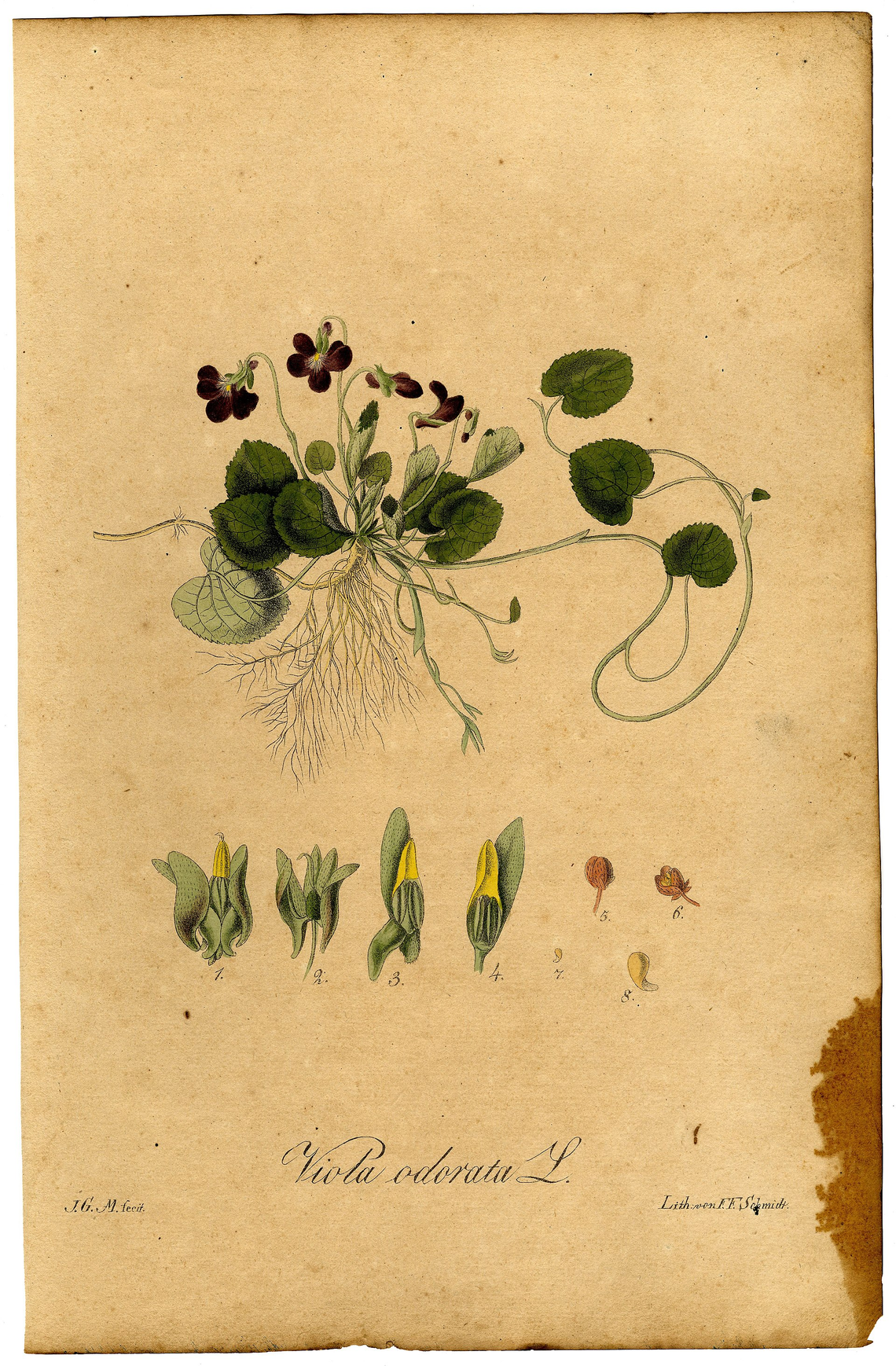
Sweet violet is a low-growing perennial herb forming clumps 4-6 inches tall with heart-shaped leaves and fragrant purple flowers.
roots
Thick, fleshy rhizomes spread horizontally underground, producing new plants and forming colonies over time.
stem
Stems are very short or absent, with leaves and flowers arising directly from the underground rhizome.
leaves
Heart-shaped leaves are 1-3 inches wide with scalloped margins. Leaves are dark green and arranged in a basal rosette.
flowers
Fragrant, five-petaled flowers are typically deep purple (sometimes white or pink) and appear in early spring before many other flowers.
fruits/seeds
Three-valved capsules explode when ripe, shooting seeds several feet away. Plants also produce inconspicuous self-fertilizing flowers.
Active Compounds
Traditional Uses
- Respiratory conditions and coughs
- Skin conditions and inflammation
- Eye irritations and conjunctivitis
- Digestive inflammation and ulcers
- Lymphatic congestion
- Nervous tension and insomnia
Modern Applications
- Expectorant for respiratory conditions
- Anti-inflammatory for skin and mucous membranes
- Demulcent for digestive irritation
- Lymphatic drainage support
- Gentle remedy for children's conditions
⚠️ Safety Information
Contraindications
- None known for typical medicinal use
- Avoid very large quantities (high saponin content)
- Rare allergic reactions in sensitive individuals
Side Effects
- Generally very well-tolerated
- Possible mild nausea with excessive consumption
- Rare skin sensitivity with topical use
Drug Interactions
- No significant interactions reported
- Generally considered very safe
- May enhance effects of other mucilaginous herbs
Parts Used
- Leaves and flowers (aerial parts)
- Occasionally roots
Preparation Methods
1-2 tsp dried leaves/flowers per cup water, steep 10-15 minutes
Traditional preparation for coughs using flowers and honey
Fresh crushed leaves applied to skin conditions
Flowers infused in oil for topical applications
Cloth soaked in strong tea for eye conditions
Related Plants
Calendula
Calendula officinalis
Chamomile
Matricaria chamomilla
Chickweed
Stellaria media
Goldenseal
Hydrastis canadensis
Lemon Verbena
Aloysia citrodora
Marshmallow
Althaea officinalis