Description
overall appearance
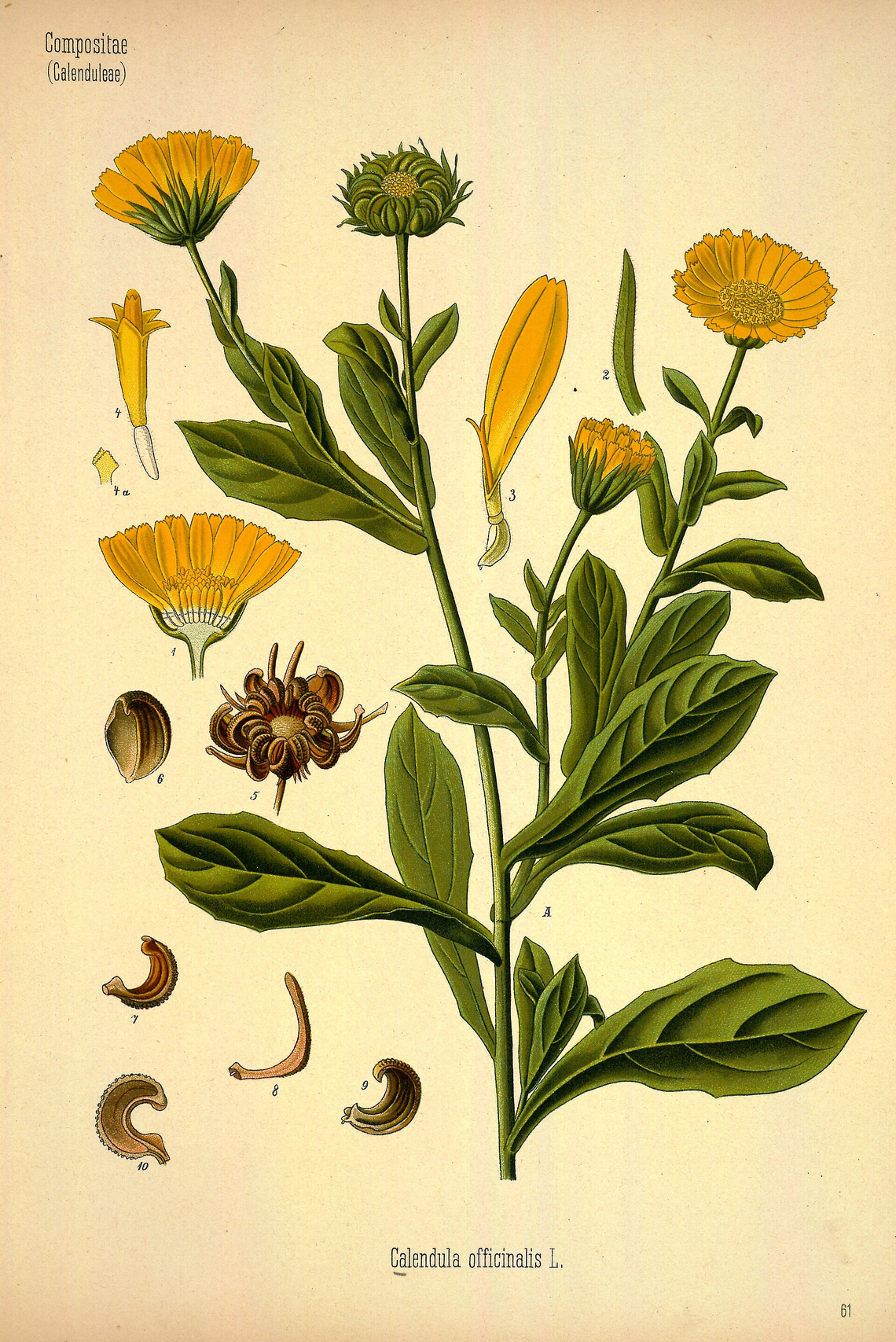
Annual herb growing 12-24 inches tall with branching stems, aromatic leaves, and bright orange to yellow daisy-like flowers.
roots
Shallow taproot with fibrous secondary roots spreading near the soil surface.
stem
Erect, branching stems that are angular, slightly hairy, and pale green, reaching 12-24 inches in height.
leaves
Alternate, oblong to spatulate leaves 2-6 inches long with entire or slightly toothed margins, pale green and slightly sticky to touch.
flowers
Large composite flower heads 1.5-3 inches across with bright orange to yellow ray petals surrounding a darker central disc; blooms continuously from spring to frost.
fruits/seeds
Curved, boat-shaped achenes with a rough, bumpy surface; seeds are brown and distinctive in shape.
Active Compounds
Traditional Uses
- European folk medicine for wound healing, skin conditions
- Treatment of cuts, burns, bruises, and inflammation
- Eye infections and conjunctivitis
- Digestive disorders and gastritis
- Women's health and menstrual irregularities
- Lymphatic system support
Modern Applications
- Wound healing and tissue regeneration
- Anti-inflammatory for skin conditions
- Antimicrobial and antifungal effects
- Burn treatment and skin protection
- Eczema, dermatitis, and rash relief
- Digestive health support
- Immune system enhancement
⚠️ Safety Information
Contraindications
- Known allergy to plants in Asteraceae family
- Pregnancy (large therapeutic amounts)
- Ragweed allergies (cross-reactivity possible)
Side Effects
- Rare allergic reactions in sensitive individuals
- Contact dermatitis with topical use in allergic persons
- Mild sedative effects with large internal doses
Drug Interactions
- Sedative medications (may enhance effects)
- Blood pressure medications (mild hypotensive effects)
- Diabetes medications (may affect blood sugar)
Parts Used
- Flower petals (fresh or dried)
- Whole flower heads
- Occasionally leaves and stems
Preparation Methods
1-2 teaspoons dried petals per cup boiling water, steep 10-15 minutes
Fresh petals in olive oil for 2-4 weeks, strain for topical use
1:5 ratio in 40% alcohol, 2-4 ml three times daily
Oil infusion combined with beeswax for topical applications
Strong tea applied to affected areas with clean cloth
Related Plants
Arnica
Arnica montana
Bhringaraj
Eclipta prostrata
Blessed Thistle
Cnicus benedictus
St. John's Wort
Hypericum perforatum
Amla / Indian Gooseberry
Phyllanthus emblica
Basil
Ocimum basilicum