Description
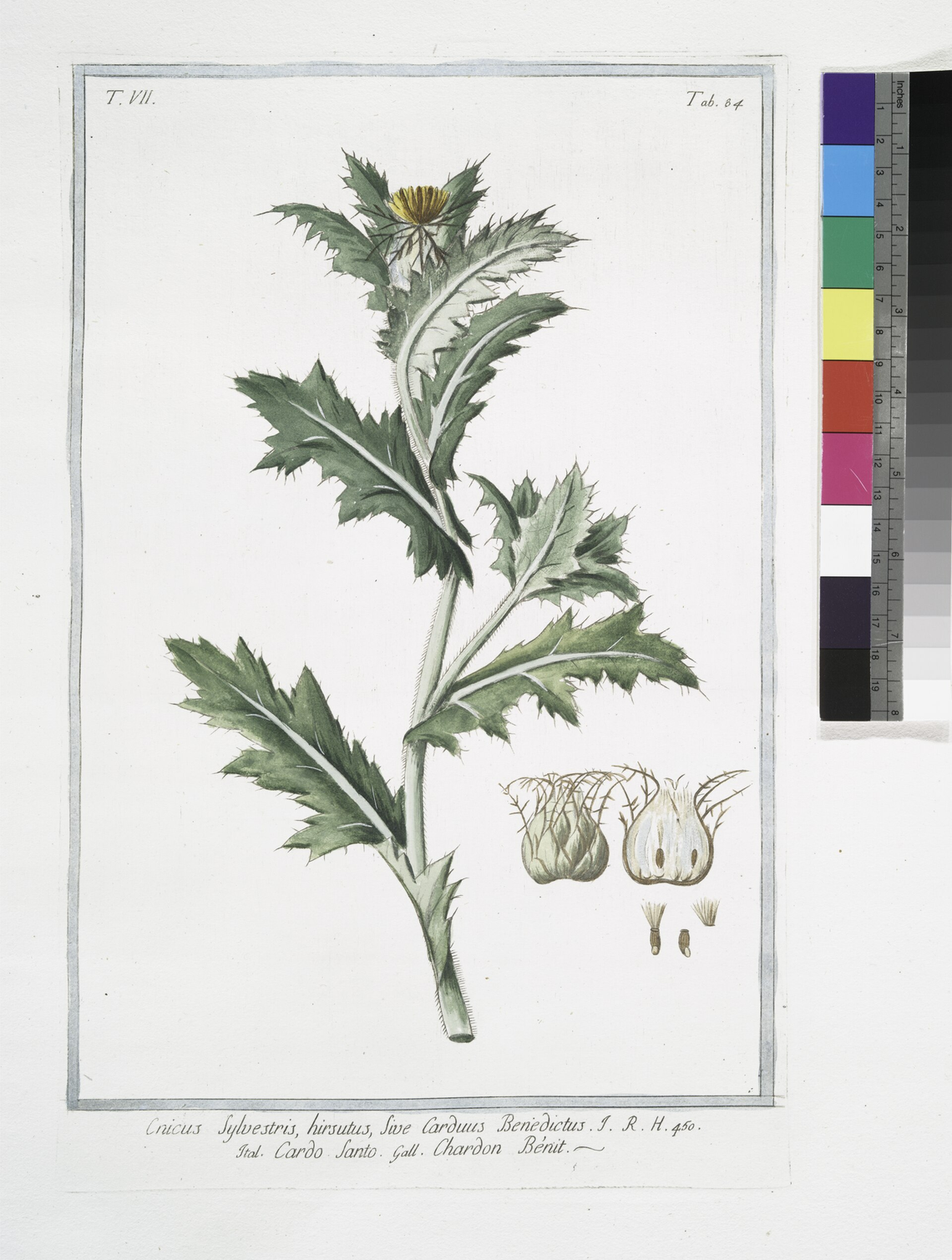
overall appearance
Blessed thistle is an annual herb growing 1-2 feet tall with a branching, spreading growth habit and distinctive spiny appearance.
roots
Shallow taproot system with fibrous secondary roots. Annual root system dies with the plant each year.
stem
Erect, branching stems are hairy, grooved, and often reddish-tinged. Stems become woody toward the base as the plant matures.
leaves
Deeply lobed, lance-shaped leaves are covered with soft spines and fine hairs. Leaves are pale green with prominent white veining.
flowers
Yellow flower heads are surrounded by spiny bracts and appear at stem tips from late spring through summer. Each head contains numerous small tubular flowers.
fruits/seeds
Small, brown achenes (seeds) are topped with bristly pappus that aids in wind dispersal. Seeds are produced abundantly.
Active Compounds
Traditional Uses
- Digestive stimulant and appetite enhancement
- Liver and gallbladder support
- Lactation support in nursing mothers
- Fever reduction
- Wounds and skin conditions
- Respiratory congestion
Modern Applications
- Bitter digestive tonic
- Liver detoxification support
- Galactagogue (promotes milk production)
- Anti-inflammatory applications
- Antimicrobial effects
⚠️ Safety Information
Contraindications
- Pregnancy (may stimulate uterine contractions)
- Allergy to Asteraceae family plants
- Gastric or duodenal ulcers
- Gallstones without professional supervision
Side Effects
- Gastric irritation with large doses
- Nausea and vomiting in sensitive individuals
- Allergic reactions in susceptible people
- Contact dermatitis from handling fresh plant
Drug Interactions
- May enhance effects of diabetes medications
- Possible interactions with blood-thinning medications
- May affect absorption of other medications due to bitter compounds
Parts Used
- Aerial parts (leaves, stems, flowers) collected during flowering
- Occasionally seeds
Preparation Methods
1-2 tsp dried herb per cup water, steep 10-15 minutes
Simmer for stronger bitter preparation
1:5 ratio in 40% alcohol, 1-3 ml three times daily
Fresh crushed leaves for external application
For topical skin applications
Related Plants
Arnica
Arnica montana
Bhringaraj
Eclipta prostrata
Burdock
Arctium lappa
Andrographis
Andrographis paniculata
Ashitaba
Angelica keiskei
Basil
Ocimum basilicum