Description
overall appearance
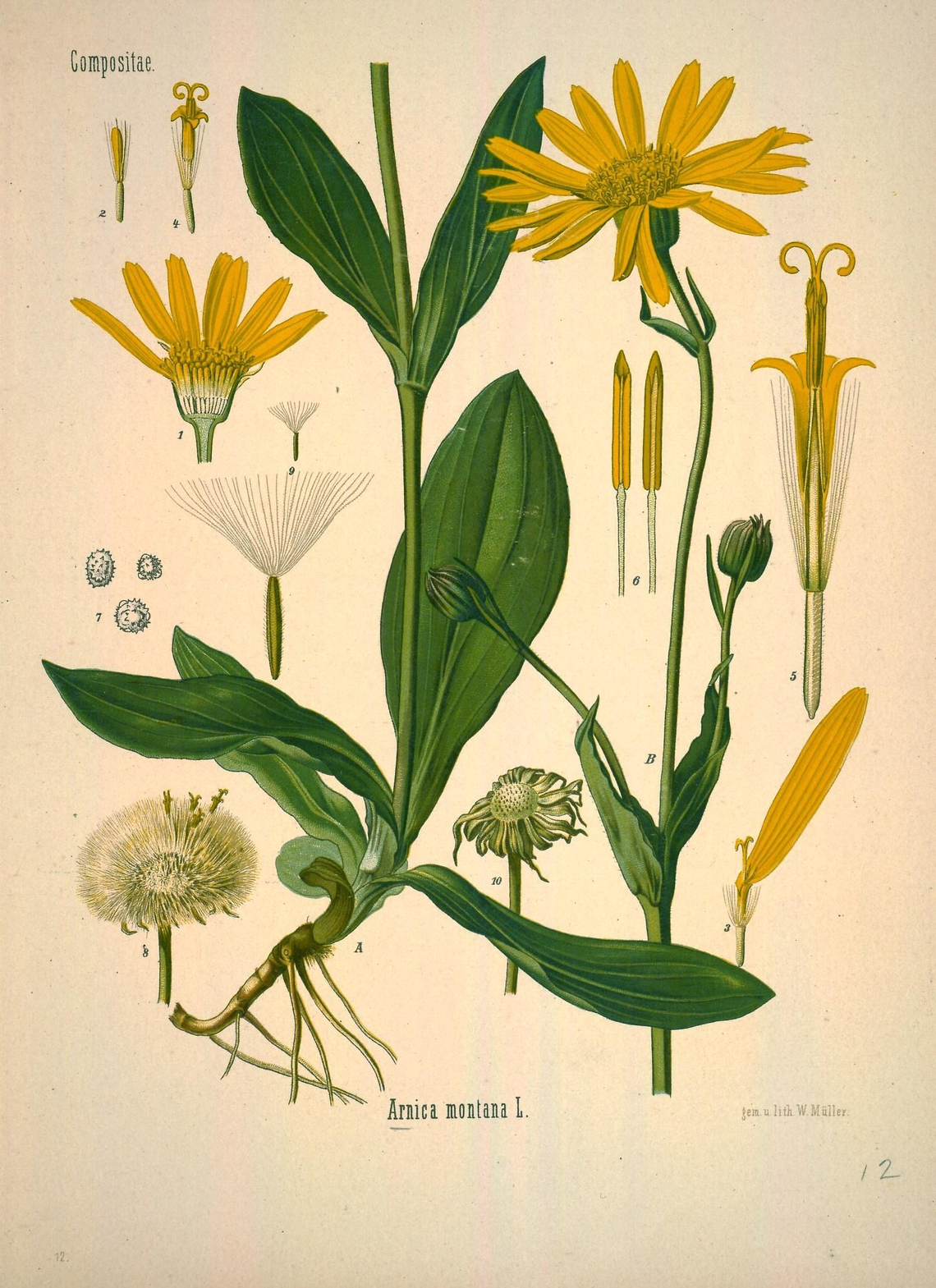
Arnica is a perennial herb growing 1-2 feet tall with a basal rosette of leaves and distinctive bright yellow daisy-like flowers.
roots
Creeping rhizome system spreads horizontally underground, producing new shoots and forming colonies in suitable habitat.
stem
Erect, hairy flower stems arise from basal rosette, typically bearing 1-3 flower heads at the top.
leaves
Basal rosette of oval leaves 2-3 inches long with parallel veins. Leaves are light green, hairy, and arranged in opposite pairs.
flowers
Bright golden-yellow flower heads are 2-3 inches across with 10-15 ray petals around a central disc of tubular flowers.
fruits/seeds
Small achenes (seeds) are topped with white bristly pappus that aids in wind dispersal.
Active Compounds
Traditional Uses
- Bruises, sprains, and trauma injuries
- Muscle soreness and inflammation
- Wound healing and cuts
- Rheumatic conditions
- Chilblains and frostbite
- Insect bites and stings
Modern Applications
- Topical anti-inflammatory for injuries
- Bruise and swelling reduction
- Post-surgical healing support
- Sports injury treatment
- Homeopathic preparations for trauma
- Cosmetic applications for skin health
⚠️ Safety Information
Contraindications
- Internal use (toxic when taken internally)
- Broken skin or open wounds
- Allergy to Asteraceae family plants
- Pregnancy and breastfeeding (external use only)
Side Effects
- Contact dermatitis in sensitive individuals
- Skin irritation with prolonged use
- Systemic toxicity if used internally
- Allergic reactions in susceptible people
Drug Interactions
- No significant interactions with topical use
- Avoid internal use which could interact with medications
- May enhance effects of other topical anti-inflammatory preparations
Parts Used
- Flower heads (primary medicinal part)
- Occasionally leaves and roots
Preparation Methods
1:10 ratio in 50% alcohol for external use only
Flowers infused in carrier oil for massage
Traditional preparation with beeswax and oils
Diluted tincture applied on cloth to affected area
Highly diluted preparations for internal use
Related Plants
Bhringaraj
Eclipta prostrata
Blessed Thistle
Cnicus benedictus
Burdock
Arctium lappa
Witch Hazel
Hamamelis virginiana
Basil
Ocimum basilicum
Buchu
Agathosma betulina