Description
overall appearance
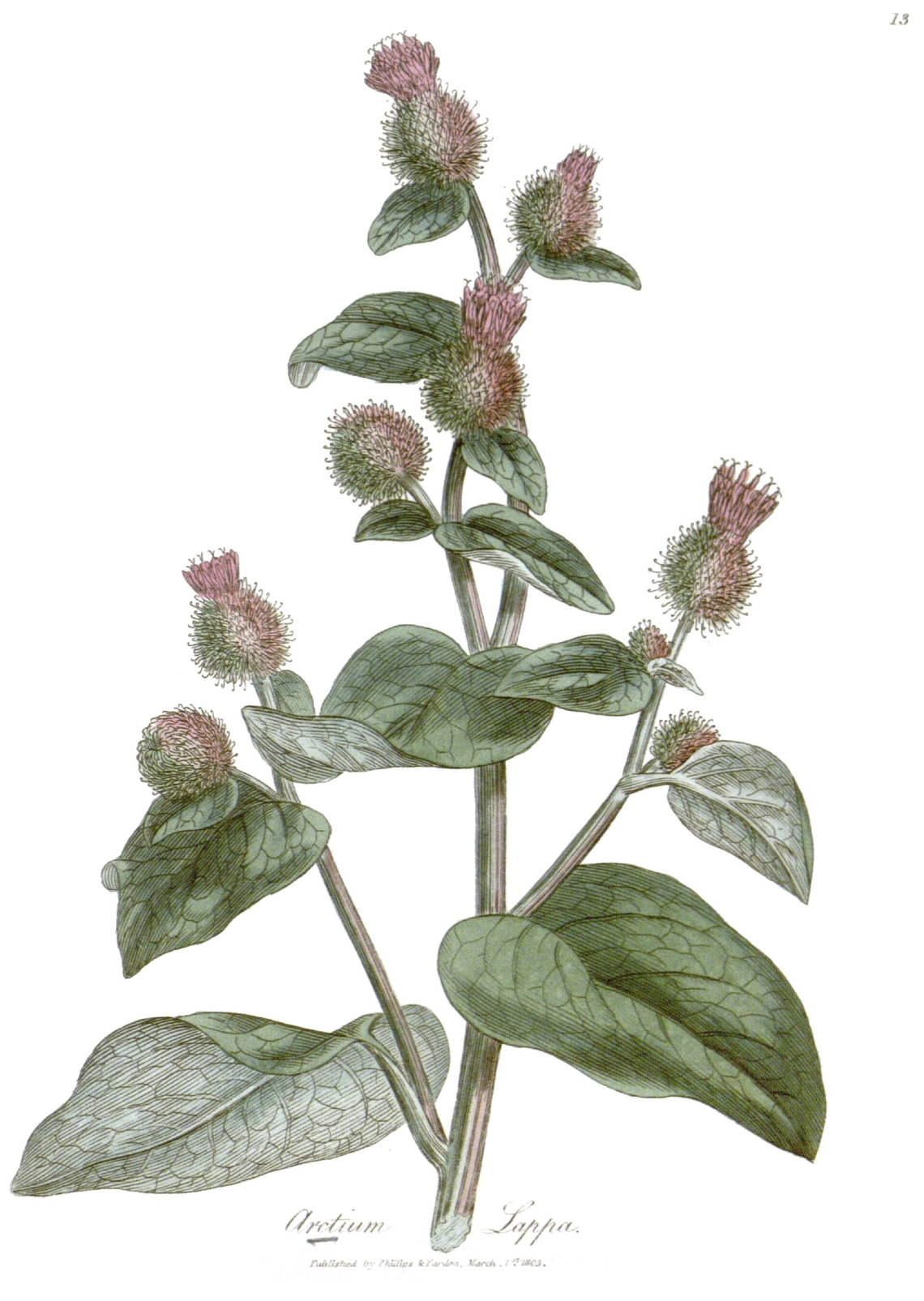
Biennial herb growing 3-8 feet tall in second year with large basal leaves and distinctive burr-like flower heads.
roots
Large, deep taproot extending 2-3 feet deep; brown exterior with white interior; fleshy and carrot-like.
stem
Tall, robust, branching stem in second year; hollow and ribbed; can reach 8 feet in height.
leaves
Very large basal leaves up to 18 inches long; heart-shaped with woolly undersides; smaller leaves alternate up stem.
flowers
Purple to pink thistle-like flowers in globular heads; surrounded by hooked bracts that form burrs; bloom in second year.
fruits/seeds
Brown achenes with pappus; dispersed by animals via burr attachment; inspired invention of Velcro.
Active Compounds
Traditional Uses
- Skin conditions including eczema and psoriasis
- Blood purification and detoxification
- Liver and kidney support
- Arthritis and joint inflammation
- Digestive disorders
- Cancer prevention and support
Modern Applications
- Skin health and dermatological conditions
- Liver detoxification support
- Blood sugar regulation
- Anti-inflammatory and antioxidant effects
- Prebiotic support for gut health
- Heavy metal detoxification
⚠️ Safety Information
Contraindications
- Known allergies to Asteraceae family plants
- Pregnancy and breastfeeding (insufficient safety data)
- Dehydration (mild diuretic effects)
Side Effects
- Generally very well-tolerated
- Possible allergic reactions in sensitive individuals
- Mild diuretic effects
- Contact dermatitis from fresh plant in sensitive people
Drug Interactions
- Diabetes medications (may enhance blood sugar lowering)
- Diuretic medications (may enhance effects)
- Blood-thinning medications (theoretical interaction)
Parts Used
- Roots (primary medicinal use - first year roots preferred)
- Leaves (topical applications)
- Seeds (traditionally for skin conditions)
- Young leaf stalks (culinary and mild medicinal)
Preparation Methods
1-2 teaspoons dried root per cup; steep 15-20 minutes
1 tablespoon chopped fresh root per cup; simmer 20-30 minutes
1:5 ratio with 50% alcohol; macerate chopped fresh root 4-6 weeks
Fresh crushed leaves for topical skin applications
Fresh or dried root in carrier oil for topical skin care
Related Plants
Arnica
Arnica montana
Bhringaraj
Eclipta prostrata
Blessed Thistle
Cnicus benedictus
Turmeric
Curcuma longa
Birch
Betula spp.
Bitter Melon
Momordica charantia