Description
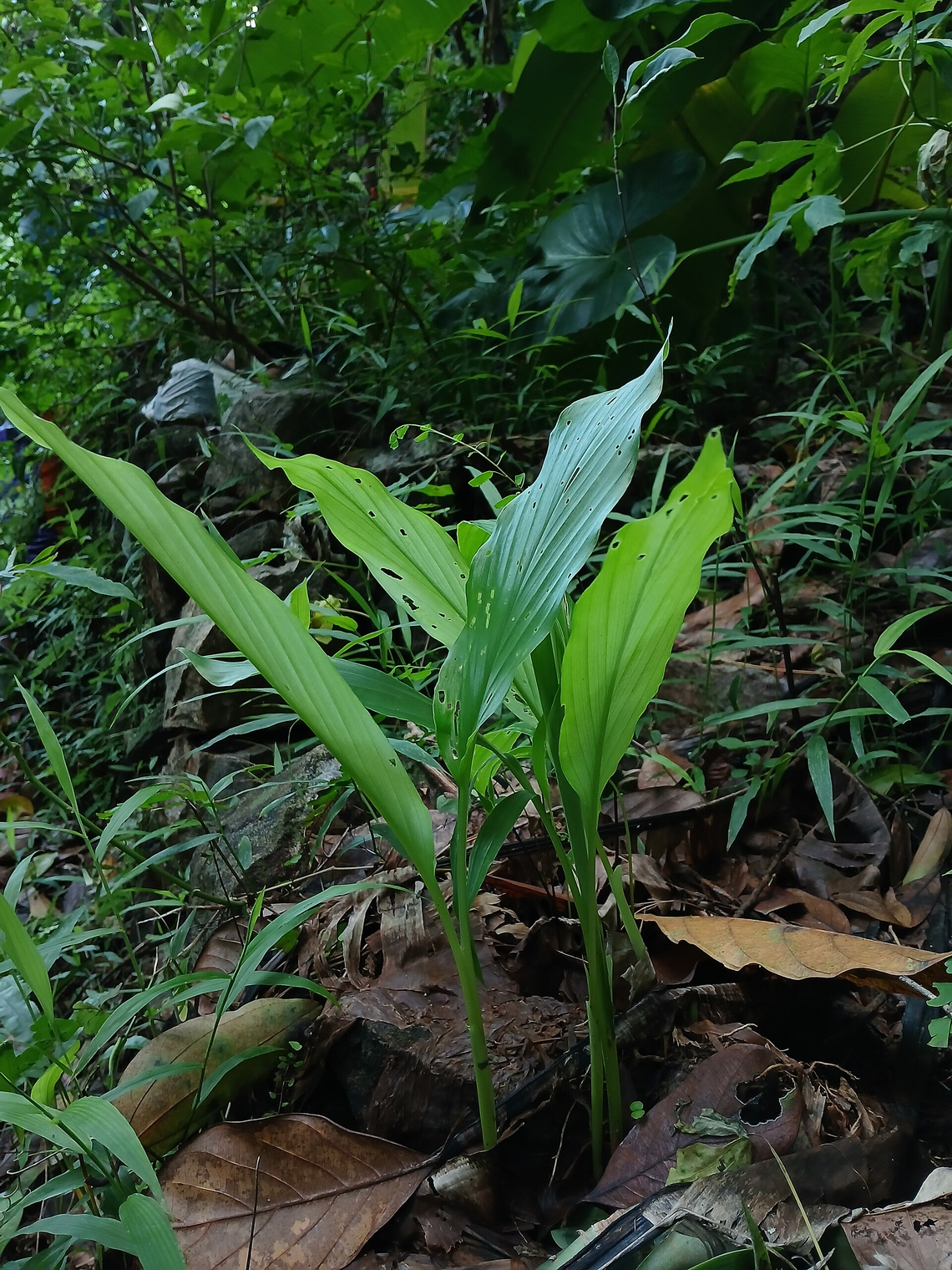
overall appearance
Perennial herbaceous plant growing 3-5 feet tall with large, broad leaves and distinctive underground rhizomes that are bright orange-yellow when fresh.
roots
Thick, branched rhizome system with primary rhizome (mother rhizome) and secondary finger-like branches; externally brown, internally bright orange-yellow with aromatic, slightly bitter taste.
stem
Short, thick underground stem (rhizome) with leaf sheaths forming a false stem (pseudostem) above ground reaching 2-4 feet in height.
leaves
Large, oblong-lanceolate leaves 8-20 inches long and 4-8 inches wide, with parallel venation, smooth margins, and a prominent midrib; leaves emerge directly from the rhizome.
flowers
Rare flowering in cultivation; when present, flowers are white to pale yellow, arranged in dense spikes 4-6 inches long, emerging from the center of the leaf cluster.
fruits/seeds
Rarely produces viable seeds; propagated primarily through rhizome division.
Active Compounds
Traditional Uses
- Ayurvedic medicine for inflammation, digestive disorders, skin conditions
- Traditional Chinese Medicine for blood stagnation and qi circulation
- Wound healing and antiseptic applications
- Treatment of arthritis and joint pain
- Liver protection and digestive aid
- Respiratory conditions and allergies
Modern Applications
- Powerful anti-inflammatory effects
- Antioxidant protection against free radicals
- Potential anti-cancer properties
- Cardiovascular health support
- Cognitive function and neuroprotection
- Digestive health and ulcer prevention
- Skin health and wound healing
⚠️ Safety Information
Contraindications
- Gallstones or bile duct obstruction
- Bleeding disorders or before surgery
- Iron deficiency anemia (may reduce iron absorption)
- Pregnancy in therapeutic doses
Side Effects
- Gastrointestinal upset with high doses
- Increased bleeding risk
- Kidney stone formation in susceptible individuals
- Skin irritation with topical use in sensitive people
Drug Interactions
- Blood-thinning medications (warfarin, aspirin)
- Diabetes medications (may enhance blood sugar lowering)
- Stomach acid reducers
- Chemotherapy drugs (may interfere with some treatments)
Parts Used
- Rhizomes (fresh or dried and powdered)
- Occasionally young shoots and leaves
Preparation Methods
1 teaspoon powder in warm milk or water with black pepper
Fresh rhizome sliced and simmered 15-20 minutes
1:5 ratio in 60% alcohol, 2-4 ml three times daily
Fresh paste applied to wounds, skin conditions
Turmeric powder in coconut or sesame oil for topical use
Related Plants
Cardamom
Elettaria cardamomum
Ginger
Zingiber officinale
Bhringaraj
Eclipta prostrata
Andrographis
Andrographis paniculata
Arjuna
Terminalia arjuna
Gotu Kola
Centella asiatica