Description
overall appearance
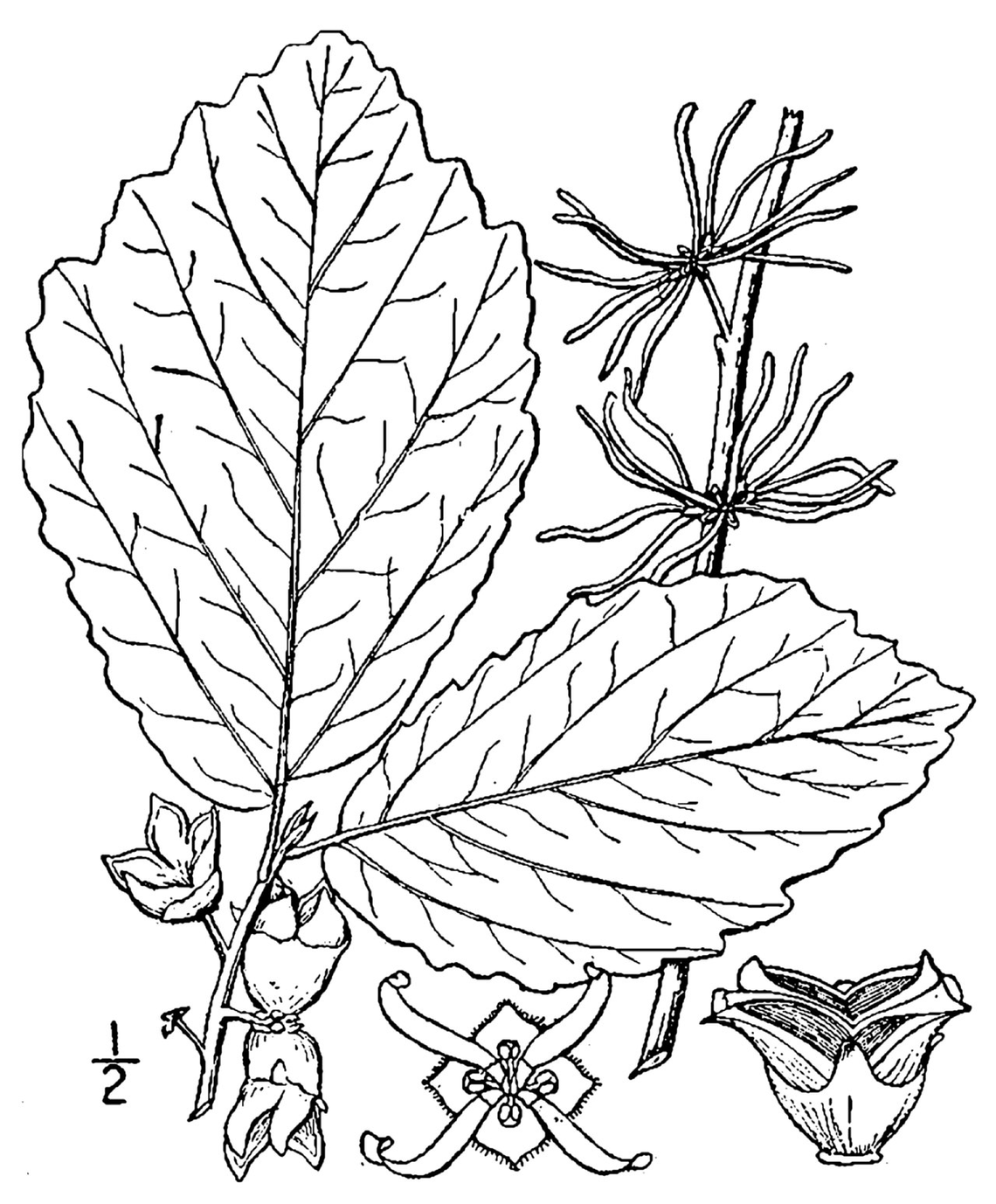
Deciduous shrub or small tree reaching 15-20 feet tall with distinctive late-season yellow flowers.
roots
Shallow, spreading root system; forms colonies through root suckers in suitable habitat.
stem
Multiple stems from base; smooth gray bark when young, becoming slightly furrowed; flexible branches.
leaves
Alternate, oval leaves 3-6 inches long; asymmetrical base; wavy margins; turn bright yellow in fall.
flowers
Distinctive yellow flowers with four narrow, ribbon-like petals; appear in late fall after leaves drop.
fruits/seeds
Woody capsules that explosively discharge two black seeds; mature the year after flowering.
Active Compounds
Traditional Uses
- Hemorrhoids and varicose veins
- Cuts, bruises, and minor wounds
- Insect bites and stings
- Eye irritation and conjunctivitis
- Diarrhea and digestive inflammation
- Skin conditions and eczema
Modern Applications
- Topical astringent for skin conditions
- Hemorrhoid treatment and relief
- Anti-inflammatory skin care
- Wound healing and tissue repair
- Varicose vein and circulation support
- Natural deodorant and skin toner
⚠️ Safety Information
Contraindications
- Large internal doses (high tannin content)
- Damaged or severely irritated skin
- Eye preparations without proper dilution
- Known allergies to tannin-rich plants
Side Effects
- Generally very well-tolerated topically
- Possible skin dryness with excessive use
- Digestive upset with large internal doses
- Rare allergic reactions in sensitive individuals
Drug Interactions
- Iron supplements (tannins may reduce absorption)
- Generally no significant interactions with topical use
- Minimal interactions with occasional internal use
Parts Used
- Bark (primary commercial use)
- Twigs and branches
- Leaves (secondary use)
- Witch hazel water (steam distillation product)
Preparation Methods
Commercial steam-distilled preparation (most common)
Bark simmered 20-30 minutes for stronger astringent effects
1:5 ratio with 50% alcohol; macerate bark 4-6 weeks
Fresh crushed leaves applied to wounds and inflammation
Cloth soaked in witch hazel water for topical application
Related Plants
Plantain
Plantago major
Aloe Vera
Aloe barbadensis
Calendula
Calendula officinalis
Chickweed
Stellaria media
Coleus / Forskolin
Plectranthus barbatus (syn. Coleus forskohlii)
Coptis / Goldthread
Coptis chinensis