Description
overall appearance
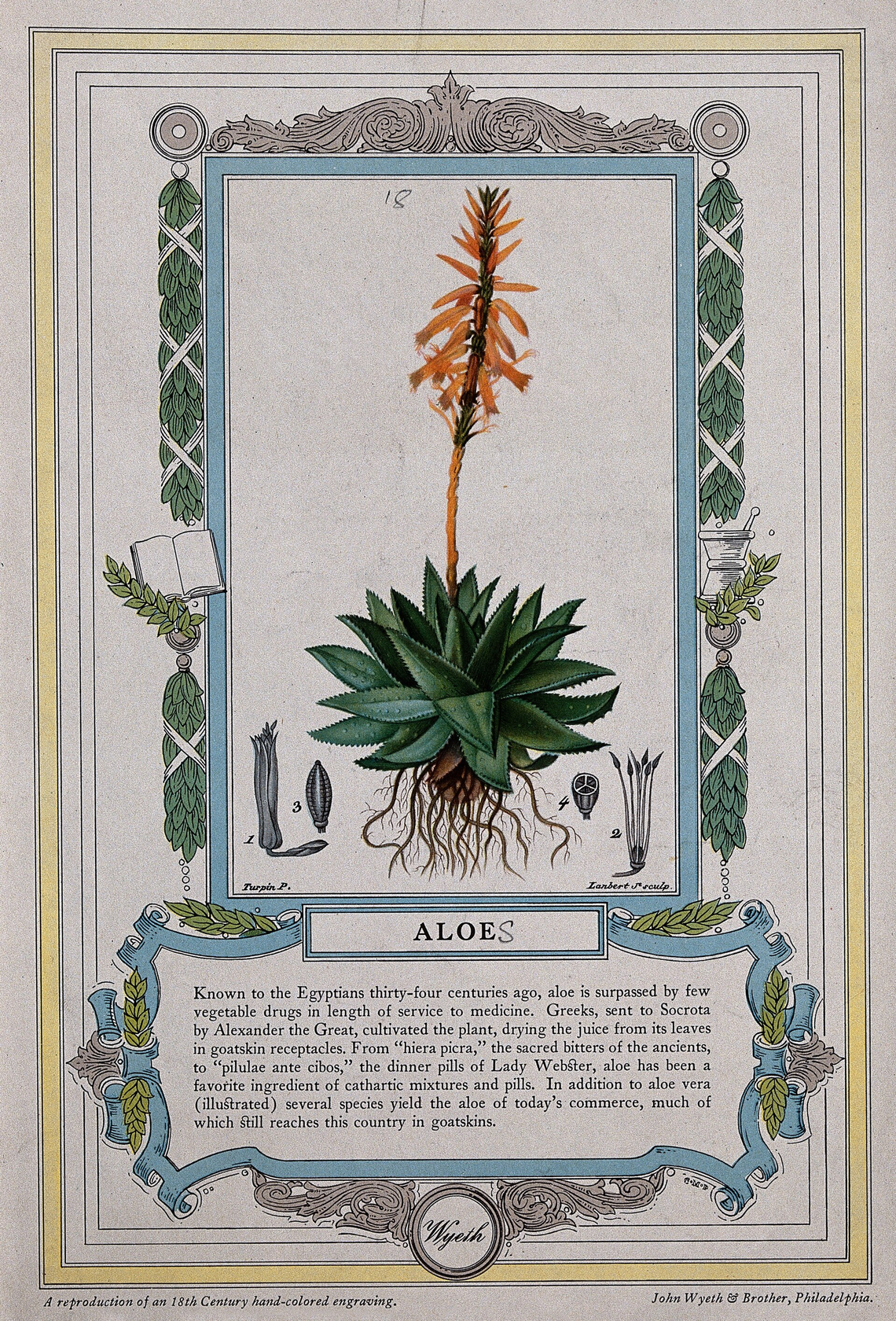
Succulent perennial forming rosettes of thick, fleshy leaves 12-24 inches long, with mature plants reaching 24-36 inches in height and width.
roots
Shallow, spreading root system with limited depth but extensive lateral spread to capture surface water.
stem
Short, thick stem at base of rosette, often not visible above ground level.
leaves
Thick, fleshy, lance-shaped leaves 12-24 inches long and 2-4 inches wide, blue-green to gray-green with serrated margins and white spots in young plants.
flowers
Tubular yellow to orange flowers arranged in dense racemes on tall stalks 24-36 inches high; blooms in summer in mature plants (3+ years).
fruits/seeds
Triangular capsules containing numerous flat, winged seeds; rarely produces viable seeds in cultivation.
Active Compounds
Traditional Uses
- Ancient Egyptian medicine for wound healing, skin conditions
- Traditional Chinese Medicine for heat clearing, liver support
- Folk medicine worldwide for burns, cuts, skin inflammation
- Digestive disorders and constipation (latex)
- Eye conditions and infections
- Hair and scalp health
Modern Applications
- Burn treatment and wound healing acceleration
- Skin moisturizing and anti-aging effects
- Anti-inflammatory for various skin conditions
- Digestive health support (gel, not latex)
- Immune system modulation
- Potential anti-cancer properties
- Diabetic wound healing
⚠️ Safety Information
Contraindications
- Pregnancy and breastfeeding (latex forms)
- Inflammatory bowel diseases
- Kidney disorders
- Known allergy to plants in Liliaceae family
Side Effects
- Digestive upset with internal latex use
- Skin irritation in sensitive individuals
- Electrolyte imbalances with chronic latex use
- Potential kidney damage with long-term latex use
Drug Interactions
- Diabetes medications (may enhance blood sugar lowering)
- Blood-thinning medications (potential interaction)
- Diuretic medications (may enhance potassium loss)
- Cardiac glycosides (dangerous interaction with latex)
Parts Used
- Leaf gel (inner clear mucilage)
- Leaf latex (yellow bitter liquid from outer layer)
- Whole leaf preparations
Preparation Methods
Direct application from freshly cut leaf
Fresh gel blended with water for internal use
Concentrated gel powder for internal use
Gel infused in carrier oils for topical use
Gel incorporated into topical preparations
Related Plants
Amla / Indian Gooseberry
Phyllanthus emblica
Celery Seed
Apium graveolens
Coleus / Forskolin
Plectranthus barbatus (syn. Coleus forskohlii)
Coptis / Goldthread
Coptis chinensis
Dill
Anethum graveolens
Garlic
Allium sativum