Description
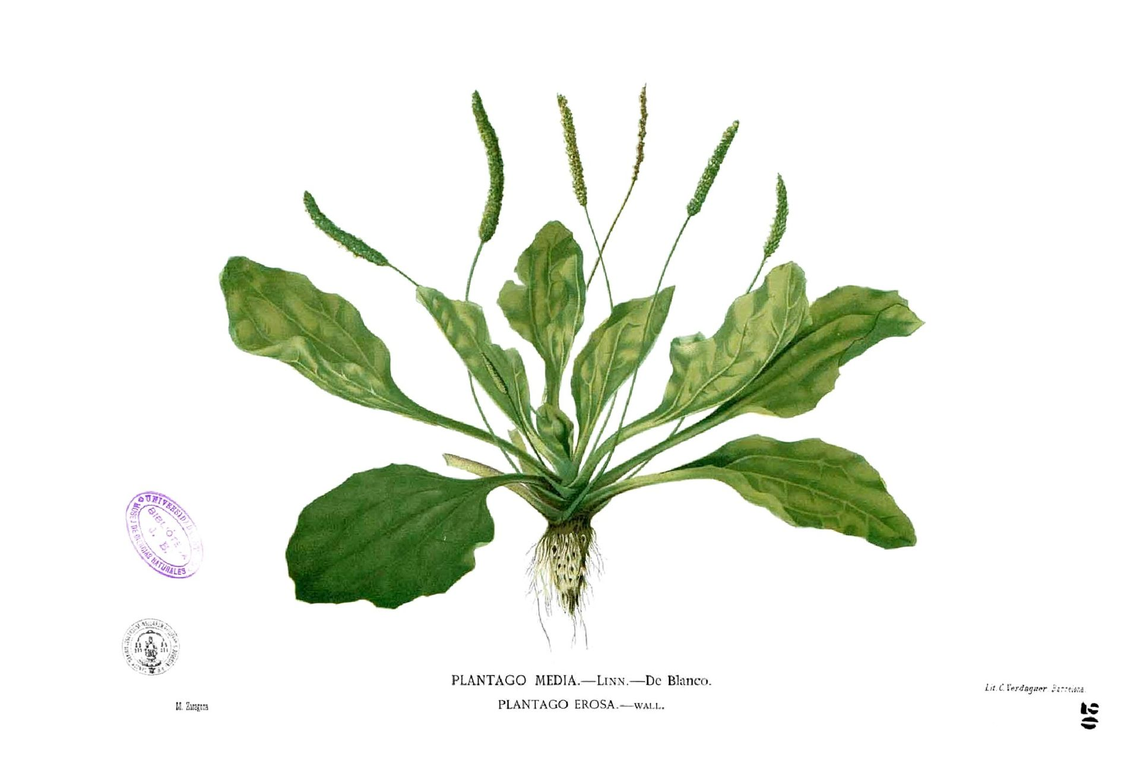
overall appearance
Perennial herb with basal rosette of leaves and distinctive tall flower spikes; no true above-ground stem.
roots
Fibrous root system with short rhizome; shallow but extensive; helps stabilize compacted soils.
stem
Flower stalks (scapes) arise from center of leaf rosette; leafless and ribbed; 6-18 inches tall.
leaves
Basal rosette of oval leaves 2-6 inches long; prominent parallel veins; smooth margins; thick and somewhat rubbery texture.
flowers
Dense cylindrical spikes of tiny, inconspicuous greenish-white flowers; stamens protrude creating fuzzy appearance.
fruits/seeds
Small capsules containing 4-20 tiny brown seeds; mucilaginous when wet; important bird food.
Active Compounds
Traditional Uses
- Wounds, cuts, and skin injuries
- Insect bites and stings
- Respiratory ailments including coughs and bronchitis
- Digestive disorders and inflammation
- Eye infections and irritation
- Urinary tract infections
Modern Applications
- Wound healing and tissue repair
- Anti-inflammatory and antimicrobial effects
- Respiratory tract support
- Digestive tract protection and healing
- Skin conditions and dermatitis
- Natural first aid for minor injuries
⚠️ Safety Information
Contraindications
- Known allergies to Plantaginaceae family plants
- Bowel obstruction (seeds only)
- None significant for leaf preparations
Side Effects
- Generally extremely well-tolerated
- Rare allergic reactions in sensitive individuals
- Seeds may cause digestive upset if not taken with adequate water
Drug Interactions
- Lithium (may affect elimination - theoretical)
- Digoxin (seeds may interfere with absorption)
- Generally no significant interactions with leaf preparations
Parts Used
- Leaves (fresh or dried - primary medicinal use)
- Seeds (psyllium-like properties)
- Whole plant (topical applications)
- Fresh plant juice
Preparation Methods
2-3 teaspoons dried leaves per cup; steep 10-15 minutes
Not typically used; fresh applications preferred
1:5 ratio with 40% alcohol; macerate fresh leaves 2-3 weeks
Fresh crushed leaves applied directly to wounds and bites
Fresh or dried leaves in carrier oil for skin care
Related Plants
Bacopa
Bacopa monnieri
Marshmallow
Althaea officinalis
Slippery Elm
Ulmus rubra
Chickweed
Stellaria media
Coleus / Forskolin
Plectranthus barbatus (syn. Coleus forskohlii)
Coltsfoot
Tussilago farfara