Description
overall appearance
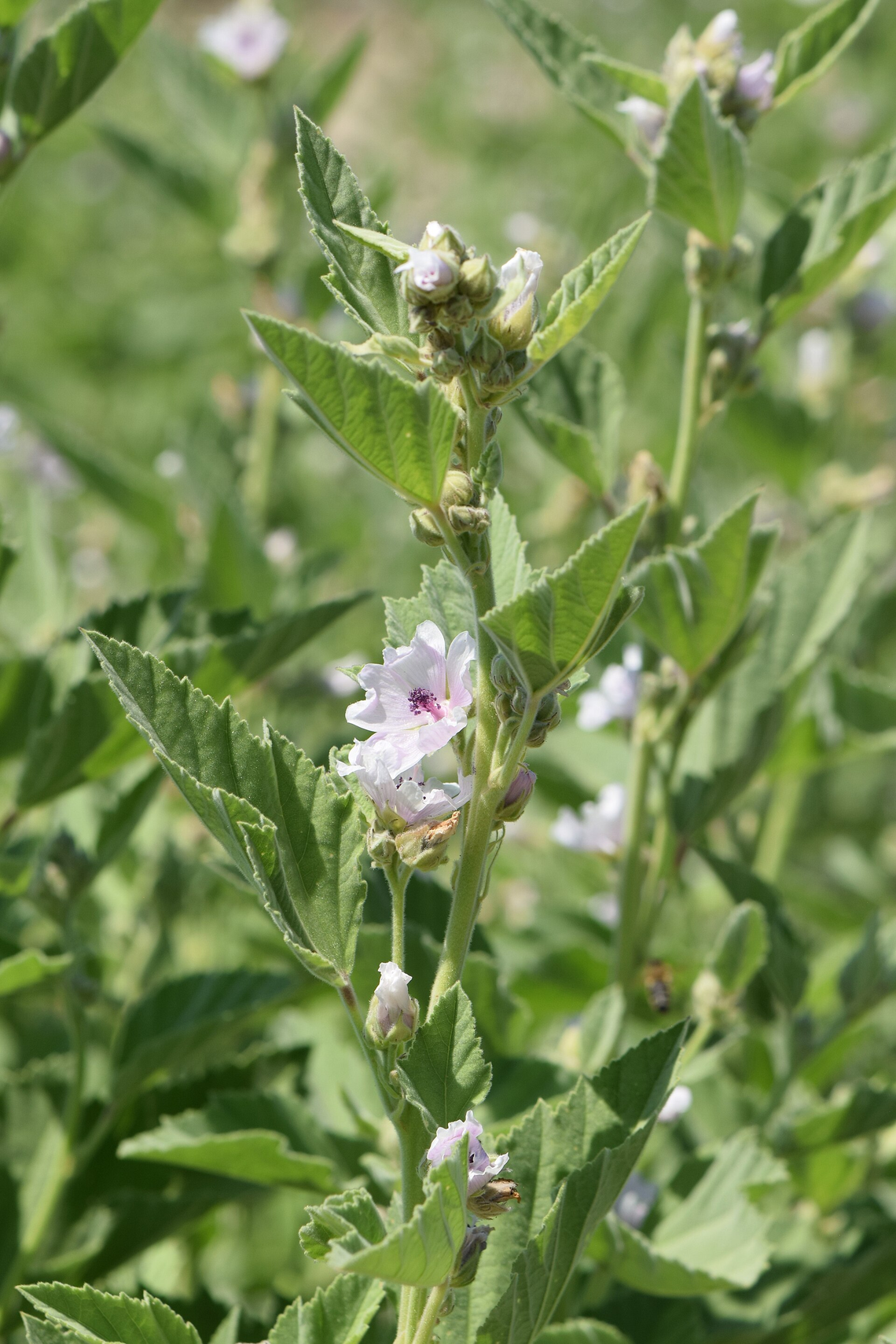
Tall perennial herb growing 2-6 feet tall with soft, velvety leaves and pale pink flowers; entire plant covered with dense, soft hairs.
roots
Thick, fleshy, white taproot that can grow 1-2 feet long; roots are mucilaginous when fresh and turn yellowish when dried.
stem
Erect, unbranched or slightly branched stems covered with soft, velvety hairs; stems are round and can reach 3-6 feet in height.
leaves
Alternate, heart-shaped to oval leaves 2-3 inches long with serrated margins; leaves are soft and velvety due to dense covering of stellate hairs.
flowers
Pale pink to white flowers 1-2 inches across with five petals; flowers grow in clusters in leaf axils and bloom from July to September.
fruits/seeds
Disc-shaped fruits that split into numerous kidney-shaped segments (mericarps); each segment contains one seed and is covered with fine hairs.
Active Compounds
Traditional Uses
- Respiratory conditions (coughs, bronchitis, sore throat)
- Digestive inflammation (gastritis, ulcers, colitis)
- Urinary tract irritation and cystitis
- Skin conditions (wounds, burns, eczema)
- Dental problems and mouth sores
- Eye irritation and inflammation
- Mastitis and breast inflammation
Modern Applications
- Respiratory tract soothing and cough relief
- Digestive tract protection and healing
- Anti-inflammatory effects for mucous membranes
- Skin healing and wound care
- Gastroesophageal reflux disease (GERD) support
- Irritable bowel syndrome (IBS) management
- Topical applications for skin irritation
⚠️ Safety Information
Contraindications
- No known absolute contraindications
- Diabetes (may affect blood sugar absorption)
- Medication timing (may delay drug absorption)
Side Effects
- Generally very safe with minimal side effects
- Rare allergic reactions in sensitive individuals
- Possible blood sugar changes (theoretical)
- May slow absorption of other medications
Drug Interactions
- May delay absorption of medications taken simultaneously
- Blood sugar medications (theoretical interaction)
- Lithium (may affect excretion)
Parts Used
- Roots (highest mucilage content)
- Leaves (moderate mucilage content)
- Flowers (mild mucilage content)
Preparation Methods
2-3 tablespoons dried root in cold water for 2-8 hours, strain
1-2 teaspoons dried leaves per cup boiling water, steep 10 minutes
1 tablespoon root per cup water, simmer 15 minutes
Cold infusion concentrated with honey for cough relief
Fresh leaves or root powder mixed with water for topical use
Related Plants
Cacao
Theobroma cacao
Hibiscus
Hibiscus sabdariffa
Linden / Tilia
Tilia cordata
Goldenseal
Hydrastis canadensis
Plantain
Plantago major
Slippery Elm
Ulmus rubra