Description
overall appearance
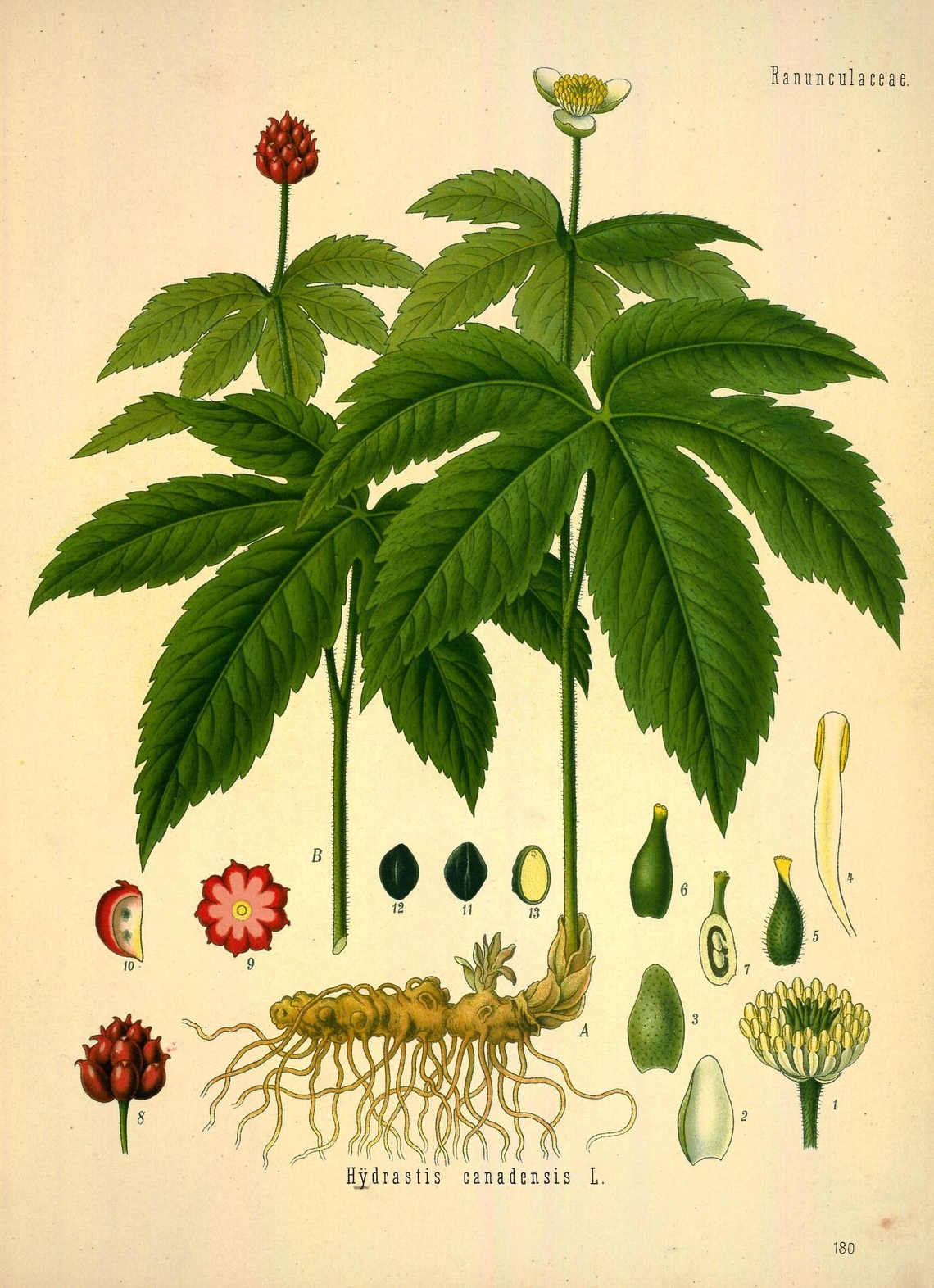
Perennial herb growing 6-12 inches tall with distinctive palmate leaves and bright yellow rhizome system.
roots
Thick, yellow-orange rhizome (underground stem) with bright yellow interior; bitter taste; fibrous roots extend from rhizome.
stem
Simple, erect stem; hairy texture; usually bearing two leaves; dies back completely in winter.
leaves
Two palmate leaves with 5-7 deeply lobed segments; serrated margins; wrinkled texture; alternate arrangement.
flowers
Single, small, inconspicuous greenish-white flower; no petals, only sepals; appears in spring before leaves fully develop.
fruits/seeds
Red, raspberry-like aggregate fruit containing 10-30 black seeds; matures in summer; birds disperse seeds.
Active Compounds
Traditional Uses
- Digestive disorders and infections
- Respiratory infections and sinusitis
- Eye infections and conjunctivitis
- Wound healing and skin infections
- Urinary tract infections
- Digestive inflammation and ulcers
Modern Applications
- Antimicrobial and antibacterial effects
- Digestive health and gastric protection
- Upper respiratory tract infections
- Blood sugar regulation support
- Anti-inflammatory and immune support
- Topical antimicrobial applications
⚠️ Safety Information
Contraindications
- Pregnancy and breastfeeding (uterine stimulant)
- High blood pressure (may increase)
- Heart conditions (cardiovascular effects)
- Liver disease (processing burden)
Side Effects
- Digestive upset and nausea with large doses
- Possible blood pressure elevation
- Skin and mucous membrane irritation
- Allergic reactions in sensitive individuals
Drug Interactions
- Blood pressure medications
- Blood-thinning medications
- Diabetes medications (may enhance effects)
- Liver-metabolized drugs
Parts Used
- Rhizome (underground stem - primary medicinal use)
- Roots (secondary use)
- Dried powder from rhizome
- Fresh rhizome (rarely used due to sustainability concerns)
Preparation Methods
1/2 teaspoon dried root per cup; steep 15-20 minutes
Small amounts simmered 10-15 minutes for stronger effects
1:5 ratio with 60% alcohol; macerate dried root 4-6 weeks
Ground root mixed with water for topical antimicrobial use
Very dilute preparation for conjunctivitis (professional guidance recommended)
Related Plants
Black Cohosh
Cimicifuga racemosa
Coptis / Goldthread
Coptis chinensis
Marshmallow
Althaea officinalis
Plantain
Plantago major
Slippery Elm
Ulmus rubra
Birch
Betula spp.