Description
overall appearance
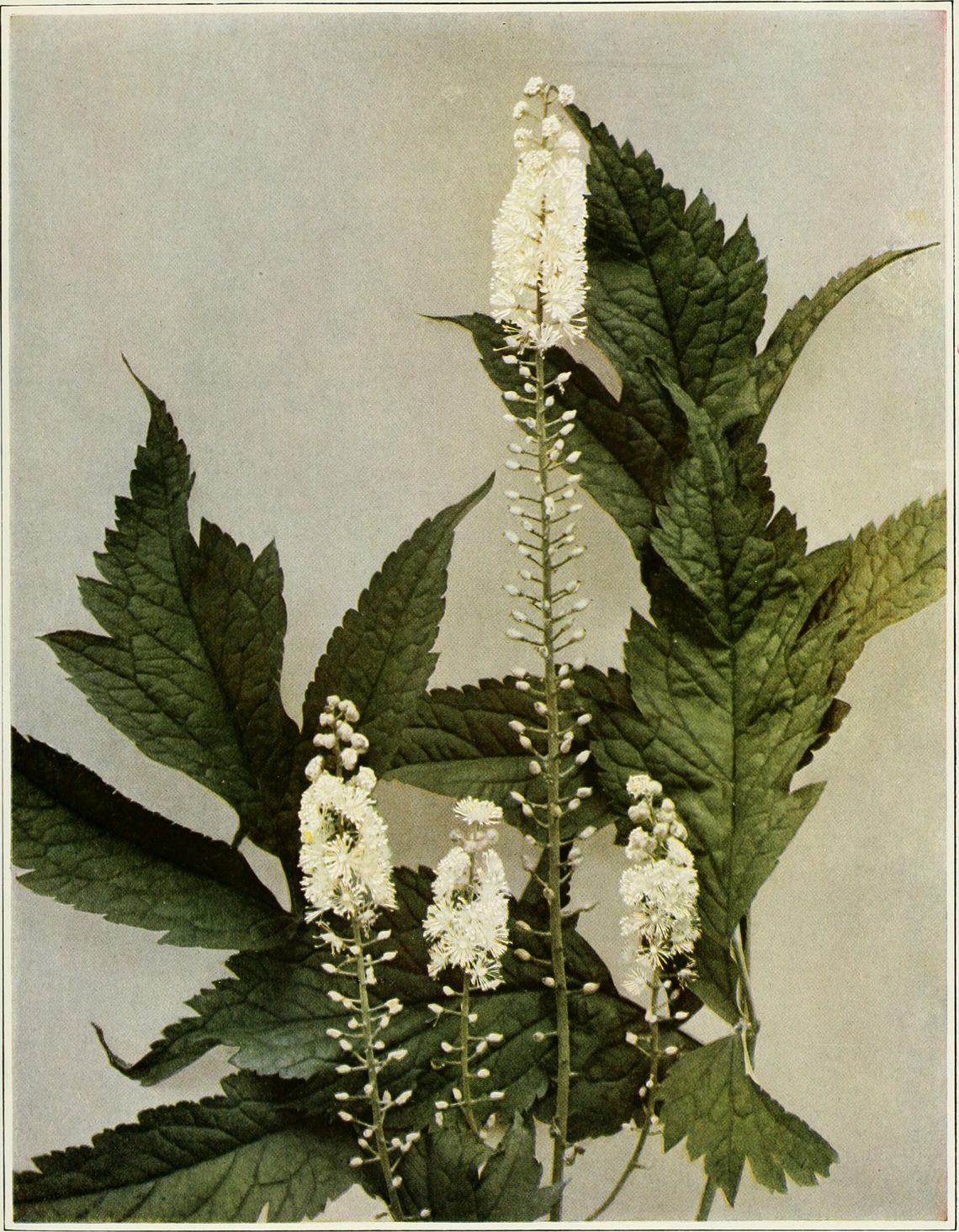
Tall perennial herb growing 3-8 feet tall with large, compound leaves and distinctive tall spikes of white, feathery flowers.
roots
Thick, dark, knotted rhizomes with fibrous roots; rhizomes are blackish-brown externally, whitish internally, with a bitter taste and unpleasant odor.
stem
Smooth, tall stems that are green to purplish, rising directly from the rhizome; stems can reach 6-8 feet in height during flowering.
leaves
Large, alternate, twice or thrice pinnately compound leaves with serrated leaflets; leaflets are 1-3 inches long and dark green with prominent veining.
flowers
Small, white flowers lacking petals but with numerous conspicuous stamens, arranged in tall, dense, bottlebrush-like racemes that can be 1-3 feet long.
fruits/seeds
Small, dry, pod-like follicles containing several small, flattened seeds; seeds have a scale-like appendage and are dispersed in late summer.
Active Compounds
Traditional Uses
- Menstrual irregularities and painful menstruation
- Menopause symptoms and hot flashes
- Childbirth facilitation and labor pains
- Arthritis and rheumatic conditions
- Nervous conditions and anxiety
- Snakebite treatment (historical use)
- Respiratory conditions and coughs
Modern Applications
- Menopausal symptom relief (hot flashes, mood swings)
- Premenstrual syndrome (PMS) management
- Osteoporosis prevention support
- Anti-inflammatory effects for arthritis
- Anxiety and mood disorders
- Sleep disturbances related to menopause
⚠️ Safety Information
Contraindications
- Pregnancy and breastfeeding (may stimulate uterine contractions)
- Hormone-sensitive conditions (breast cancer, endometriosis)
- Liver disease or dysfunction
- Aspirin allergy (contains salicylates)
Side Effects
- Gastrointestinal upset or nausea
- Headache or dizziness
- Weight gain (uncommon)
- Breast tenderness
- Rare cases of liver toxicity
Drug Interactions
- Hormone replacement therapy (may have additive effects)
- Hepatotoxic medications (increased liver risk)
- Estrogen-containing medications
- Blood pressure medications (may enhance effects)
Parts Used
- Rhizomes and roots (primary medicinal part)
- Occasionally aerial parts in traditional preparations
Preparation Methods
1-2 teaspoons dried rhizome per cup water, simmer 15-20 minutes
1:5 ratio in 60% alcohol, 1-2 ml twice daily
20-40mg daily of extract standardized to triterpenes
1/2 teaspoon powdered root per cup hot water, steep 15 minutes
40-80mg standardized extract daily
Related Plants
Coptis / Goldthread
Coptis chinensis
Goldenseal
Hydrastis canadensis
Blue Cohosh
Caulophyllum thalictroides
Angelica
Angelica archangelica
Basil
Ocimum basilicum
Celery Seed
Apium graveolens