Description
overall appearance
Angelica is a tall biennial or short-lived perennial herb growing 4-8 feet tall with large compound leaves and distinctive umbrella-shaped flower clusters.
roots
Large, thick taproot is aromatic and can reach 12 inches long. The root is the most medicinally valued part of the plant.
stem
Hollow, thick stems are deeply grooved and can reach 2 inches in diameter. Stems are often purplish and covered with a whitish bloom.
leaves
Large, compound leaves are divided into toothed leaflets. Leaves can reach 3 feet long with inflated sheaths at the base.
flowers
Tiny white to greenish flowers are arranged in large, compound umbels (umbrella-shaped clusters) up to 10 inches across.
fruits/seeds
Flattened, oval fruits split into two parts when ripe. Seeds are aromatic and have been used as spice.
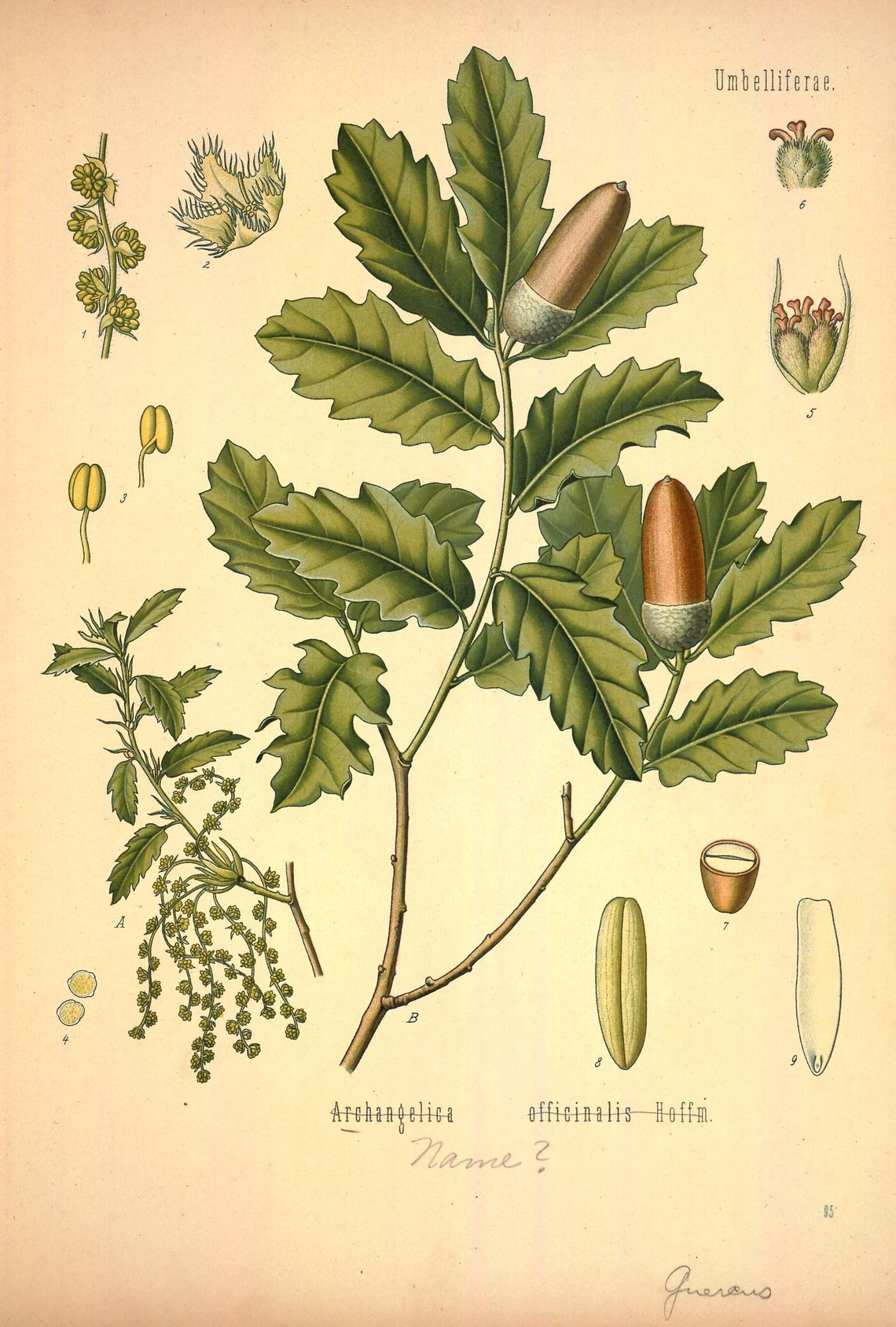
Active Compounds
Traditional Uses
- Digestive disorders and poor appetite
- Respiratory conditions and bronchitis
- Nervous exhaustion and anxiety
- Circulation and cardiovascular support
- Menstrual irregularities
- Rheumatism and muscle pain
Modern Applications
- Digestive bitter and carminative
- Expectorant for respiratory conditions
- Circulatory stimulant
- Antimicrobial and antifungal effects
- Adaptogenic support for stress
- Flavoring agent in liqueurs and perfumes
⚠️ Safety Information
Contraindications
- Pregnancy and breastfeeding (emmenagogue properties)
- Diabetes (may affect blood sugar)
- Sun exposure after topical use (photosensitizing)
Side Effects
- Photosensitivity with topical use
- Possible skin irritation in sensitive individuals
- May affect blood sugar levels
- Rare allergic reactions
Drug Interactions
- May interact with blood-thinning medications (coumarin content)
- Possible interactions with diabetes medications
- May enhance effects of photosensitizing drugs
- Caution with other phototoxic herbs
Parts Used
- Root (primary medicinal part)
- Seeds
- Leaves (less commonly used)
Preparation Methods
1 tsp dried root per cup water, simmer 10-15 minutes
1:5 ratio in 60% alcohol, 2-4 ml three times daily
1 tsp dried leaves per cup water, steep 10 minutes
Root infused in oil for topical applications
Traditional European confection
Related Plants
Ashitaba
Angelica keiskei
Celery Seed
Apium graveolens
Coriander
Coriandrum sativum
Oregano
Origanum vulgare
Basil
Ocimum basilicum
Blue Cohosh
Caulophyllum thalictroides