Blue Cohosh
Caulophyllum thalictroides
Description
overall appearance
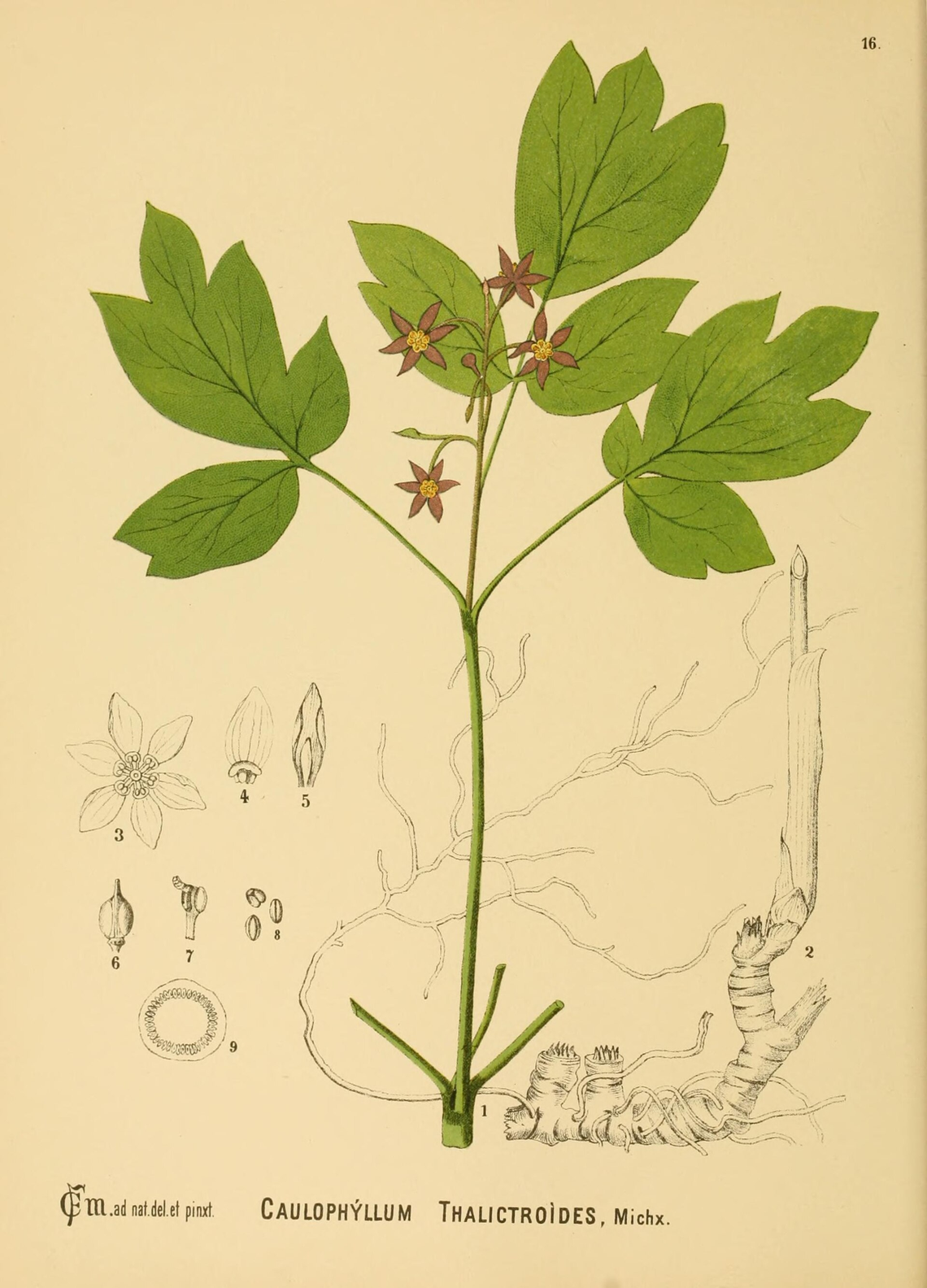
Blue cohosh is a perennial woodland herb growing 1-3 feet tall with distinctive blue-purple stems and compound leaves. The plant has an elegant, upright growth habit.
roots
The rhizome is thick, knotted, and woody with numerous fibrous roots. Fresh rhizomes are yellowish-brown externally and whitish internally, becoming darker with age.
stem
Stems are smooth, erect, and often purplish or blue-tinted, especially when young. The stem is typically unbranched and hollow.
leaves
Large, compound leaves are divided into three leaflets, each further divided into 2-3 lobes. Leaves are blue-green with a waxy appearance and prominent veining.
flowers
Small, star-shaped flowers appear in terminal clusters in early spring before leaves fully develop. Flowers are yellow-green to purple-brown with 6 petals.
fruits/seeds
Distinctive bright blue, berry-like seeds develop in late summer. The seeds are exposed when the thin pericarp ruptures, creating the plant's characteristic blue "berries."
Active Compounds
Traditional Uses
- Labor induction and facilitation of childbirth
- Menstrual regulation and relief of dysmenorrhea
- Treatment of rheumatism and arthritis
- Urinary tract infections
- Nervous system disorders
- Bronchitis and respiratory conditions
Modern Applications
- Uterine tonic (though controversial due to safety concerns)
- Anti-inflammatory for joint conditions
- Antispasmodic for smooth muscle
- Research into alkaloid properties for various conditions
⚠️ Safety Information
Contraindications
- Pregnancy (except under professional supervision for labor)
- Breastfeeding
- Children and adolescents
- Heart conditions
- Hypertension
Side Effects
- Gastric irritation
- Nausea and vomiting
- Chest pain
- Hypertension
- Hyperglycemia
Drug Interactions
- May potentiate effects of cardiac medications
- Possible interactions with blood pressure medications
- May affect blood sugar levels
Parts Used
- Rhizome and roots (collected in autumn after seed set)
Preparation Methods
1 tsp dried root per cup water, steep 10-15 minutes
Simmer 1 oz root in 1 pint water for 20 minutes
1:5 ratio in 50% alcohol, 10-30 drops 2-3 times daily
Powdered root mixed with water for external application
Combined with other herbs for respiratory conditions
Related Plants
Oregon Grape
Mahonia aquifolium
Basil
Ocimum basilicum
Black Cohosh
Cimicifuga racemosa
Oregano
Origanum vulgare
St. John's Wort
Hypericum perforatum
Thyme
Thymus vulgaris