Description
overall appearance
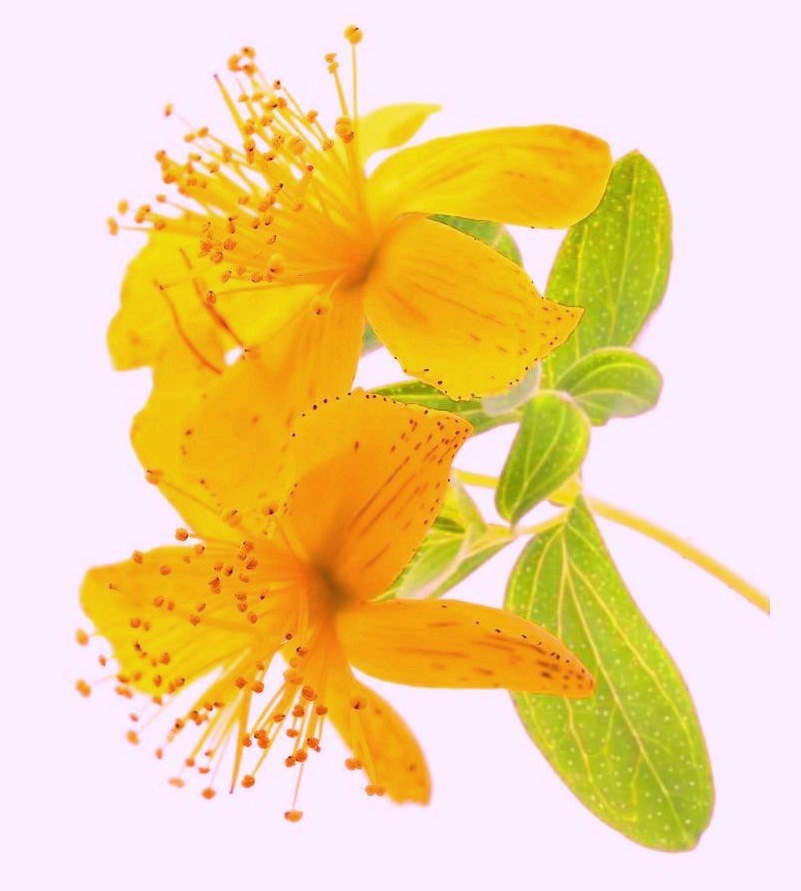
Perennial herb growing 1-3 feet tall with numerous branching stems, small yellow flowers, and leaves that appear perforated when held to light.
roots
Creeping rhizome system with an extensive network of roots and underground stems that spread to form colonies.
stem
Erect, branching stems that are smooth, round, and often reddish; stems have two raised ridges running lengthwise.
leaves
Opposite, sessile, oblong to linear leaves 0.5-1 inch long with numerous translucent dots (oil glands) that appear as perforations when held to light.
flowers
Bright yellow flowers 0.75 inch across with 5 petals that have black dots along the margins; flowers arranged in terminal cymes, blooming June-September.
fruits/seeds
Three-chambered capsules containing numerous small, dark brown seeds; capsules split open when mature.
Active Compounds
Traditional Uses
- European folk medicine for melancholy, anxiety, nervous disorders
- Wound healing and treatment of burns, cuts
- Respiratory conditions and bronchitis
- Digestive disorders and gastritis
- Women's health and menstrual irregularities
- Topical treatment for muscle pain and inflammation
Modern Applications
- Mild to moderate depression treatment
- Anxiety and mood disorders
- Seasonal Affective Disorder (SAD)
- Wound healing and burn treatment
- Anti-inflammatory effects
- Antimicrobial and antiviral properties
- Nerve pain and neuralgia
⚠️ Safety Information
Contraindications
- Pregnancy and breastfeeding
- Bipolar disorder or psychosis
- Severe depression requiring prescription medication
- Known photosensitivity disorders
Side Effects
- Photosensitivity (increased sun sensitivity)
- Digestive upset, fatigue, restlessness
- Dry mouth and dizziness
- Potential for mania in bipolar individuals
Drug Interactions
- Antidepressant medications (risk of serotonin syndrome)
- Blood-thinning medications (warfarin)
- Birth control pills (reduced effectiveness)
- Immunosuppressive drugs
- HIV medications and many prescription drugs
Parts Used
- Flowering tops (flowers, buds, upper leaves)
- Occasionally whole aerial parts
- Red oil extracted from flowers
Preparation Methods
1-2 teaspoons dried herb per cup boiling water, steep 10-15 minutes
1:5 ratio in 50% alcohol, 2-4 ml three times daily
Fresh flowers in olive oil, exposed to sunlight for several weeks
300mg three times daily of 0.3% hypericin extract
Powdered herb or standardized extract
Related Plants
Basil
Ocimum basilicum
Chamomile
Matricaria chamomilla
Lavender
Lavandula angustifolia
Peppermint
Mentha x piperita
Ashitaba
Angelica keiskei
Calendula
Calendula officinalis