Lavender
Lavandula angustifolia
Description
overall appearance
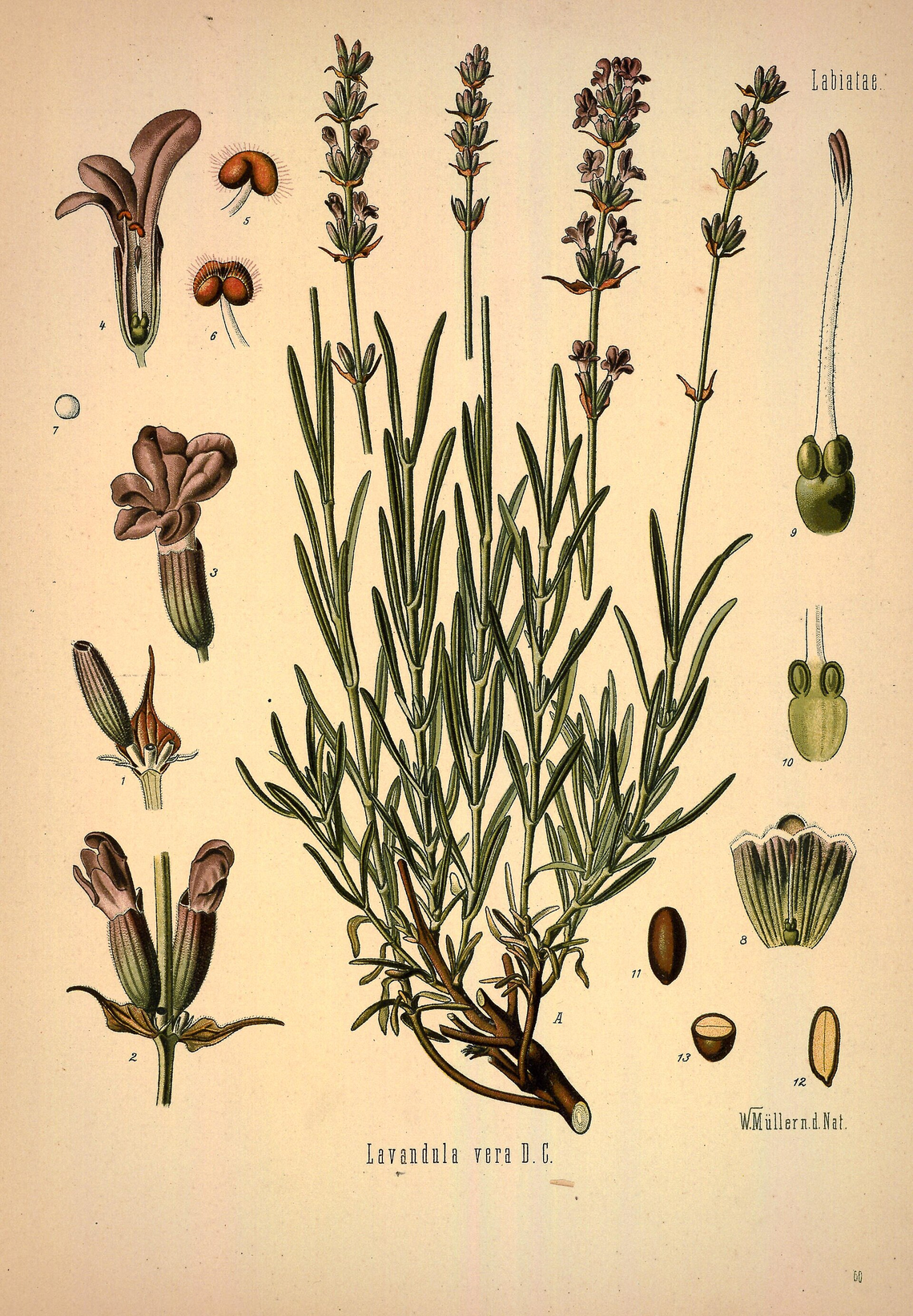
Perennial evergreen shrub growing 1-3 feet tall and wide, forming dense, aromatic clumps with gray-green foliage and purple flower spikes.
roots
Deep taproot system with fibrous secondary roots; drought-adapted root structure extending several feet deep.
stem
Woody base with numerous branching stems; young stems are square in cross-section (characteristic of mint family), becoming round and woody with age.
leaves
Opposite, linear to lance-shaped leaves 1-2 inches long, gray-green in color with entire margins, densely covered with fine hairs giving silvery appearance.
flowers
Small, tubular, purple-blue flowers arranged in dense terminal spikes 2-4 inches long; blooms June through August with distinctive sweet, floral fragrance.
fruits/seeds
Small, smooth, brown nutlets about 1-2mm long; four nutlets per flower enclosed in persistent calyx.
Active Compounds
Traditional Uses
- European folk medicine for nervous conditions, insomnia, headaches
- Wound healing and antiseptic applications
- Digestive disorders and stomach upset
- Respiratory conditions and bronchitis
- Women's health and menstrual irregularities
- Perfumery and aromatherapy
Modern Applications
- Anxiety and stress reduction
- Sleep disorders and insomnia
- Wound healing and burn treatment
- Antimicrobial and antifungal effects
- Pain relief and anti-inflammatory effects
- Aromatherapy and mood enhancement
- Skin health and dermatitis
⚠️ Safety Information
Contraindications
- Known allergy to plants in Lamiaceae family
- Pregnancy (large therapeutic amounts of essential oil)
- Very low blood pressure (hypotension)
Side Effects
- Rare allergic reactions
- Skin irritation with undiluted essential oil
- Drowsiness with large amounts
- Possible hormonal effects with chronic use
Drug Interactions
- Sedative medications (may enhance effects)
- Blood pressure medications (mild hypotensive effects)
- Central nervous system depressants
Parts Used
- Flowers (dried flower buds and spikes)
- Essential oil distilled from flowers
- Occasionally leaves and stems
Preparation Methods
1-2 teaspoons dried flowers per cup boiling water, steep 5-10 minutes
Steam distillation of fresh flowers, 2-3 drops for aromatherapy
1:5 ratio in 40% alcohol, 2-4 ml three times daily
Dried flowers in olive oil for topical use
Dried flowers in small bags for aromatherapy and insect repelling
Related Plants
Basil
Ocimum basilicum
Cat's Whiskers / Java Tea
Orthosiphon aristatus
Catnip
Nepeta cataria
Chamomile
Matricaria chamomilla
St. John's Wort
Hypericum perforatum
Calendula
Calendula officinalis