Catnip
Nepeta cataria
Description
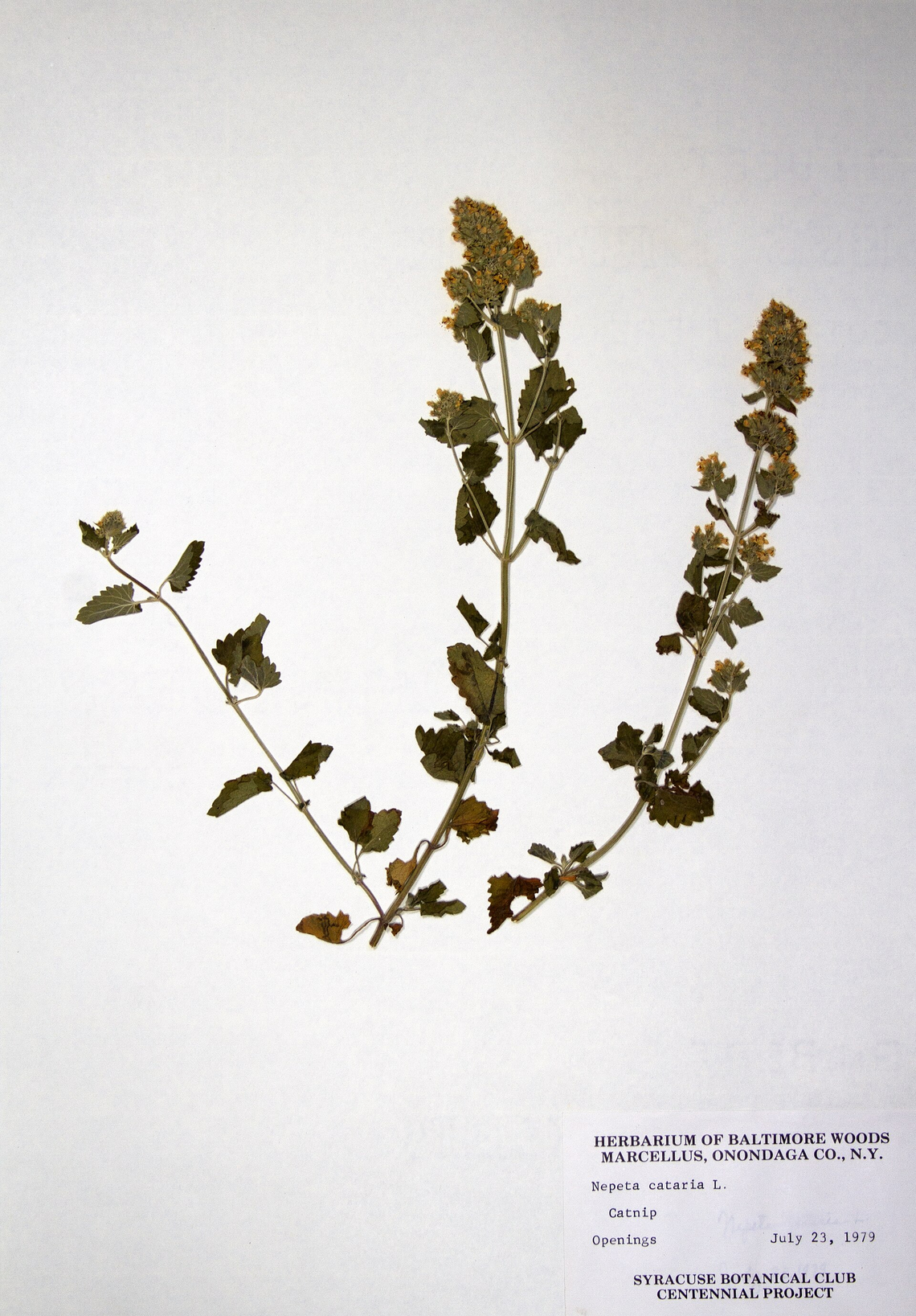
overall appearance
Catnip is an aromatic perennial herb growing 2-4 feet tall with a bushy, branching growth habit and distinctive gray-green foliage.
roots
Fibrous root system with short rhizomes that spread slowly to form clumps rather than aggressive colonies.
stem
Square stems characteristic of mint family, erect and branching, covered with fine white hairs giving a grayish appearance.
leaves
Opposite, heart-shaped leaves are 1-3 inches long with serrated margins. Leaves are gray-green and covered with fine hairs.
flowers
Small, white to pale pink tubular flowers are arranged in dense terminal spikes. Flowers have purple spots and are very attractive to bees.
fruits/seeds
Small, brown nutlets (typically 4 per flower) are smooth and oval-shaped.
Active Compounds
Traditional Uses
- Nervous tension and anxiety
- Insomnia and sleep disorders
- Digestive conditions and colic
- Fever reduction
- Menstrual irregularities
- Children's restlessness and hyperactivity
Modern Applications
- Natural sedative and calming agent
- Digestive aid and antispasmodic
- Mild fever reducer
- Sleep aid for insomnia
- Gentle remedy for children's conditions
⚠️ Safety Information
Contraindications
- Pregnancy (may stimulate menstruation)
- Very large doses may cause overstimulation
- Pelvic inflammatory disease
Side Effects
- Generally very well-tolerated
- Possible mild drowsiness (desired effect)
- Large doses may cause headache or nausea
- Rare allergic reactions
Drug Interactions
- May enhance effects of sedative medications
- Possible interactions with medications for liver conditions
- Generally considered very safe with minimal interactions
Parts Used
- Aerial parts (leaves, stems, flowers)
- Fresh or dried plant material
Preparation Methods
1-2 tsp dried herb per cup water, steep 10-15 minutes
1:5 ratio in 40% alcohol, 2-4 ml three times daily
Strong infusion added to bathwater for relaxation
Traditionally smoked for relaxation (though not recommended)
Steam distilled for aromatherapy applications
Related Plants
Basil
Ocimum basilicum
Cat's Whiskers / Java Tea
Orthosiphon aristatus
Chaste Tree
Vitex agnus-castus
Chamomile
Matricaria chamomilla
Hops
Humulus lupulus
Lemon Verbena
Aloysia citrodora