Description
overall appearance
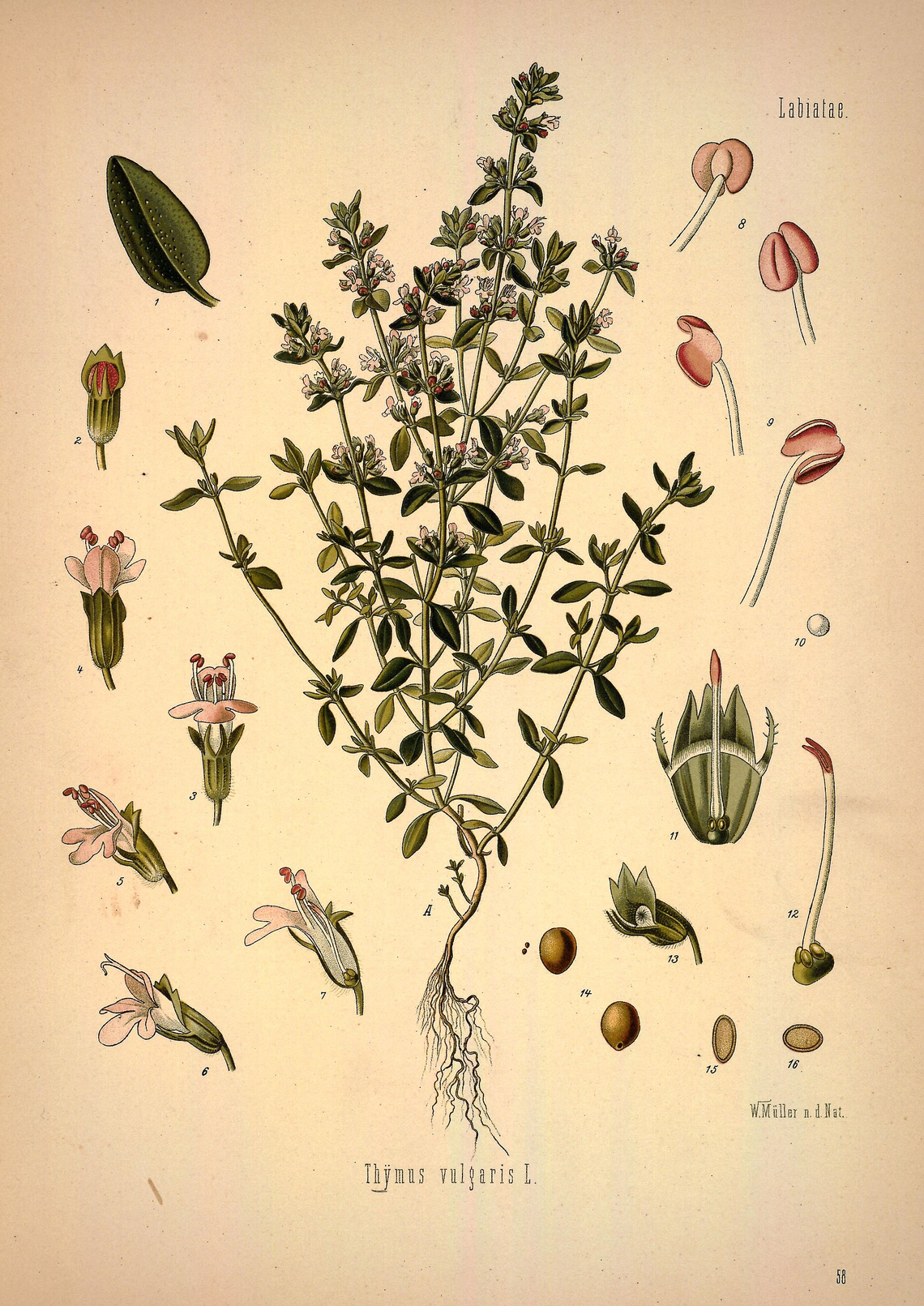
Small, evergreen perennial subshrub growing 6-15 inches tall with tiny, aromatic leaves and small pink, purple, or white flowers in dense clusters.
roots
Fibrous root system with shallow, spreading roots; roots form a dense mat near the soil surface.
stem
Woody, square stems (characteristic of mint family) that are branching and often prostrate; stems become woody with age.
leaves
Opposite, small, oval leaves 1/4 to 1/2 inch long with smooth margins; leaves are gray-green and covered with tiny oil glands giving intense aroma.
flowers
Tiny, tubular, two-lipped flowers in dense terminal clusters; flowers are typically pink to purple, sometimes white, blooming from late spring through summer.
fruits/seeds
Small, brown nutlets containing one seed each; fruits are very small and dispersed by wind and gravity.
Active Compounds
Traditional Uses
- Respiratory conditions (coughs, bronchitis, whooping cough)
- Digestive complaints and poor appetite
- Urinary tract infections
- Skin conditions (wounds, acne, fungal infections)
- Mouth and throat infections
- Nervous conditions and exhaustion
- Menstrual irregularities
Modern Applications
- Antimicrobial and antifungal treatment
- Respiratory tract infections and congestion
- Digestive system support and appetite stimulation
- Antispasmodic effects for coughs
- Topical antiseptic for wounds and skin conditions
- Oral hygiene and dental health
- Immune system support
⚠️ Safety Information
Contraindications
- Pregnancy in large medicinal doses (safe in culinary amounts)
- Thyroid disorders (may affect thyroid function)
- Known allergies to Lamiaceae family plants
Side Effects
- Generally very safe with minimal side effects
- Possible allergic reactions in sensitive individuals
- Skin irritation from undiluted essential oil
- Gastrointestinal upset with very large doses
Drug Interactions
- Blood-thinning medications (may enhance effects)
- Blood pressure medications (potential interaction)
- Thyroid medications (may affect function)
Parts Used
- Leaves and flowering tops (primary medicinal parts)
- Essential oil distilled from aerial parts
Preparation Methods
1-2 teaspoons dried herb per cup boiling water, steep 5-10 minutes
Strong tea for throat infections and oral hygiene
Fresh herb in hot water for respiratory congestion
1:5 ratio in 45% alcohol, 2-4 ml three times daily
Diluted 1-2% in carrier oil for topical antiseptic use
Related Plants
Basil
Ocimum basilicum
Cat's Whiskers / Java Tea
Orthosiphon aristatus
Catnip
Nepeta cataria
Damiana
Turnera diffusa
Elecampane
Inula helenium
Marshmallow
Althaea officinalis