Damiana
Turnera diffusa
Description
overall appearance
Damiana is a small, aromatic shrub growing 3-6 feet tall with a dense, branching growth habit and silvery-green foliage.
roots
Fibrous root system adapted to dry conditions, with some woody taproot development for water storage.
stem
Multiple woody stems branch from the base, covered with fine hairs and often appearing whitish or silvery.
leaves
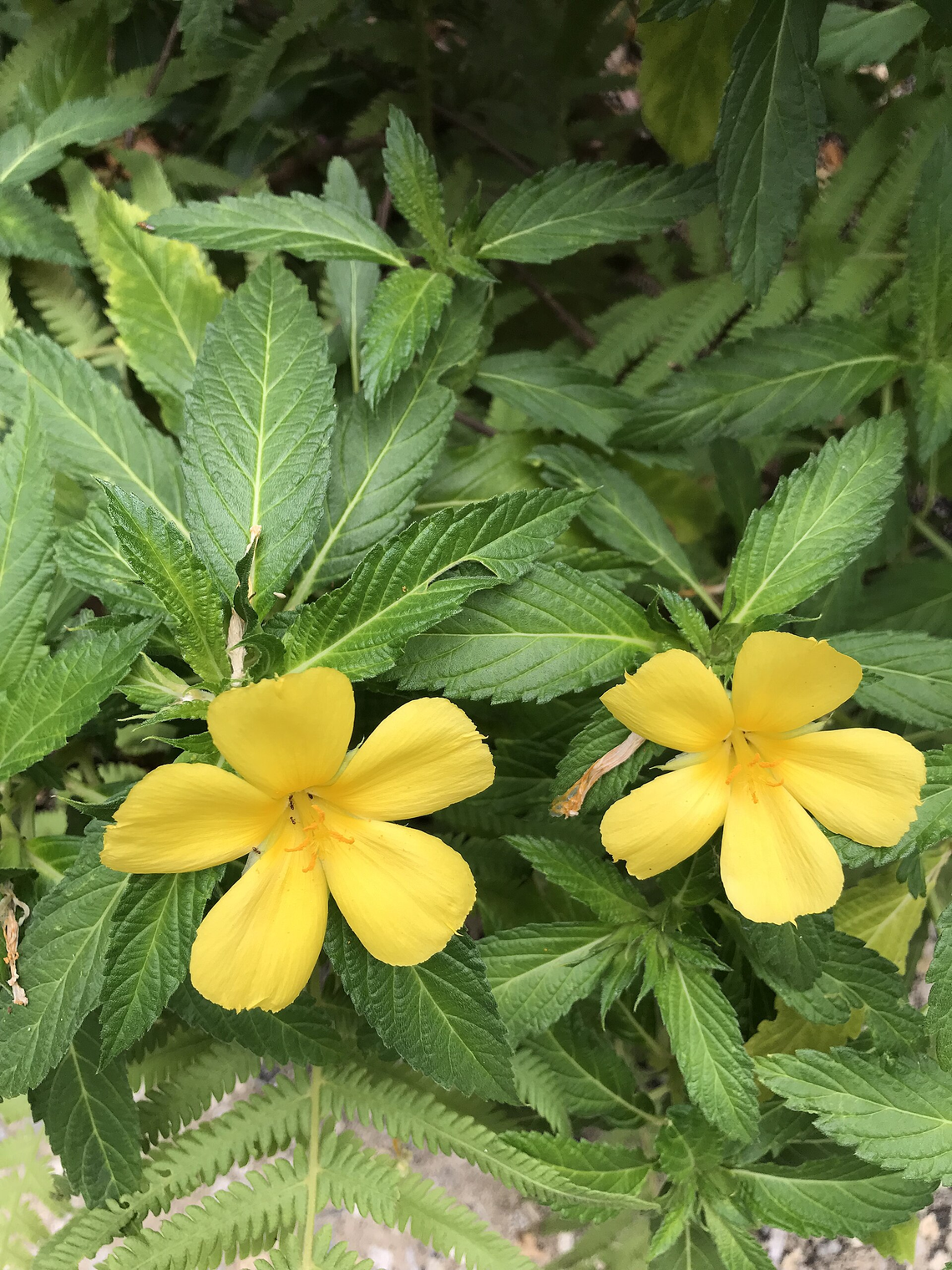
Small, alternate leaves are 1/2 to 1 inch long, oval to lance-shaped with serrated margins. Leaves are pale green and covered with fine hairs.
flowers
Small, bright yellow flowers with 5 petals appear singly in leaf axils from spring through fall. Flowers are fragrant and attract butterflies.
fruits/seeds
Small, three-valved capsules contain tiny seeds. Capsules split when ripe to release seeds.
Active Compounds
Traditional Uses
- Nervous system support and mood enhancement
- Traditional aphrodisiac and libido enhancement
- Digestive stimulant and stomach tonic
- Respiratory conditions and coughs
- Urinary tract infections
- Menstrual irregularities
Modern Applications
- Mild antidepressant and anxiolytic effects
- Libido and sexual health support
- Digestive system stimulant
- Mild diuretic action
- Energy and mood enhancement
⚠️ Safety Information
Contraindications
- Diabetes (may affect blood sugar)
- Pregnancy and breastfeeding (insufficient safety data)
- Bipolar disorder (may trigger mania)
Side Effects
- Generally well-tolerated
- Possible mild headache with large doses
- Stomach upset in sensitive individuals
- Possible blood sugar effects
Drug Interactions
- May interact with diabetes medications
- Possible interactions with MAO inhibitors
- May enhance effects of other mood-affecting substances
- Caution with blood sugar medications
Parts Used
- Leaves (primary medicinal part)
- Flowering tops
- Stems (occasionally)
Preparation Methods
1-2 tsp dried leaves per cup water, steep 10-15 minutes
Traditionally smoked alone or with other herbs
1:5 ratio in 40% alcohol, 2-4 ml three times daily
Traditional Mexican preparation with alcohol and honey
Powdered leaves in standardized preparations
Related Plants
Passionflower
Passiflora incarnata
Celery Seed
Apium graveolens
Oregano
Origanum vulgare
Thyme
Thymus vulgaris
Angelica
Angelica archangelica
Basil
Ocimum basilicum