Description
overall appearance
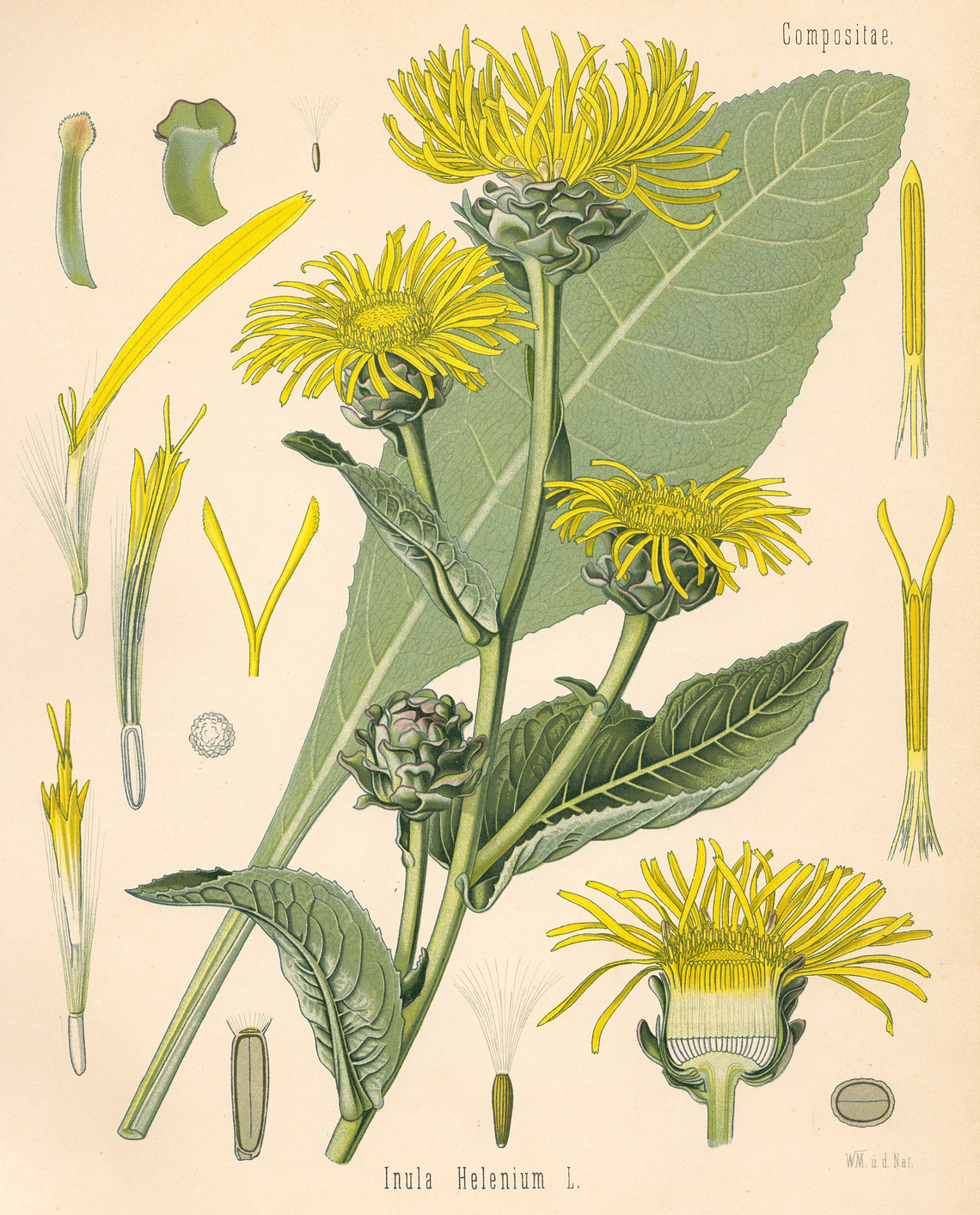
Tall perennial herb growing 3-8 feet tall with large, coarse leaves and bright yellow sunflower-like blooms; develops thick, aromatic roots.
roots
Thick, fleshy taproot and rhizomes that are brown externally, white internally; roots have a distinctive camphor-like aroma and bitter taste.
stem
Tall, erect, hairy stems that are grooved and branching; stems can reach 6-8 feet in height and support large flower heads.
leaves
Large, alternate leaves that are oval to lance-shaped; lower leaves can be 12-20 inches long with heart-shaped bases and serrated margins.
flowers
Large, bright yellow flower heads 2-4 inches across with numerous narrow ray petals; flowers bloom from July to September.
fruits/seeds
Small, brown achenes with a pappus of bristles for wind dispersal; seeds ripen in late summer to fall.
Active Compounds
Traditional Uses
- Respiratory conditions (bronchitis, asthma, coughs)
- Digestive disorders and poor appetite
- Skin conditions (scabies, eczema, wounds)
- Urinary tract infections
- Worm infestations and parasites
- Joint pain and rheumatism
- Menstrual irregularities
Modern Applications
- Respiratory tract infections and congestion
- Antimicrobial effects against bacteria and fungi
- Digestive system support and appetite stimulation
- Anti-inflammatory effects for airways
- Expectorant properties for chest congestion
- Immune system support
⚠️ Safety Information
Contraindications
- Pregnancy and breastfeeding (stimulates uterine contractions)
- Allergies to plants in Asteraceae family
- Diabetes (large amounts may affect blood sugar)
Side Effects
- Allergic reactions including contact dermatitis
- Gastrointestinal upset with large doses
- Possible blood sugar changes
- Skin photosensitivity (rare)
Drug Interactions
- Diabetes medications (may affect blood sugar)
- Blood pressure medications (potential interaction)
- Sedative medications (may enhance effects)
Parts Used
- Roots and rhizomes (primary medicinal part)
- Occasionally leaves and flowers
Preparation Methods
1-2 teaspoons dried root per cup water, simmer 15-20 minutes
1:5 ratio in 45% alcohol, 1-3 ml three times daily
Root decoction concentrated with honey for respiratory conditions
Fresh root grated and applied to skin conditions
Traditional preparation of root in white wine
Related Plants
Arnica
Arnica montana
Bhringaraj
Eclipta prostrata
Blessed Thistle
Cnicus benedictus
Birch
Betula spp.
Evening Primrose
Oenothera biennis
Juniper
Juniperus communis