Description
overall appearance
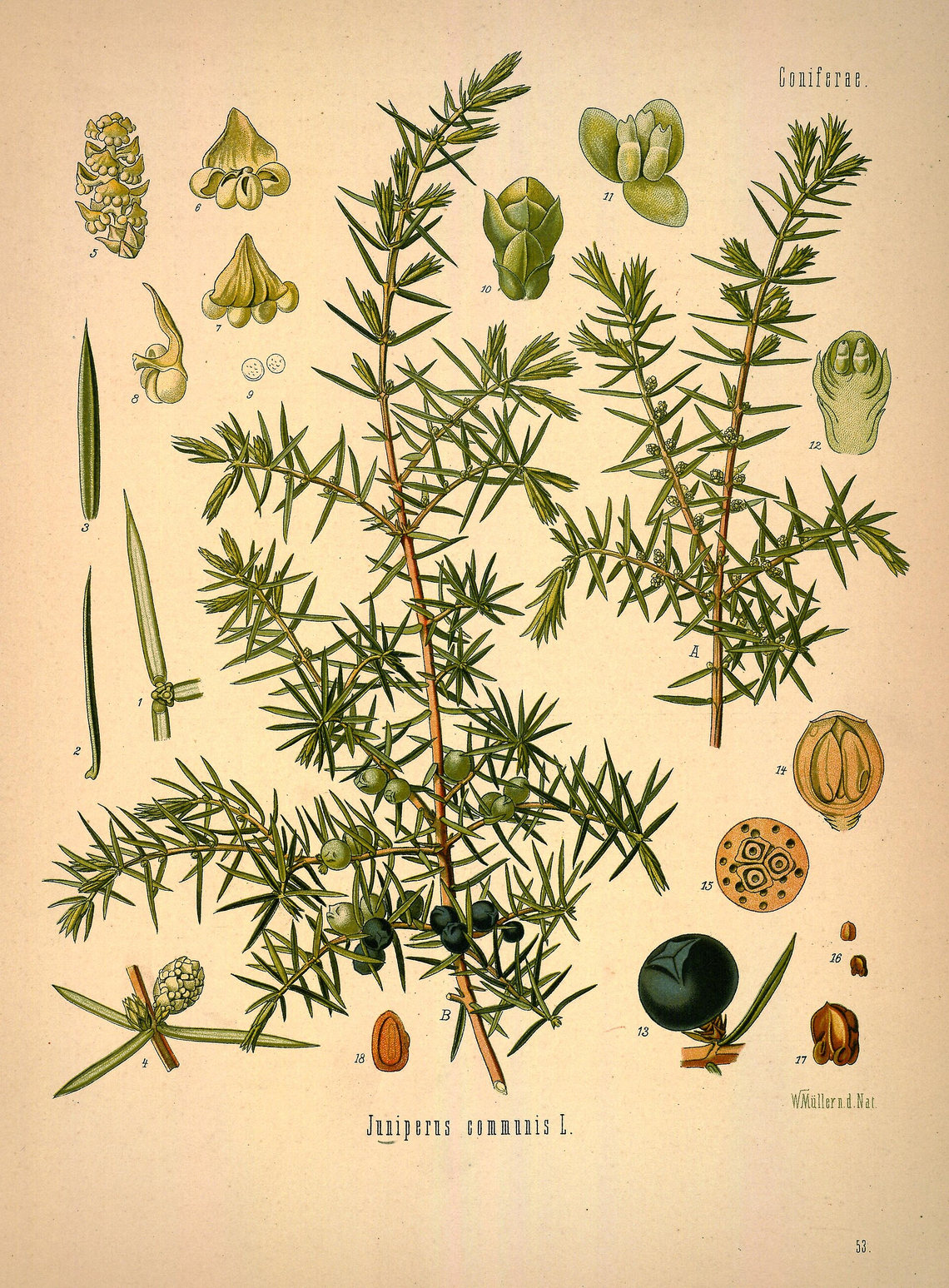
Evergreen shrub or small tree reaching 3-20 feet tall; extremely variable growth form from prostrate to upright.
roots
Deep taproot with lateral spreading roots; adapted to dry, rocky conditions; mycorrhizal associations.
stem
Multiple stems from base; fibrous, reddish-brown bark; needle-bearing twigs; very slow-growing.
leaves
Needle-like leaves in whorls of three; sharp-pointed; blue-green with white stripe above; persistent for 2-3 years.
flowers
Dioecious (male and female plants separate); small, inconspicuous flowers; wind-pollinated.
fruits/seeds
Berry-like cones (actually modified scales); blue-black with waxy bloom; take 2-3 years to mature.
Active Compounds
Traditional Uses
- Urinary tract infections and kidney disorders
- Digestive problems and poor appetite
- Arthritis and joint inflammation
- Respiratory ailments and bronchitis
- Skin conditions and wounds
- Traditional flavoring for gin
Modern Applications
- Urinary tract antiseptic and diuretic
- Digestive support and appetite stimulation
- Anti-inflammatory and antimicrobial effects
- Respiratory tract support
- Traditional aromatherapy applications
- Antioxidant and circulation support
⚠️ Safety Information
Contraindications
- Pregnancy (uterine stimulant and diuretic effects)
- Kidney disease or kidney inflammation
- Heart conditions with fluid retention
- Children under 12 years
Side Effects
- Kidney irritation with excessive or prolonged use
- Digestive upset and diarrhea
- Skin irritation with topical essential oil
- Increased urination (intended diuretic effect)
Drug Interactions
- Diuretic medications (may enhance effects)
- Diabetes medications (may affect blood sugar)
- Blood pressure medications
- Lithium (may affect elimination)
Parts Used
- Berries (mature blue-black cones - primary use)
- Essential oil from berries
- Young twigs and needles (occasionally)
- Bark (historical use)
Preparation Methods
1 teaspoon crushed berries per cup; steep 15-20 minutes
Berries simmered 10-15 minutes for stronger diuretic effects
1:5 ratio with 60% alcohol; macerate crushed berries 4 weeks
Steam distillation (professional preparation only)
Traditional alcoholic extraction (historical medicinal use)
Related Plants
Birch
Betula spp.
Parsley
Petroselinum crispum
Turmeric
Curcuma longa
Alfalfa
Medicago sativa
Andrographis
Andrographis paniculata
Ashitaba
Angelica keiskei