Description
overall appearance
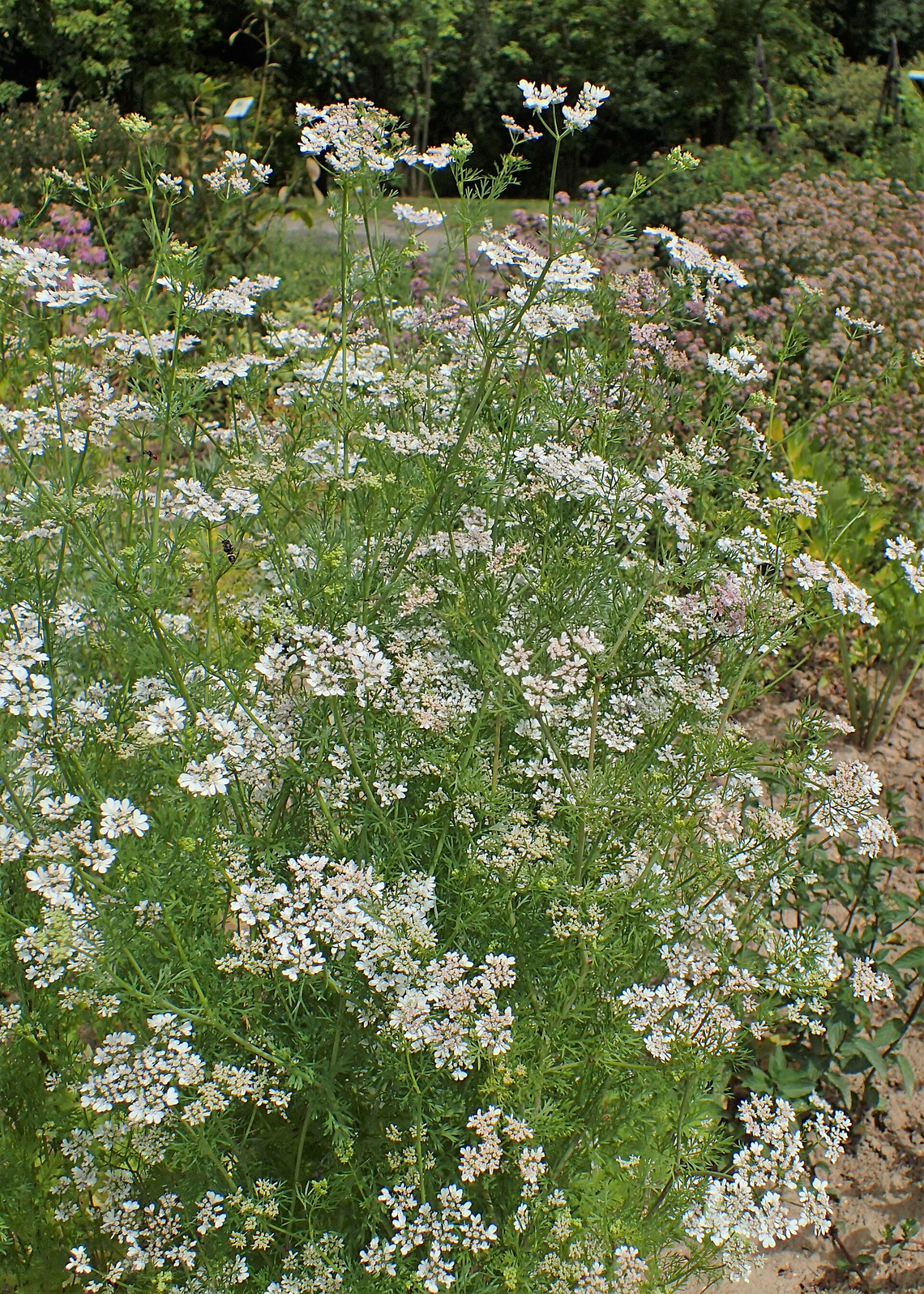
Annual herb growing 1-3 feet tall with delicate, lacy foliage and umbel-shaped flower clusters; entire plant is aromatic.
roots
Taproot system extending 8-12 inches deep with lateral roots; relatively shallow but efficient nutrient uptake.
stem
Slender, hollow, branching stems; green color with possible purple tinge; smooth surface with ridged appearance.
leaves
Compound leaves with different shapes: lower leaves broad and lobed; upper leaves finely divided and feathery; alternate arrangement.
flowers
Small white to pale pink flowers arranged in compound umbels; 5 petals per flower; appear in summer months.
fruits/seeds
Round, ribbed seeds (coriander spice) with sweet, citrusy aroma; tan to brown color when mature; contain essential oils.
Active Compounds
Traditional Uses
- Digestive disorders and dyspepsia
- Urinary tract infections and kidney stones
- Arthritis and joint inflammation
- Anxiety and nervous tension
- Diabetes and blood sugar regulation
- Eye infections and conjunctivitis
Modern Applications
- Digestive health and gastric motility
- Antimicrobial and antifungal properties
- Blood sugar regulation and diabetes support
- Heavy metal detoxification (leaves)
- Antioxidant and neuroprotective effects
- Cholesterol management
⚠️ Safety Information
Contraindications
- Known allergies to Apiaceae family plants
- Low blood pressure (may enhance hypotensive effects)
- Upcoming surgery within 2 weeks
Side Effects
- Generally well-tolerated in normal doses
- Possible photosensitivity with excessive use
- Digestive upset in very large doses
- Allergic reactions in sensitive individuals
Drug Interactions
- Diabetes medications (may enhance blood sugar lowering)
- Blood pressure medications
- Blood-thinning medications
- Sedative medications
Parts Used
- Seeds (primary medicinal and culinary use)
- Fresh leaves (cilantro - culinary and some medicinal use)
- Essential oil from seeds
- Roots (occasionally in traditional medicine)
Preparation Methods
1-2 teaspoons crushed seeds per cup boiling water; steep 10-15 minutes
Seeds simmered 15 minutes for stronger digestive effects
1:5 ratio with 60% alcohol; macerate crushed seeds 3-4 weeks
Ground seeds or fresh leaves applied to inflamed areas
Seeds in carrier oil for topical anti-inflammatory use
Related Plants
Angelica
Angelica archangelica
Ashitaba
Angelica keiskei
Celery Seed
Apium graveolens
Alfalfa
Medicago sativa
Amla / Indian Gooseberry
Phyllanthus emblica
Birch
Betula spp.