Description
overall appearance
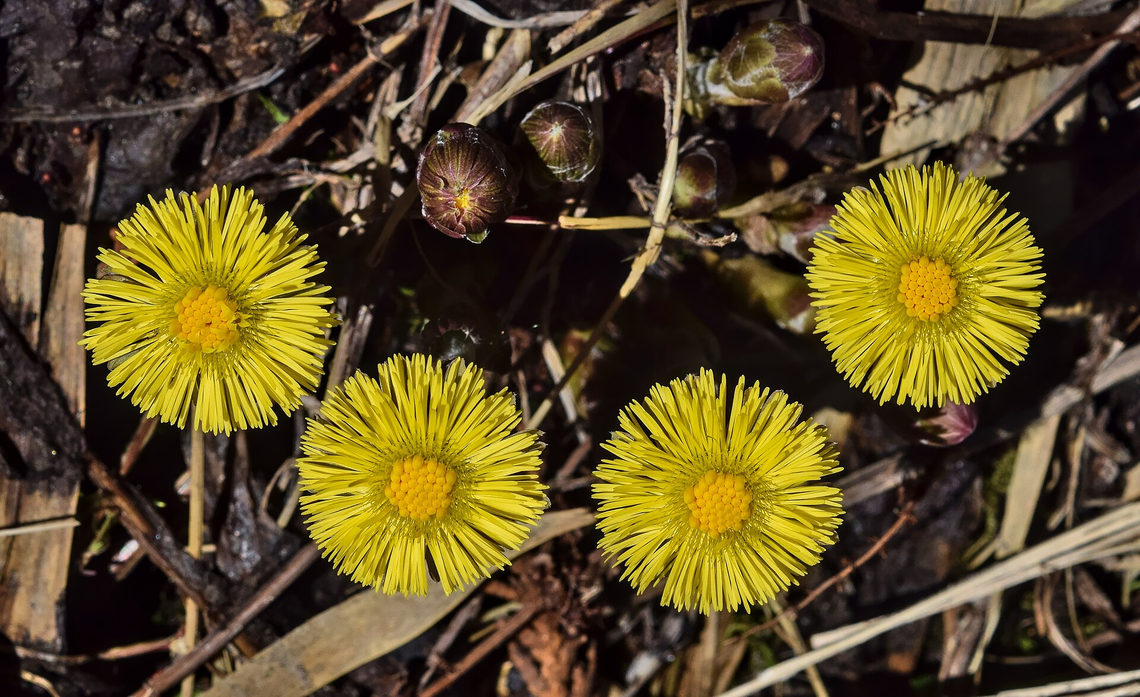
Low perennial herb with distinctive flowering pattern: bright yellow flowers appear before leaves in early spring, followed by large, heart-shaped leaves.
roots
Extensive creeping rhizome system that spreads underground; rhizomes are white to pale brown and can form large colonies.
stem
Flowering stems are 4-12 inches tall, covered with purple-tinged scales and woolly hairs; no true stem for leaves (they emerge directly from rhizomes).
leaves
Large, heart-shaped to rounded leaves 4-8 inches across that appear after flowering; leaves are dark green above, white-woolly beneath with prominent veining.
flowers
Bright yellow, daisy-like flower heads that appear in early spring before leaves; flowers are 1/2 to 1 inch across on short, scaly stems.
fruits/seeds
Small achenes with fluffy white pappus for wind dispersal; seeds are produced in late spring after flowering completes.
Active Compounds
Traditional Uses
- Respiratory conditions (coughs, bronchitis, asthma)
- Throat inflammation and laryngitis
- Lung congestion and phlegm
- Skin conditions (wounds, burns, ulcers)
- Inflammatory conditions and swelling
- Digestive complaints and gastritis
- Urinary tract disorders
Modern Applications
- Respiratory tract soothing (with safety concerns)
- Anti-inflammatory effects for airways
- Wound healing and skin protection
- Cough suppression (traditional use being reevaluated)
- Topical applications for inflammation
⚠️ Safety Information
Contraindications
- Pregnancy and breastfeeding (pyrrolizidine alkaloids)
- Liver disease or dysfunction
- Children under 18 years (safety concerns)
- Long-term use (hepatotoxicity risk)
Side Effects
- Potential liver toxicity with prolonged use
- Possible carcinogenic effects (animal studies)
- Allergic reactions in sensitive individuals
- Gastrointestinal upset with large doses
Drug Interactions
- Hepatotoxic medications (increased liver risk)
- Liver-metabolized drugs (potential interference)
Parts Used
- Leaves (primary medicinal part)
- Flowers (traditional respiratory use)
- Roots (occasional traditional use)
Preparation Methods
1-2 teaspoons dried leaves per cup boiling water, steep 10 minutes
1 tablespoon leaves per cup water, simmer 15 minutes
Fresh leaves applied directly to wounds or inflammation
Traditional preparation with honey for coughs
Dried leaves traditionally smoked for respiratory relief
Related Plants
Arnica
Arnica montana
Bhringaraj
Eclipta prostrata
Blessed Thistle
Cnicus benedictus
Licorice
Glycyrrhiza glabra
Marshmallow
Althaea officinalis
Mullein
Verbascum thapsus