Description
overall appearance
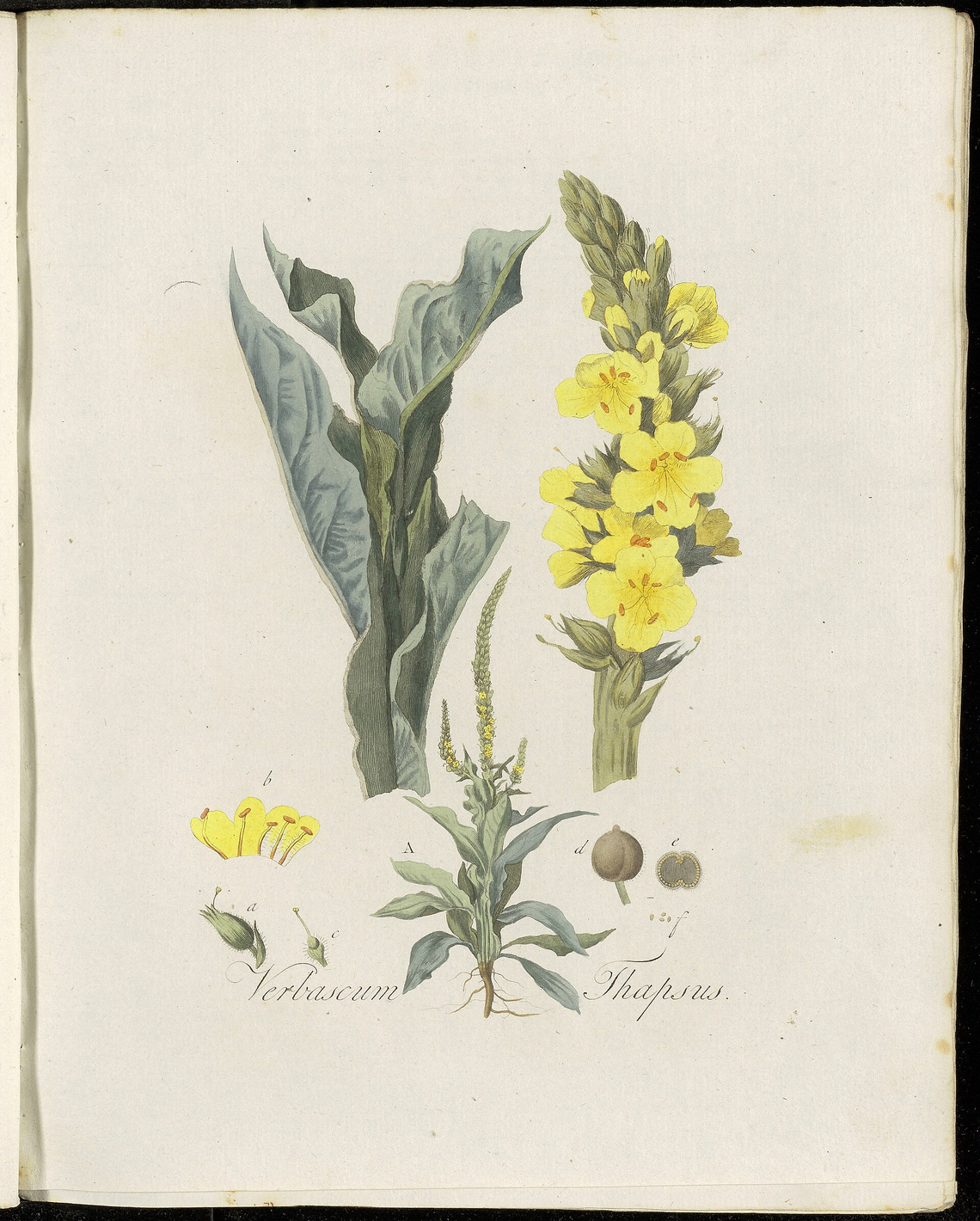
Tall biennial herb growing 3-8 feet tall with large, woolly basal leaves and a distinctive tall spike of yellow flowers; forms rosette in first year, flowers in second.
roots
Deep taproot system that can penetrate several feet into soil; roots are whitish and somewhat fibrous.
stem
Tall, erect, unbranched flowering stem covered with dense, woolly hairs; stem can reach 6-8 feet in height during second year.
leaves
Large, alternate leaves that are thick and covered with dense, soft, woolly hairs; basal leaves can be 12-18 inches long, becoming smaller up the stem.
flowers
Bright yellow, five-petaled flowers arranged in a dense, club-like spike; flowers bloom from bottom to top of spike from June to September.
fruits/seeds
Small, oval capsules containing numerous tiny seeds; capsules split open to release seeds that can remain viable for decades.
Active Compounds
Traditional Uses
- Respiratory conditions (coughs, bronchitis, asthma)
- Throat inflammation and laryngitis
- Ear infections and earache
- Skin conditions (wounds, burns, hemorrhoids)
- Digestive complaints and diarrhea
- Urinary tract infections
- Nervous conditions and pain relief
Modern Applications
- Respiratory tract soothing and cough suppression
- Anti-inflammatory effects for mucous membranes
- Antimicrobial properties for infections
- Wound healing and skin protection
- Earache relief (flower oil preparations)
- Antispasmodic effects for digestive issues
⚠️ Safety Information
Contraindications
- No known absolute contraindications
- Caution with seeds (may contain rotenone)
Side Effects
- Generally very safe with minimal side effects
- Possible skin irritation from leaf hairs in sensitive individuals
- Rare allergic reactions
Drug Interactions
- No known significant drug interactions
- May enhance effects of other respiratory herbs
Parts Used
- Leaves (primary medicinal part)
- Flowers (traditional respiratory use)
- Roots (occasional traditional use)
Preparation Methods
1-2 teaspoons dried leaves per cup boiling water, steep 10-15 minutes, strain well
Fresh flowers infused in olive oil for 2-3 weeks for ear drops
1 tablespoon leaves per cup water, simmer 15 minutes
Fresh leaves wilted and applied to skin conditions
1:5 ratio in 40% alcohol, 2-4 ml three times daily
Related Plants
Thyme
Thymus vulgaris
Andrographis
Andrographis paniculata
Coltsfoot
Tussilago farfara
Marshmallow
Althaea officinalis
Oregano
Origanum vulgare
Slippery Elm
Ulmus rubra