Description
overall appearance
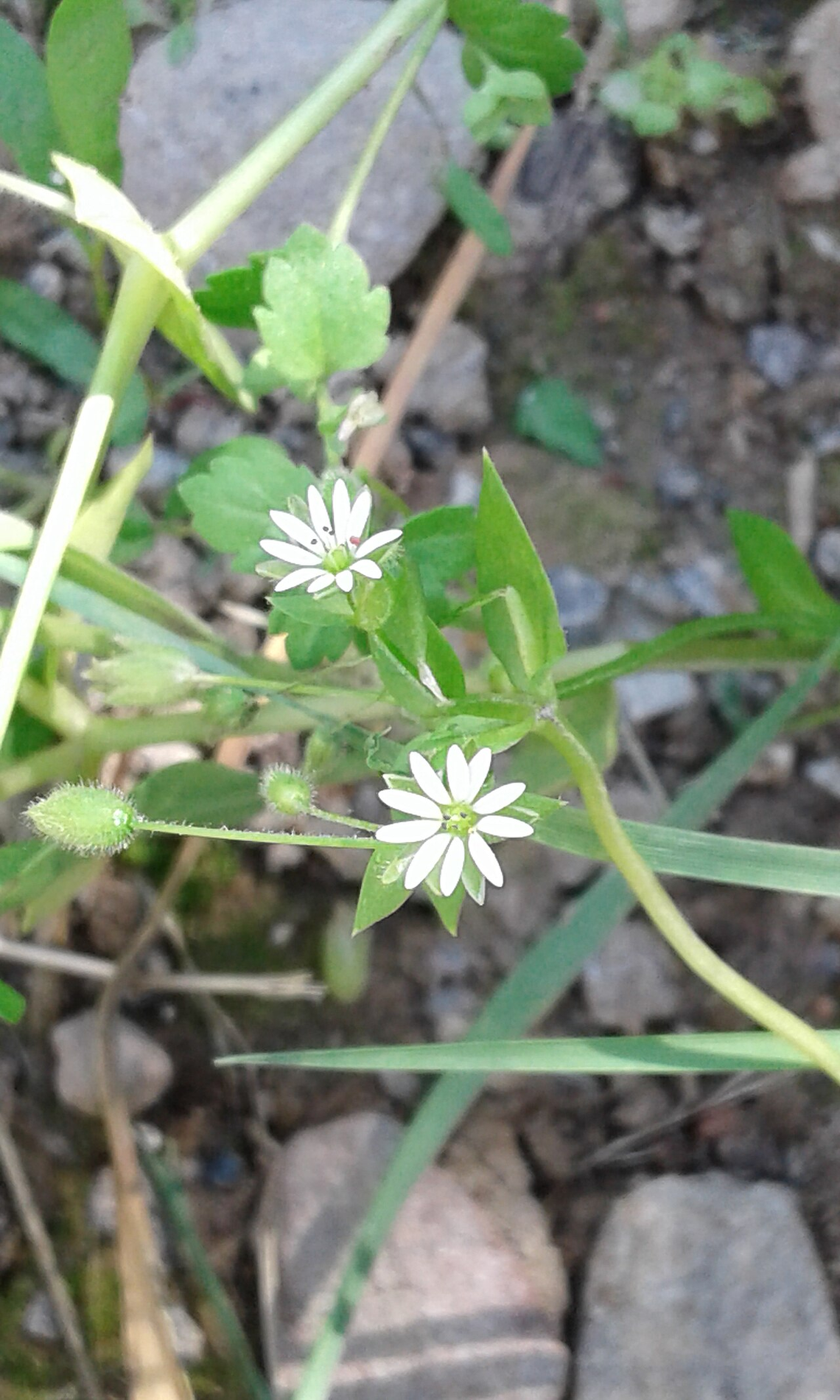
Chickweed is a low-growing annual herb that forms dense mats, typically 2-8 inches tall with sprawling, weak stems.
roots
Shallow, fibrous root system adapted to quick establishment in disturbed or cultivated soils.
stem
Weak, trailing stems are round with a distinctive line of hairs running along one side that alternates at each node.
leaves
Small, opposite, oval leaves are 1/4 to 1/2 inch long with pointed tips. Lower leaves have short petioles while upper leaves are sessile.
flowers
Tiny white flowers have 5 deeply notched petals that appear as 10 separate petals. Flowers are star-shaped, hence "starwort."
fruits/seeds
Small capsules contain numerous tiny, reddish-brown seeds that are an important food source for birds.
Active Compounds
Traditional Uses
- Skin conditions and eczema
- Wounds, cuts, and burns
- Eye irritations and conjunctivitis
- Digestive inflammation
- Respiratory conditions and coughs
- Rheumatism and joint pain
Modern Applications
- Topical anti-inflammatory for skin conditions
- Wound healing and tissue repair
- Nutritional supplement (high vitamin C)
- Cooling and soothing applications
- Natural food source (edible greens)
⚠️ Safety Information
Contraindications
- None known for typical external use
- Large internal consumption may cause digestive upset
- Avoid if allergic to plants in Caryophyllaceae family
Side Effects
- Generally very well-tolerated
- Possible mild digestive upset with large quantities
- Rare skin sensitivity in some individuals
Drug Interactions
- No significant interactions reported
- High vitamin C content may enhance iron absorption
- Generally considered very safe
Parts Used
- Aerial parts (stems, leaves, flowers)
- Fresh plant preferred over dried
Preparation Methods
Crushed fresh plant applied directly to skin
Fresh crushed herb applied to wounds and inflammation
1-2 tsp fresh herb per cup water, steep 10 minutes
Fresh herb infused in olive oil for topical use
Cloth soaked in strong tea applied to affected areas
Related Plants
Marshmallow
Althaea officinalis
Plantain
Plantago major
Slippery Elm
Ulmus rubra
Bloodroot
Sanguinaria canadensis
Chamomile
Matricaria chamomilla
Coltsfoot
Tussilago farfara