Description
overall appearance
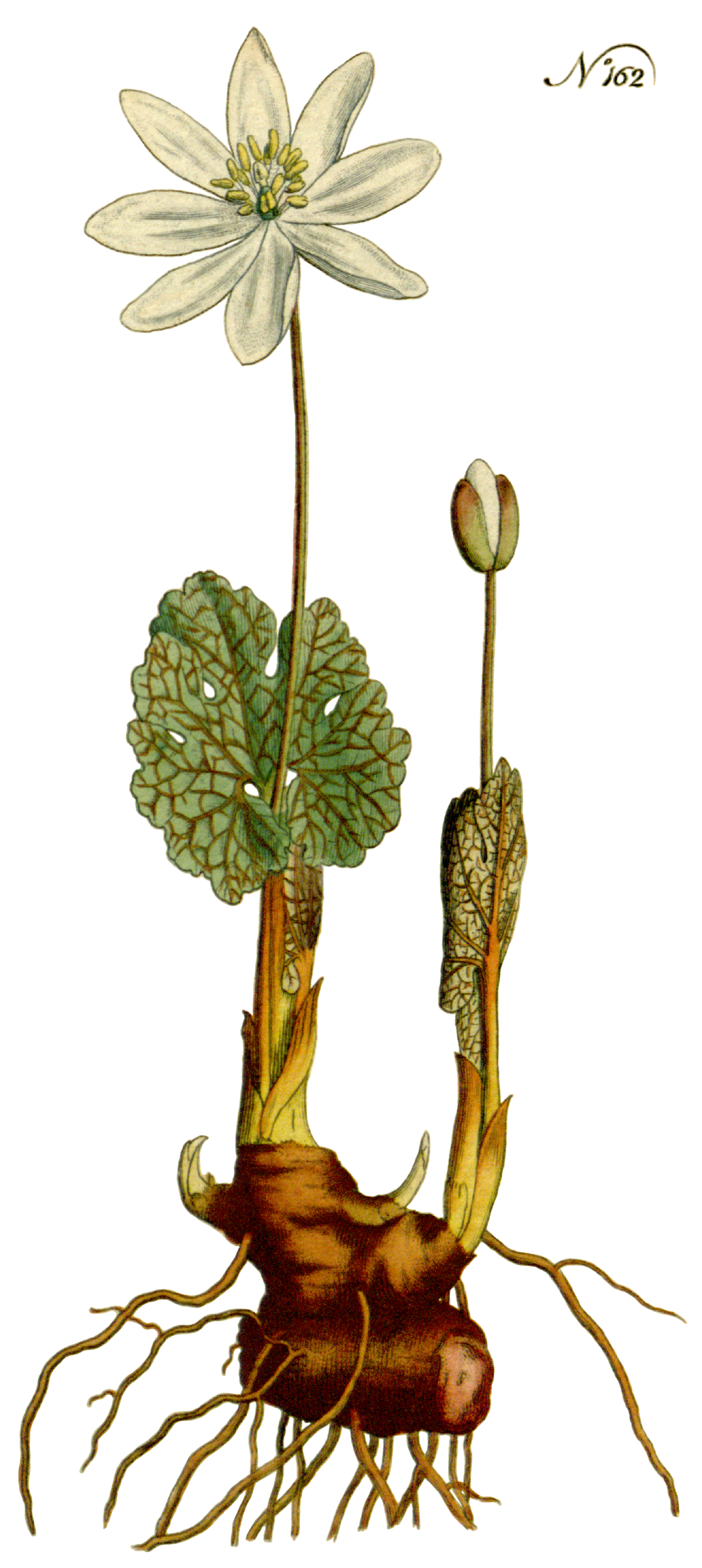
Perennial herb growing 6-10 inches tall with single lobed leaf and solitary white flower; red-orange rhizome.
roots
Thick, horizontal rhizome containing bright red-orange latex; bitter taste; spreads to form colonies.
stem
Single flowering stem emerges wrapped in the emerging leaf; no true above-ground stem.
leaves
Single, deeply lobed leaf 4-8 inches across; kidney-shaped with 5-9 rounded lobes; blue-green color.
flowers
Solitary white flower with 8-12 petals; 2-3 inches across; appears in early spring before leaves fully expand.
fruits/seeds
Elongated capsule containing black seeds with white appendages; ants disperse seeds for food reward.
Active Compounds
Traditional Uses
- Skin conditions including warts and growths
- Respiratory ailments and bronchitis
- Rheumatism and joint pain
- Digestive disorders and poor appetite
- Topical antimicrobial applications
- Traditional cancer treatments (external use)
Modern Applications
- Dental care and oral health (very dilute preparations)
- Topical antimicrobial applications (professional use)
- Research into cancer cell cytotoxicity
- Traditional dermatological applications (with extreme caution)
- Historical interest in respiratory support
- Plaque and gingivitis research
⚠️ Safety Information
Contraindications
- Pregnancy and breastfeeding (highly toxic)
- Children (too dangerous for pediatric use)
- Liver disease (hepatotoxic alkaloids)
- Heart conditions (cardiovascular effects)
- Internal use generally contraindicated
Side Effects
- Severe skin irritation and burns with direct application
- Nausea, vomiting, and digestive upset
- Cardiovascular toxicity with larger doses
- Liver damage with repeated use
- Respiratory depression in severe poisoning
Drug Interactions
- All medications (due to general toxicity)
- Liver-metabolized drugs (hepatotoxicity concerns)
- Cardiovascular medications
- CNS depressants
Parts Used
- Rhizome (underground stem - contains active alkaloids)
- Fresh latex (red sap - highly potent)
- Dried root powder (traditional preparations)
- Standardized extracts (modern applications)
Preparation Methods
All preparations require extreme care due to toxicity
1:10 ratio with 70% alcohol; professional preparation only
Extremely dilute preparations for skin conditions
Commercial formulations only (not home preparation)
Standardized alkaloid content for scientific study
Related Plants
Andrographis
Andrographis paniculata
Ashitaba
Angelica keiskei
Linden / Tilia
Tilia cordata
Bacopa
Bacopa monnieri
Bitter Melon
Momordica charantia
Buchu
Agathosma betulina