Description
overall appearance
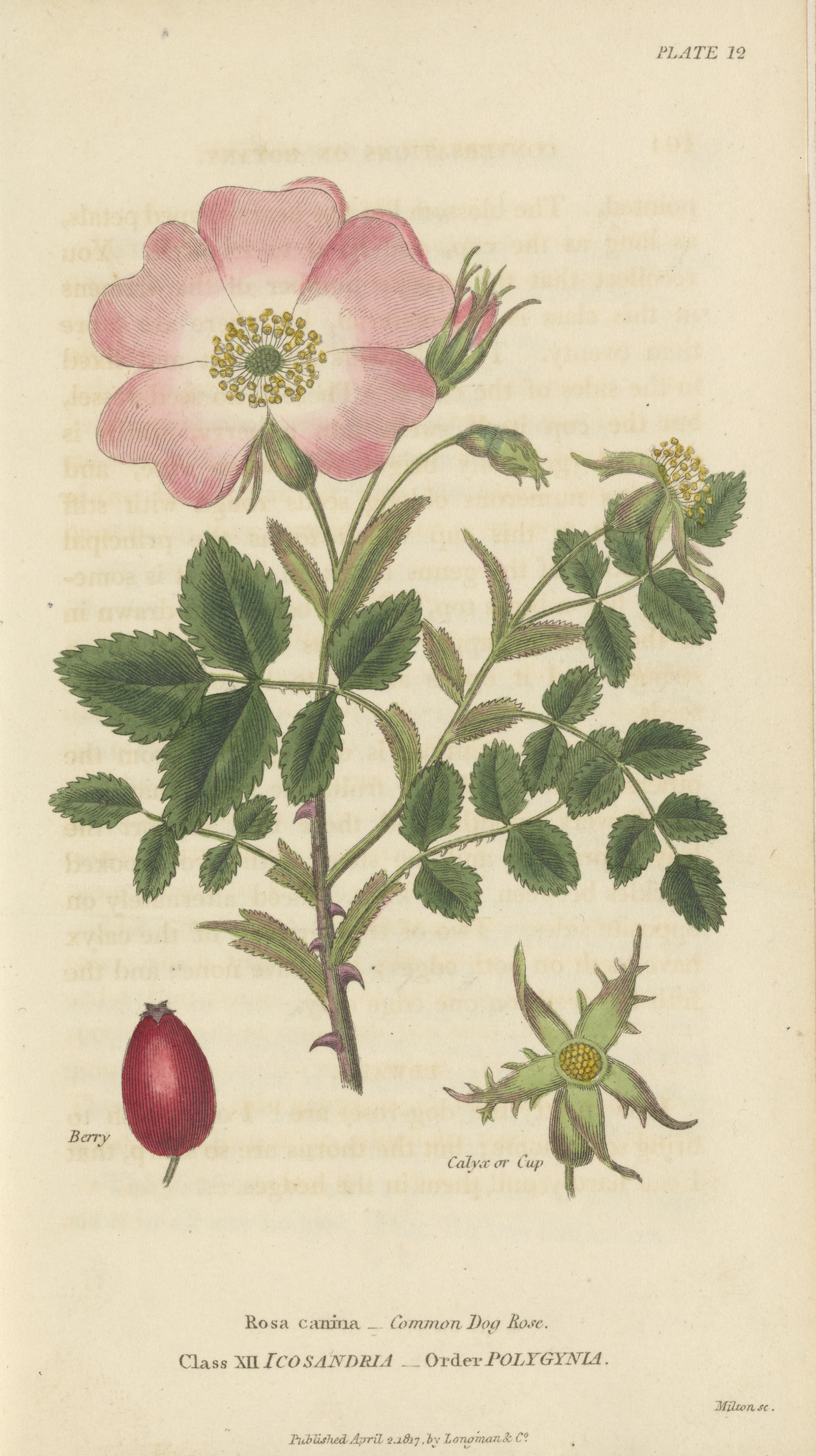
Dog rose is a deciduous climbing shrub growing 6-16 feet tall with arching, thorny stems. It forms dense thickets through suckers.
roots
Deep taproot system with spreading lateral roots that produce suckers, allowing the plant to form colonies.
stem
Long, arching canes are green to reddish-brown with curved thorns. Stems can climb through other vegetation or sprawl along the ground.
leaves
Compound leaves with 5-7 serrated leaflets arranged pinnately. Leaflets are oval, bright green, and have toothed margins.
flowers
Five-petaled flowers are typically pale pink to white, fragrant, and appear in clusters from late spring to early summer.
fruits/seeds
Rose hips are the fruit, appearing as red to orange oval berries in autumn. Each hip contains numerous small, hard seeds surrounded by pulp.
Active Compounds
Traditional Uses
- Scurvy prevention and vitamin C deficiency
- Immune system support
- Digestive ailments and diarrhea
- Kidney and bladder conditions
- Respiratory infections
- Joint pain and arthritis
Modern Applications
- Natural vitamin C supplementation
- Antioxidant and immune support
- Anti-inflammatory for joint conditions
- Digestive health and fiber supplementation
- Skin health and wound healing
⚠️ Safety Information
Contraindications
- None known for typical food/supplement use
- Caution with kidney stones (contains vitamin C and organic acids)
Side Effects
- Generally very well-tolerated
- Possible mild digestive upset with large doses
- Fine hairs around seeds can cause irritation if not properly strained
Drug Interactions
- High vitamin C content may enhance iron absorption
- Potential interaction with blood-thinning medications in very large doses
- May affect blood sugar levels slightly
Parts Used
- Fruits (rose hips) - fresh or dried
- Petals (less commonly used)
- Leaves (traditional use)
Preparation Methods
1-2 tbsp dried hips per cup water, steep 10-15 minutes
Simmer whole hips for 15-20 minutes, strain well
Traditional method for preserving and concentrating vitamin C
Cooked preparations for long-term storage
Ground dried hips for supplementation
Related Plants
Hawthorn
Crataegus spp.
Meadowsweet
Filipendula ulmaria
Pygeum
Prunus africana
Astragalus
Astragalus membranaceus
Birch
Betula spp.
Juniper
Juniperus communis