Description
overall appearance
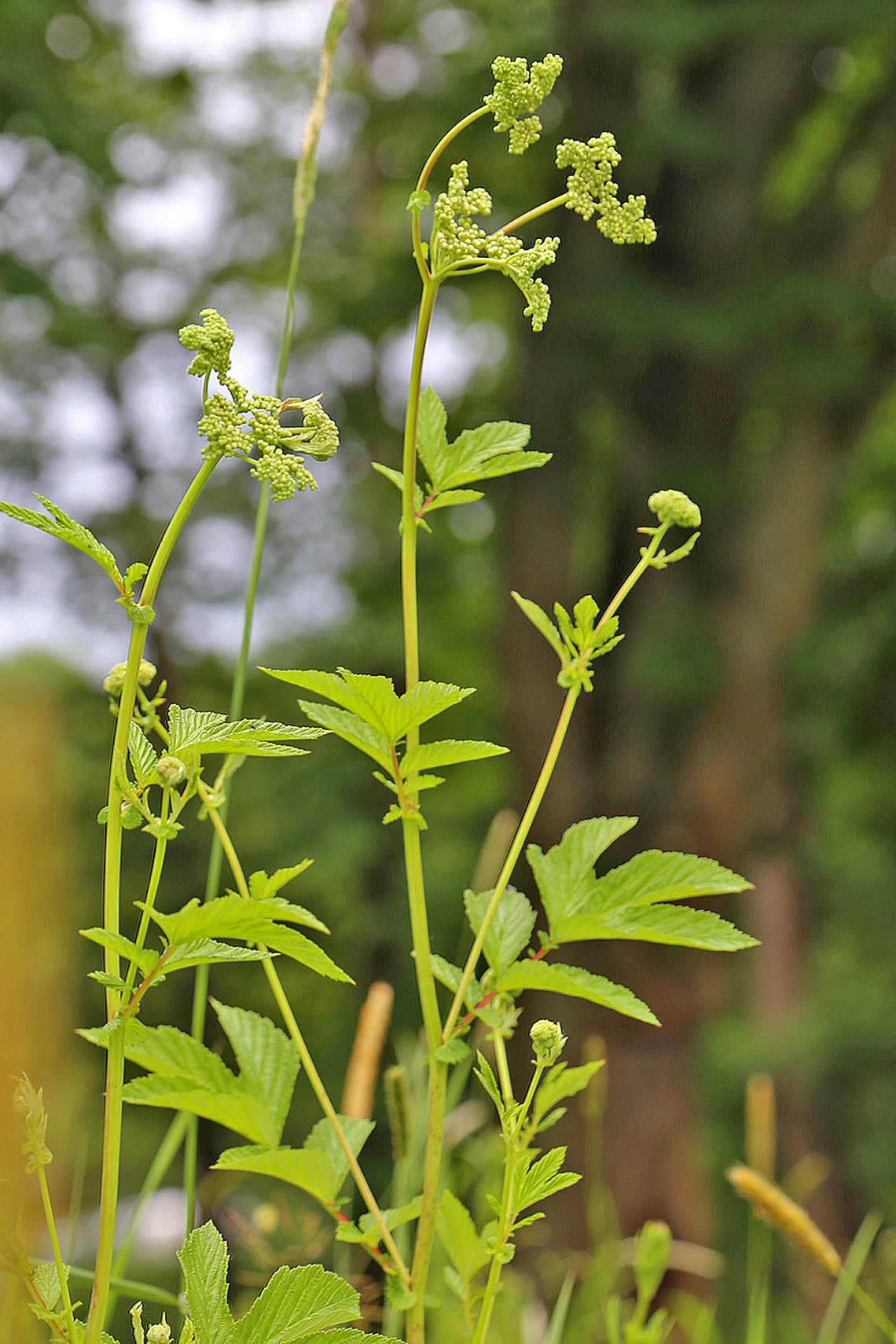
Meadowsweet is a tall perennial herb growing 3-6 feet tall with feathery clusters of creamy-white flowers and distinctive pinnate leaves.
roots
Creeping rhizome system with fibrous roots that spread to form colonies in suitable moist conditions.
stem
Erect, smooth, reddish stems are angular with prominent nodes. Stems are hollow and branched toward the top.
leaves
Alternate, pinnately compound leaves with 3-5 pairs of large serrated leaflets plus a terminal leaflet. Undersides are white and downy.
flowers
Dense, feathery clusters of small, creamy-white flowers appear at stem tips from early to mid-summer. Flowers are fragrant and rich in nectar.
fruits/seeds
Small, twisted follicles contain several small seeds. Seeds are dispersed by wind and water.
Active Compounds
Traditional Uses
- Pain relief and anti-inflammatory conditions
- Digestive disorders and stomach ulcers
- Rheumatism and arthritis
- Fever reduction
- Kidney and bladder conditions
- Skin conditions and wounds
Modern Applications
- Natural aspirin alternative for pain relief
- Anti-inflammatory for joint conditions
- Digestive system protection and healing
- Fever reduction without stomach irritation
- Antioxidant and cardiovascular support
⚠️ Safety Information
Contraindications
- Salicylate allergy or aspirin sensitivity
- Active gastric or duodenal ulcers
- Severe kidney or liver disease
- Children under 16 (due to salicylate content)
Side Effects
- Possible gastric irritation with large doses
- Nausea in sensitive individuals
- Potential bleeding with very high doses
- Rare allergic reactions
Drug Interactions
- May enhance effects of blood-thinning medications
- Possible interactions with diabetes medications
- May increase effects of other anti-inflammatory drugs
- Caution with kidney medications
Parts Used
- Flowering tops and leaves
- Occasionally roots
Preparation Methods
1-2 tsp dried flowers per cup water, steep 10-15 minutes
Root preparations for stronger effects
1:5 ratio in 40% alcohol, 2-4 ml three times daily
Fresh crushed flowers and leaves for topical application
For external skin applications
Related Plants
Hawthorn
Crataegus spp.
Pygeum
Prunus africana
Raspberry Leaf
Rubus idaeus
Ashitaba
Angelica keiskei
Birch
Betula spp.
Bloodroot
Sanguinaria canadensis