Description
overall appearance
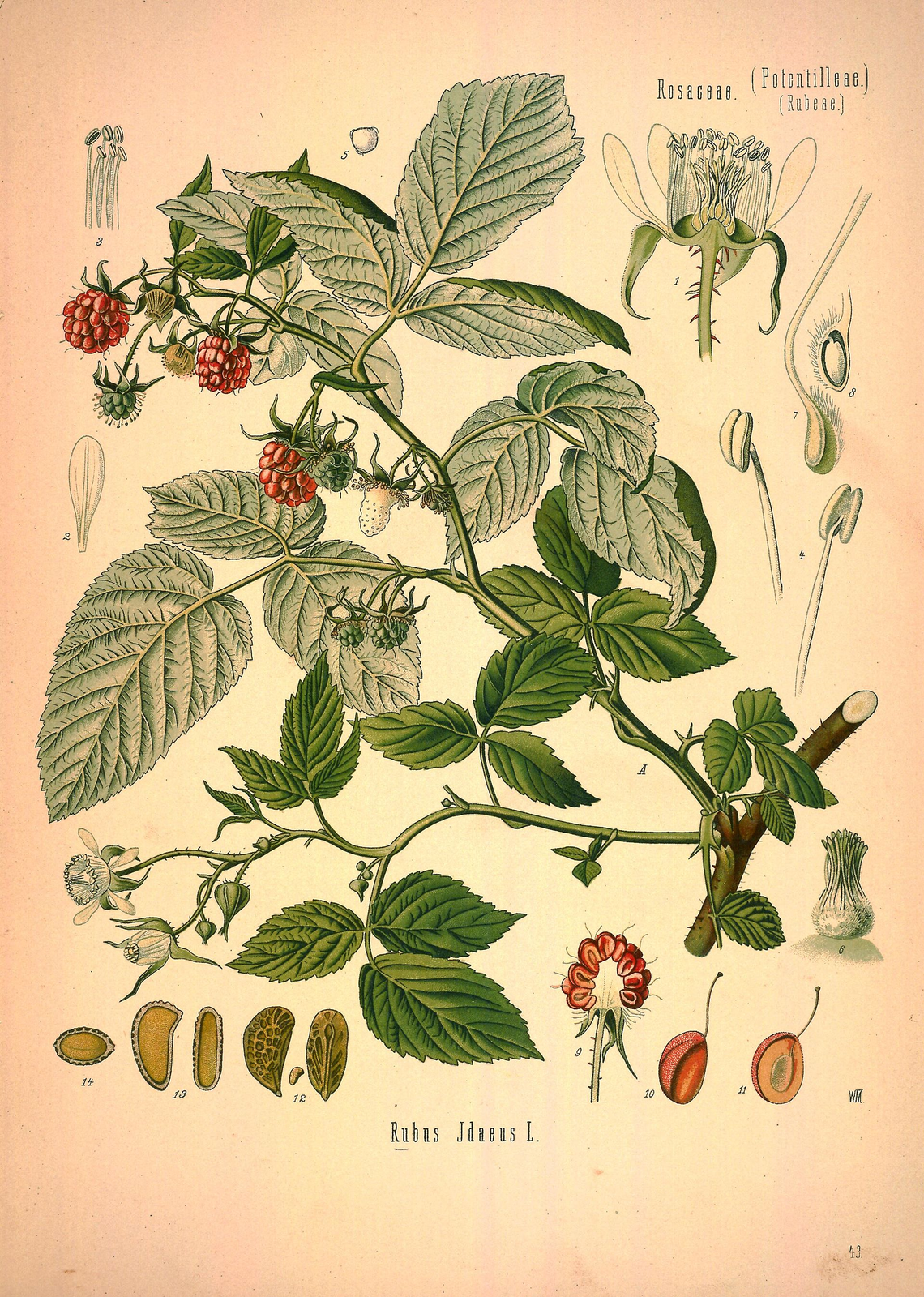
Raspberry is a deciduous shrub growing 3-6 feet tall with arching canes (stems) that live for two years. Forms colonies through root suckers.
roots
Perennial root system with shallow, spreading roots that produce numerous suckers, creating new canes each year.
stem
Biennial canes are woody, thorny, and reddish-brown. First-year canes (primocanes) are vegetative; second-year canes (floricanes) flower and fruit.
leaves
Compound leaves with 3-5 serrated leaflets arranged palmately. Leaflets are oval with pointed tips, green above and whitish-downy beneath.
flowers
White to pale pink flowers appear in clusters on second-year canes in late spring. Flowers have 5 petals and numerous stamens.
fruits/seeds
Aggregate fruits (raspberries) are red when ripe, composed of many small drupelets, each containing a tiny seed.
Active Compounds
Traditional Uses
- Pregnancy tonic and labor preparation
- Menstrual irregularities and cramping
- Diarrhea and digestive upset
- Mouth sores and sore throat
- Wound healing and skin conditions
- Postpartum recovery
Modern Applications
- Uterine tonic during pregnancy
- Astringent for diarrhea and inflammation
- Antioxidant support
- Women's reproductive health
- Digestive system support
⚠️ Safety Information
Contraindications
- None known for typical use
- Caution with very large doses in early pregnancy (though generally considered safe)
Side Effects
- Generally very well-tolerated
- Possible mild gastric upset with excessive consumption
- Rare allergic reactions in sensitive individuals
Drug Interactions
- Generally considered safe with most medications
- May enhance effects of anti-diarrheal medications
- No significant drug interactions reported
Parts Used
- Leaves (primary medicinal part)
- Fruit (nutritional and mild medicinal value)
- Root bark (less commonly used)
Preparation Methods
1-2 tbsp dried leaves per cup of water, steep 15-20 minutes
Not typically used for leaves
1:5 ratio in 25% alcohol, 2-4 ml three times daily
Fresh crushed leaves for topical application
Cool tea for mouth and throat conditions
Related Plants
Hawthorn
Crataegus spp.
Meadowsweet
Filipendula ulmaria
Pygeum
Prunus africana
Haritaki / Black Myrobalan (Triphala representative)
Terminalia chebula
Mangosteen
Garcinia mangostana
Oak
Quercus spp.