Description
overall appearance
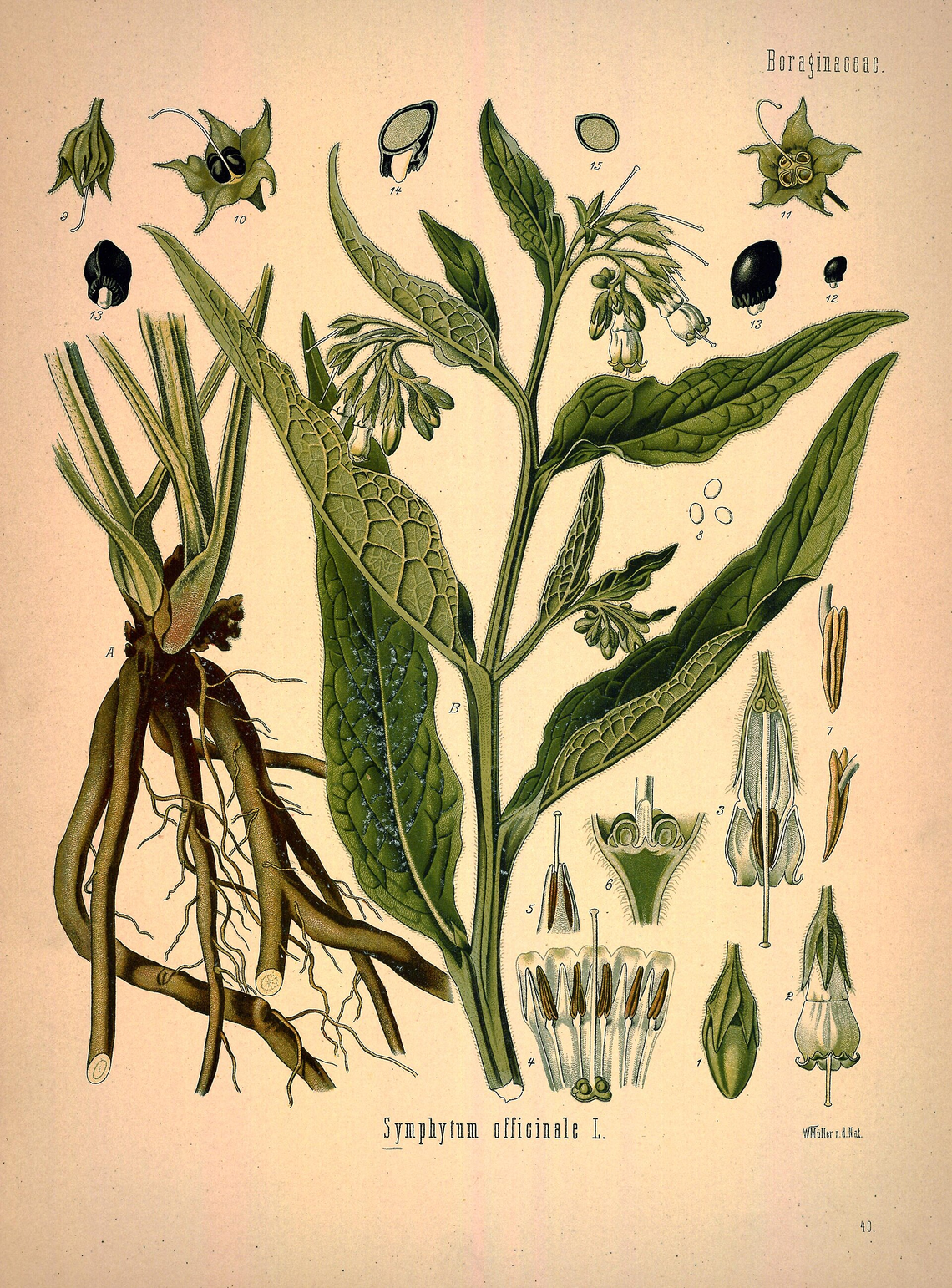
Perennial herb growing 2-4 feet tall with large, hairy leaves and drooping clusters of tubular flowers.
roots
Deep, thick, black-skinned taproot extending 6-10 feet deep; white, mucilaginous interior; regenerates from root fragments.
stem
Thick, hollow, branching stems; covered with stiff hairs; succulent texture; contains abundant mucilage.
leaves
Large, lance-shaped leaves 4-10 inches long; rough, hairy texture; alternate arrangement; prominent parallel veins.
flowers
Drooping clusters of tubular flowers; white, pink, purple, or blue; bell-shaped with 5 lobes; appear in summer.
fruits/seeds
Four small, hard nutlets; black when mature; contained within persistent calyx; reproduce primarily by root division.
Active Compounds
Traditional Uses
- Bone fractures and bone healing
- Wounds, cuts, and bruises
- Sprains and muscle injuries
- Skin conditions and ulcers
- Respiratory ailments (historically internal)
- Digestive disorders (historically internal)
Modern Applications
- External wound healing and tissue repair
- Topical anti-inflammatory for injuries
- Skin conditions and dermatitis (external only)
- Bruises and soft tissue trauma
- Joint and muscle pain (external application)
- Osteoarthritis support (topical preparations)
⚠️ Safety Information
Contraindications
- Internal use (oral consumption) due to liver toxicity
- Pregnancy and breastfeeding
- Liver disease or dysfunction
- Open wounds (may promote healing too rapidly, trapping infection)
Side Effects
- Liver damage with internal use (pyrrolizidine alkaloids)
- Skin sensitivity in some individuals with topical use
- Rapid wound closure may trap debris or infection
Drug Interactions
- Liver-metabolized medications (if used internally)
- No significant interactions with external use
Parts Used
- Leaves (external use only due to safety concerns)
- Roots (traditional internal use now discouraged)
- Fresh plant juice (external use)
- Dried aerial parts (external preparations)
Preparation Methods
EXTERNAL USE ONLY - 2-3 teaspoons dried leaves per cup for compresses
EXTERNAL USE ONLY - roots simmered for poultices
EXTERNAL USE ONLY - 1:5 ratio with 40% alcohol
Fresh crushed leaves applied directly to injuries
Dried leaves in carrier oil for topical anti-inflammatory use
Related Plants
Borage
Borago officinalis
Chickweed
Stellaria media
Coltsfoot
Tussilago farfara
Marshmallow
Althaea officinalis
Mullein
Verbascum thapsus
Plantain
Plantago major