Description
overall appearance
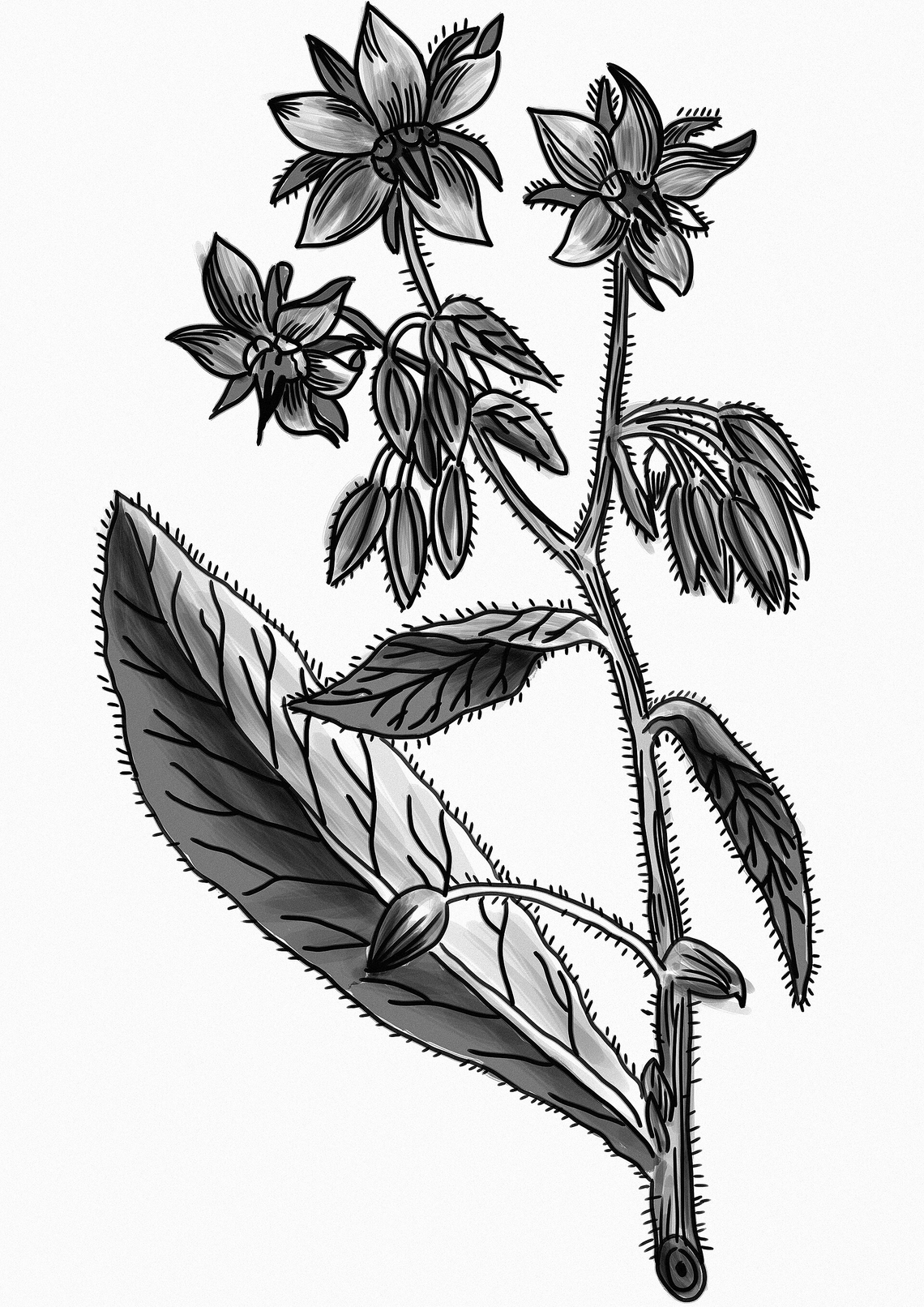
Annual herb growing 2-3 feet tall with hairy stems and leaves; star-shaped blue flowers.
roots
Taproot system extending 12-18 inches deep; fibrous lateral roots.
stem
Thick, hollow, branching stems covered with bristly hairs; succulent texture.
leaves
Large, oval leaves 3-6 inches long; rough, hairy texture; alternate arrangement; gray-green color.
flowers
Star-shaped blue flowers with 5 petals; pink buds opening to bright blue; drooping clusters.
fruits/seeds
Four small, dark nutlets; rich in gamma-linolenic acid (GLA); important for oil production.
Active Compounds
Traditional Uses
- Inflammation and fever reduction
- Respiratory ailments and coughs
- Skin conditions and wound healing
- Depression and melancholy
- Lactation support
- Adrenal support and stress
Modern Applications
- Anti-inflammatory support (seed oil)
- Skin health and eczema (topical oil)
- Hormonal balance (GLA content)
- Cardiovascular health
- Rheumatoid arthritis support
- Adrenal fatigue and stress recovery
⚠️ Safety Information
Contraindications
- Liver disease (pyrrolizidine alkaloids in leaves)
- Pregnancy and breastfeeding (alkaloid concerns with leaves)
- Long-term internal use of leaves
- Seizure disorders (theoretical)
Side Effects
- Generally well-tolerated (seed oil)
- Liver toxicity with excessive leaf consumption
- Digestive upset with large doses
- Skin irritation possible with topical use
Drug Interactions
- Liver-metabolized medications (if using leaves)
- Anticoagulant medications (seed oil may enhance effects)
- Phenothiazines (seed oil interaction)
Parts Used
- Seeds (oil extraction - primary commercial use)
- Leaves (traditional culinary and medicinal)
- Flowers (culinary garnish and mild medicinal)
- Seed oil (standardized GLA content)
Preparation Methods
Cold-pressed for highest GLA content
Fresh flowers steeped in hot water; beautiful blue color
LIMITED USE - 1 teaspoon dried leaves per cup (pyrrolizidine concern)
Fresh crushed leaves for topical inflammation
Seeds or flowers in carrier oil for topical use
Related Plants
Comfrey
Symphytum officinale
Moringa
Moringa oleifera
Ashitaba
Angelica keiskei
Blessed Thistle
Cnicus benedictus
Chamomile
Matricaria chamomilla
Chickweed
Stellaria media