Wild Yam
Dioscorea villosa
Description
overall appearance
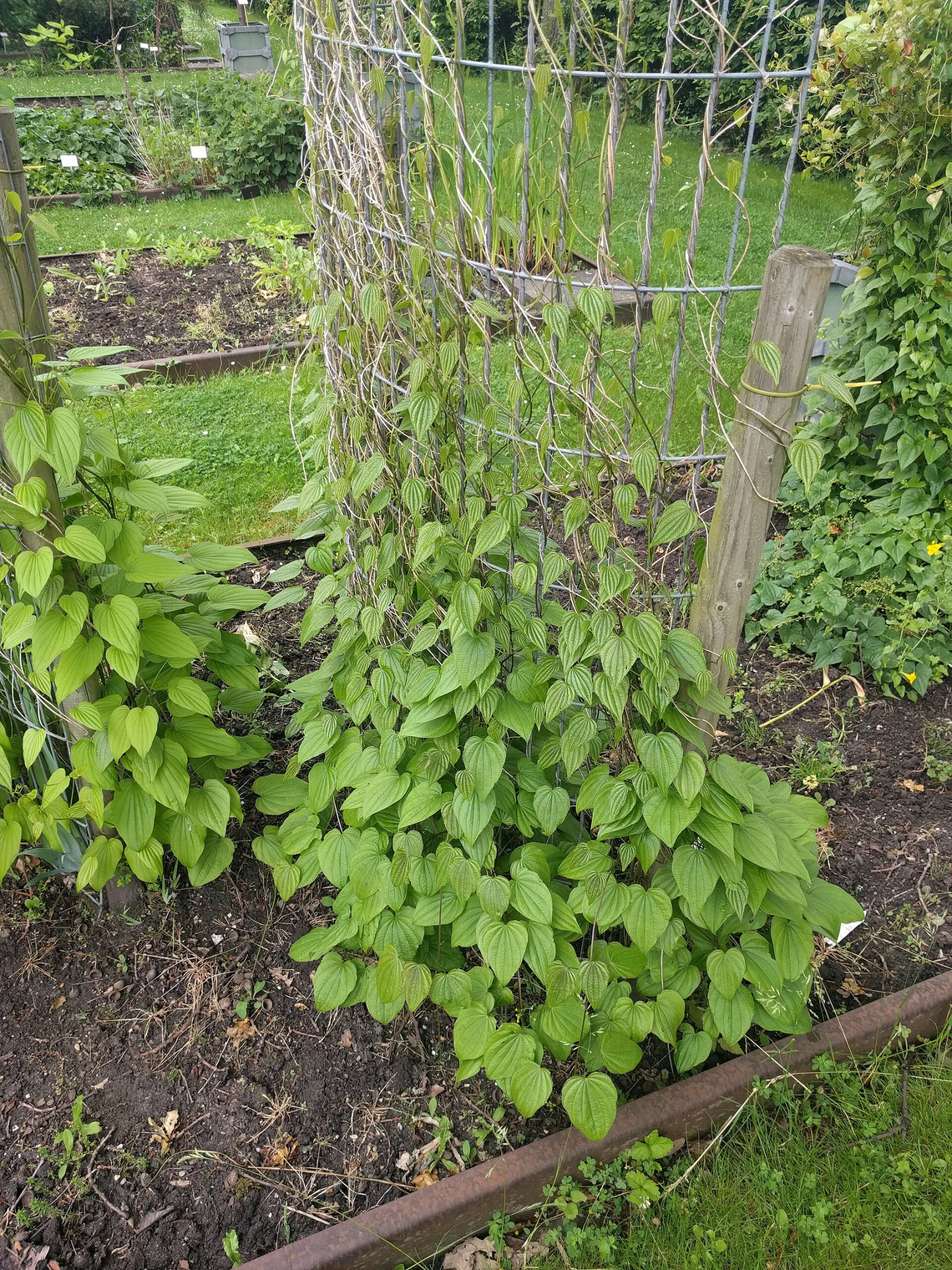
Wild yam is a perennial climbing vine that can reach 10-15 feet in length, twining counterclockwise around supports.
roots
The rhizome is the most medicinally valuable part - thick, knotty, and irregularly branched with a hard, woody texture when dried.
stem
Slender, smooth, green to reddish stems that twine counterclockwise. Stems die back to the ground each winter.
leaves
Heart-shaped leaves are arranged alternately on the stem, with prominent parallel veins running from base to tip. Leaves are 2-6 inches long.
flowers
Small, greenish-white flowers appear in drooping clusters from leaf axils in summer. Plants are dioecious (separate male and female plants).
fruits/seeds
Three-winged capsules develop on female plants, containing flat, winged seeds that disperse by wind.
Active Compounds
Traditional Uses
- Menstrual irregularities and uterine conditions
- Labor pain and childbirth assistance
- Digestive cramping and colic
- Rheumatism and inflammatory conditions
- Biliary colic and liver conditions
- Muscle spasms and nervous tension
Modern Applications
- Women's hormonal health support
- Anti-inflammatory for digestive system
- Antispasmodic for smooth muscle
- Precursor for steroid hormone synthesis (industrial use)
- Traditional menopausal support
⚠️ Safety Information
Contraindications
- Pregnancy and breastfeeding (due to hormonal effects)
- Hormone-sensitive conditions (breast cancer, endometriosis)
- Liver disease
Side Effects
- Nausea and vomiting with large doses
- Skin irritation from fresh plant
- Possible hormonal effects
- Gastric upset
Drug Interactions
- May interact with hormone replacement therapy
- Possible interactions with blood-thinning medications
- May affect blood sugar levels
- Caution with liver medications
Parts Used
- Rhizome and roots (collected in autumn after aerial parts die back)
Preparation Methods
1 tsp dried root per cup water, steep 15 minutes
Simmer 1 oz root in 1 pint water for 20 minutes
1:5 ratio in 50% alcohol, 2-4 ml three times daily
Fresh or moistened dried root for external application
Powdered root in gelatin capsules
Related Plants
Angelica
Angelica archangelica
Oregano
Origanum vulgare
Blue Cohosh
Caulophyllum thalictroides
Celery Seed
Apium graveolens
Elecampane
Inula helenium
Mugwort
Artemisia vulgaris