Description
overall appearance
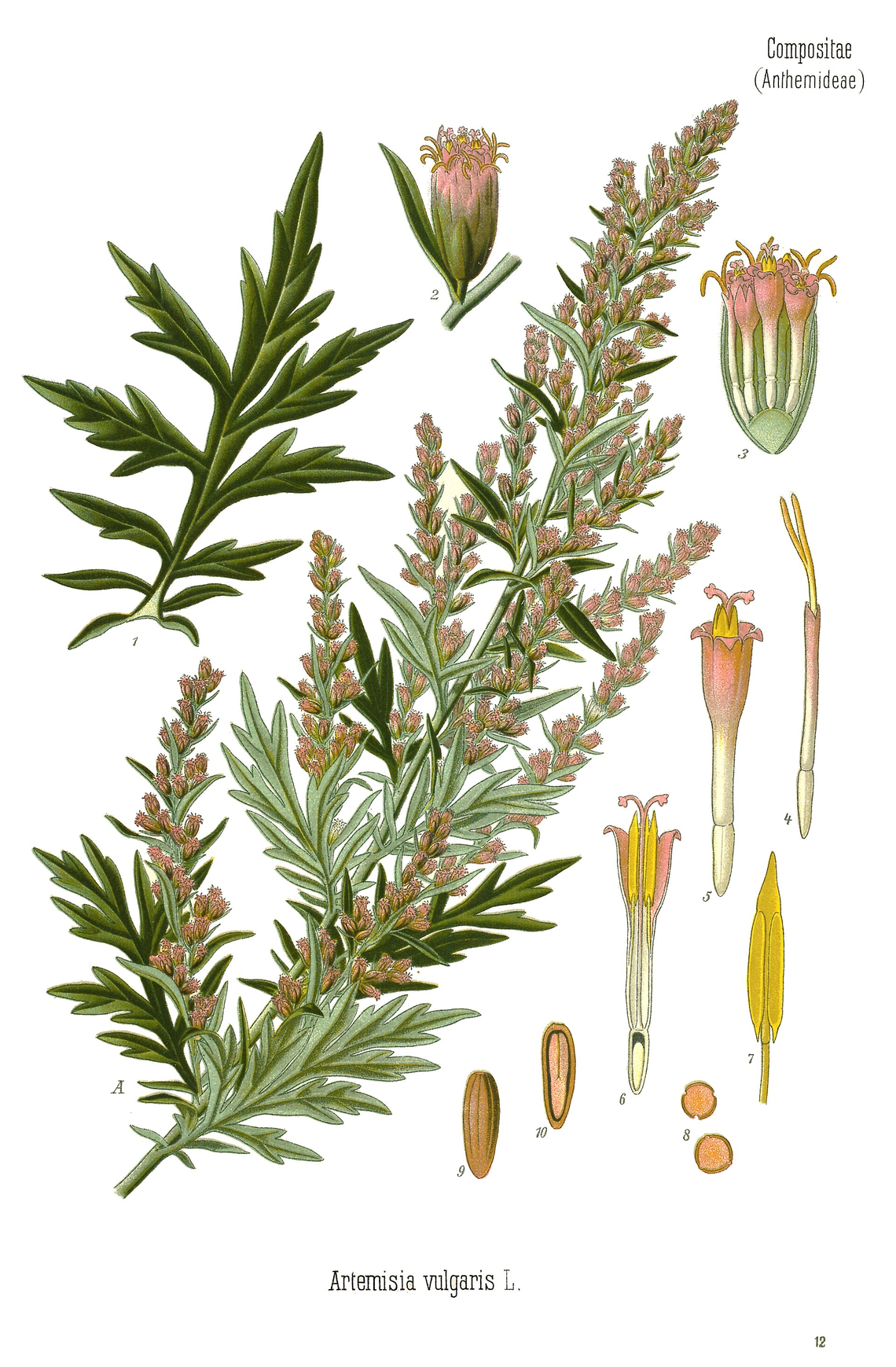
Mugwort is a tall perennial herb growing 3-6 feet tall with an erect, branching growth habit and distinctive silvery-white leaf undersides.
roots
Deep taproot with spreading rhizomes that can form extensive colonies through underground growth.
stem
Erect, grooved stems are often reddish-brown and covered with fine white hairs, especially when young.
leaves
Deeply lobed leaves are dark green above and silvery-white beneath due to dense hairs. Leaves become less divided toward the top of the plant.
flowers
Tiny, inconspicuous yellow-green flowers are arranged in dense panicles. Individual flower heads are very small and numerous.
fruits/seeds
Small achenes are dispersed by wind and can remain viable in soil for several years.
Active Compounds
Traditional Uses
- Digestive disorders and appetite stimulation
- Menstrual irregularities and labor induction
- Nervous conditions and epilepsy
- Parasites and intestinal worms
- Dream enhancement and lucid dreaming
- Protective and cleansing rituals
Modern Applications
- Digestive bitter and appetite stimulant
- Womens reproductive health (under professional guidance)
- Moxibustion in Traditional Chinese Medicine
- Dream work and consciousness exploration
- Topical applications for muscle pain
⚠️ Safety Information
Contraindications
- Pregnancy and breastfeeding (may cause uterine contractions)
- Allergy to Asteraceae family plants
- Epilepsy or seizure disorders
- Porphyria
Side Effects
- Potential allergic reactions (contact dermatitis)
- Possible uterine stimulation
- Thujone toxicity with excessive use
- Gastrointestinal upset
Drug Interactions
- May interact with anticoagulant medications
- Possible interactions with diabetes medications
- May affect seizure medications
- Caution with other herbs containing thujone
Parts Used
- Aerial parts (leaves, stems, flowers)
- Roots (less commonly used)
Preparation Methods
1 tsp dried herb per cup water, steep 10-15 minutes
1:5 ratio in 40% alcohol, 1-3 ml three times daily
Dried leaves smoked for dream enhancement
Dried, aged leaves burned on acupuncture points
For topical muscle and joint applications
Related Plants
Arnica
Arnica montana
Bhringaraj
Eclipta prostrata
Blessed Thistle
Cnicus benedictus
Angelica
Angelica archangelica
Basil
Ocimum basilicum
Catnip
Nepeta cataria