Description
overall appearance
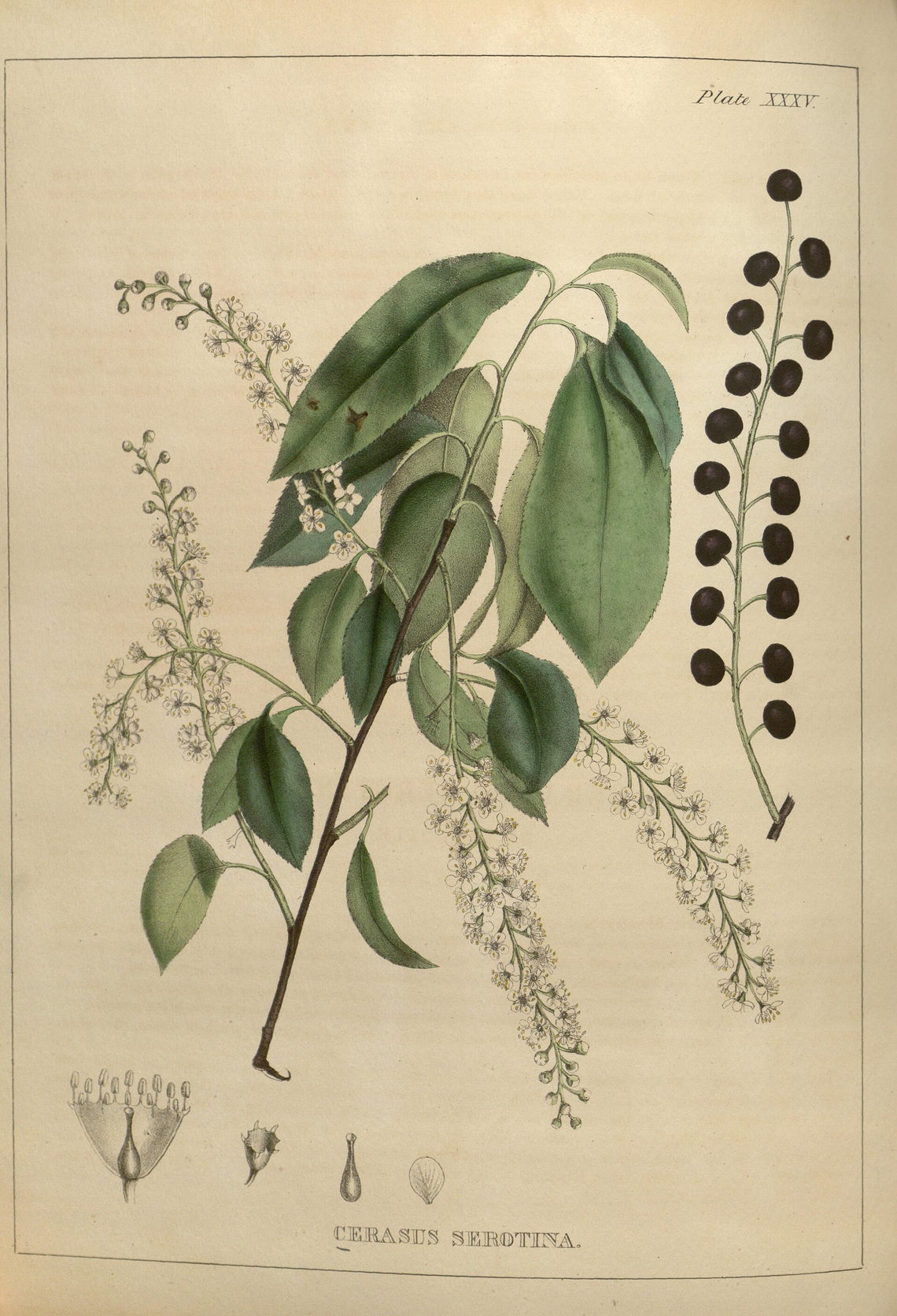
Deciduous tree reaching 50-80 feet tall with distinctive bark and drooping clusters of white flowers.
roots
Deep taproot with extensive lateral root system; forms root suckers creating groves.
stem
Bark distinctive: smooth and dark on young trees, becoming furrowed and plated on mature trees; inner bark aromatic.
leaves
Alternate, simple leaves 2-5 inches long; serrated margins; glossy dark green above, lighter beneath.
flowers
Small white flowers in drooping racemes 4-6 inches long; appear in late spring after leaves.
fruits/seeds
Small, dark purple to black cherries; astringent taste; contain single pit; important wildlife food.
Active Compounds
Traditional Uses
- Coughs and respiratory ailments
- Bronchitis and asthma
- Digestive disorders and diarrhea
- Fever reduction
- Sedative for nervous conditions
- Cold and flu symptoms
Modern Applications
- Cough suppression and respiratory support
- Expectorant for chest congestion
- Anti-inflammatory effects
- Mild sedative properties
- Digestive support (astringent effects)
- Traditional cold and flu remedy
⚠️ Safety Information
Contraindications
- Pregnancy and breastfeeding (cyanogenic glycosides)
- Children under 6 years (cyanide concerns)
- Liver disease (processing burden)
- Large doses (cyanide toxicity)
Side Effects
- Nausea and digestive upset with large doses
- Potential cyanide toxicity with excessive use
- Drowsiness (intended sedative effect)
- Allergic reactions in sensitive individuals
Drug Interactions
- Sedative medications (may enhance effects)
- Liver-metabolized drugs
- MAO inhibitors (theoretical interaction)
- Respiratory depressants
Parts Used
- Inner bark (primary medicinal use)
- Dried bark strips
- Root bark (occasionally)
- Bark tinctures and extracts
Preparation Methods
1 teaspoon dried inner bark per cup; steep 15 minutes
Bark simmered 20 minutes for stronger respiratory effects
1:5 ratio with 50% alcohol; macerate dried bark 4 weeks
Traditional cough syrup with honey and bark decoction
Bark soaked in cold water overnight for milder effects
Related Plants
Hawthorn
Crataegus spp.
Meadowsweet
Filipendula ulmaria
Pygeum
Prunus africana
Basil
Ocimum basilicum
Blue Vervain
Verbena hastata
Holy Basil
Ocimum tenuiflorum