Description
overall appearance
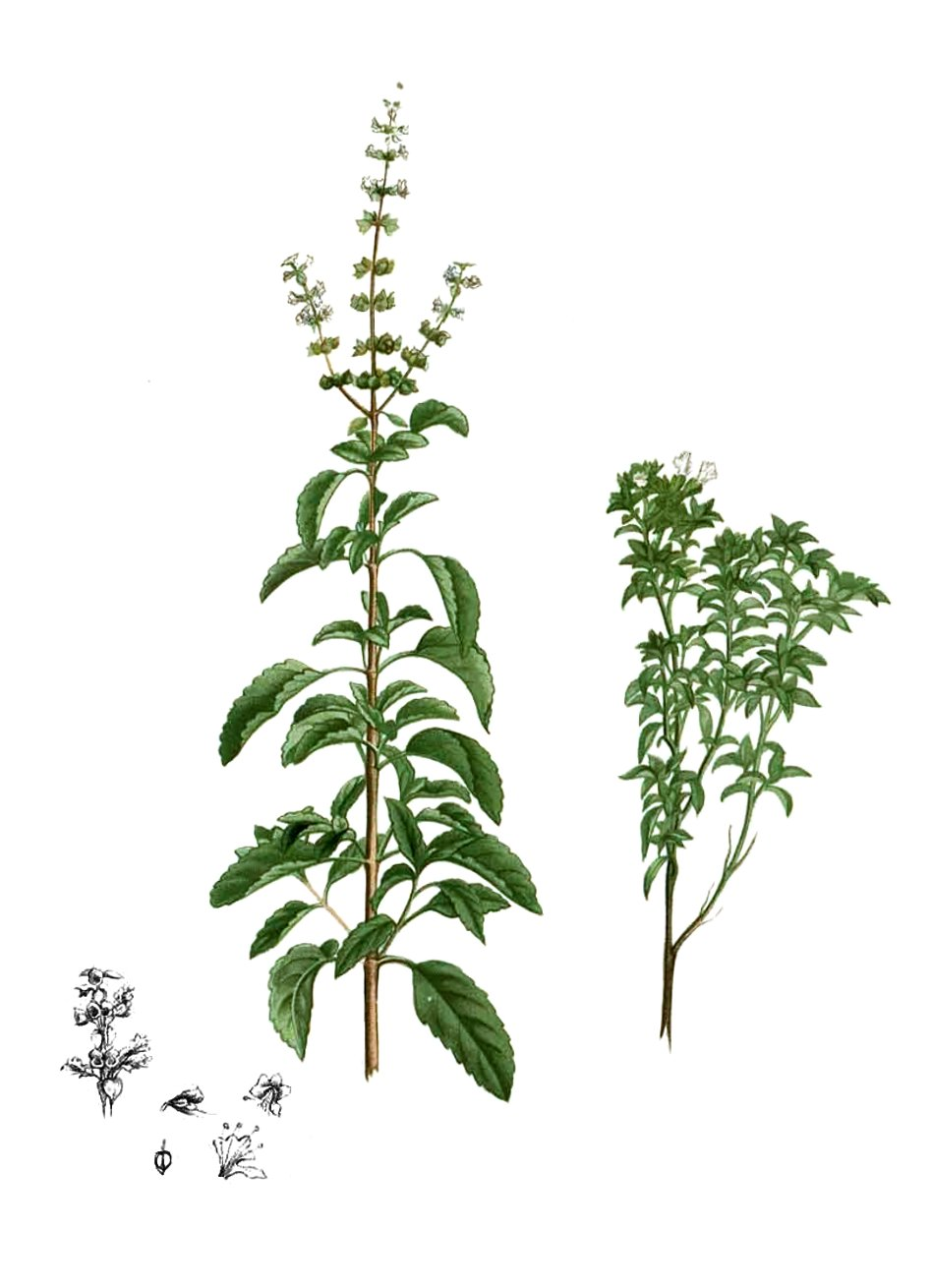
Aromatic perennial herb growing 1-3 feet tall with square stems, serrated leaves, and purple or white flower spikes; highly branched with a strong, distinctive fragrance.
roots
Fibrous root system that spreads horizontally near the surface; roots are light brown and form a dense network in the upper soil layers.
stem
Square, green to purplish stems characteristic of the mint family; stems are hairy and branch extensively, becoming woody at the base in older plants.
leaves
Opposite, oval to lance-shaped leaves 1-2 inches long with serrated margins; leaves are green to purple-tinged with a strong, clove-like aroma when crushed.
flowers
Small, tubular, purple, pink, or white flowers arranged in elongated spikes (racemes); flowers are 2-lipped and bloom continuously in suitable climates.
fruits/seeds
Small, dark brown to black nutlets (seeds) about 1mm long; seeds are mucilaginous when wet and have been used traditionally for eye problems.
Active Compounds
Traditional Uses
- Respiratory conditions (colds, cough, asthma, bronchitis)
- Stress reduction and mental clarity
- Digestive disorders and stomach problems
- Fever and infectious diseases
- Skin conditions and wounds
- Spiritual purification and meditation enhancement
- Immune system strengthening
Modern Applications
- Adaptogenic stress response support
- Respiratory health and allergies
- Blood sugar regulation in diabetes
- Cardiovascular protection
- Anti-inflammatory and antimicrobial effects
- Liver protection and detoxification
- Cognitive enhancement and neuroprotection
⚠️ Safety Information
Contraindications
- Pregnancy and breastfeeding (may affect reproductive hormones)
- Bleeding disorders (may slow blood clotting)
- Surgery (discontinue 2 weeks prior)
- Diabetes (monitor blood sugar closely)
Side Effects
- Nausea or stomach upset (rare)
- Possible blood sugar changes
- May affect fertility in high doses
- Skin irritation in sensitive individuals
Drug Interactions
- Blood-thinning medications (may enhance effects)
- Diabetes medications (may lower blood sugar)
- Blood pressure medications (may enhance effects)
- Liver medications (may affect metabolism)
Parts Used
- Leaves (primary medicinal part)
- Seeds (traditional use for eye conditions)
- Whole aerial parts during flowering
Preparation Methods
1-2 teaspoons dried leaves per cup boiling water, steep 5-10 minutes
1-2 teaspoons fresh leaf juice daily on empty stomach
1 tablespoon leaves per cup water, simmer 10 minutes
1:5 ratio in 45% alcohol, 2-4 ml twice daily
1-3 grams dried leaf powder daily with honey or water
Related Plants
Basil
Ocimum basilicum
Cat's Whiskers / Java Tea
Orthosiphon aristatus
Catnip
Nepeta cataria
Elderberry
Sambucus canadensis
Andrographis
Andrographis paniculata
Ashitaba
Angelica keiskei