Description
overall appearance
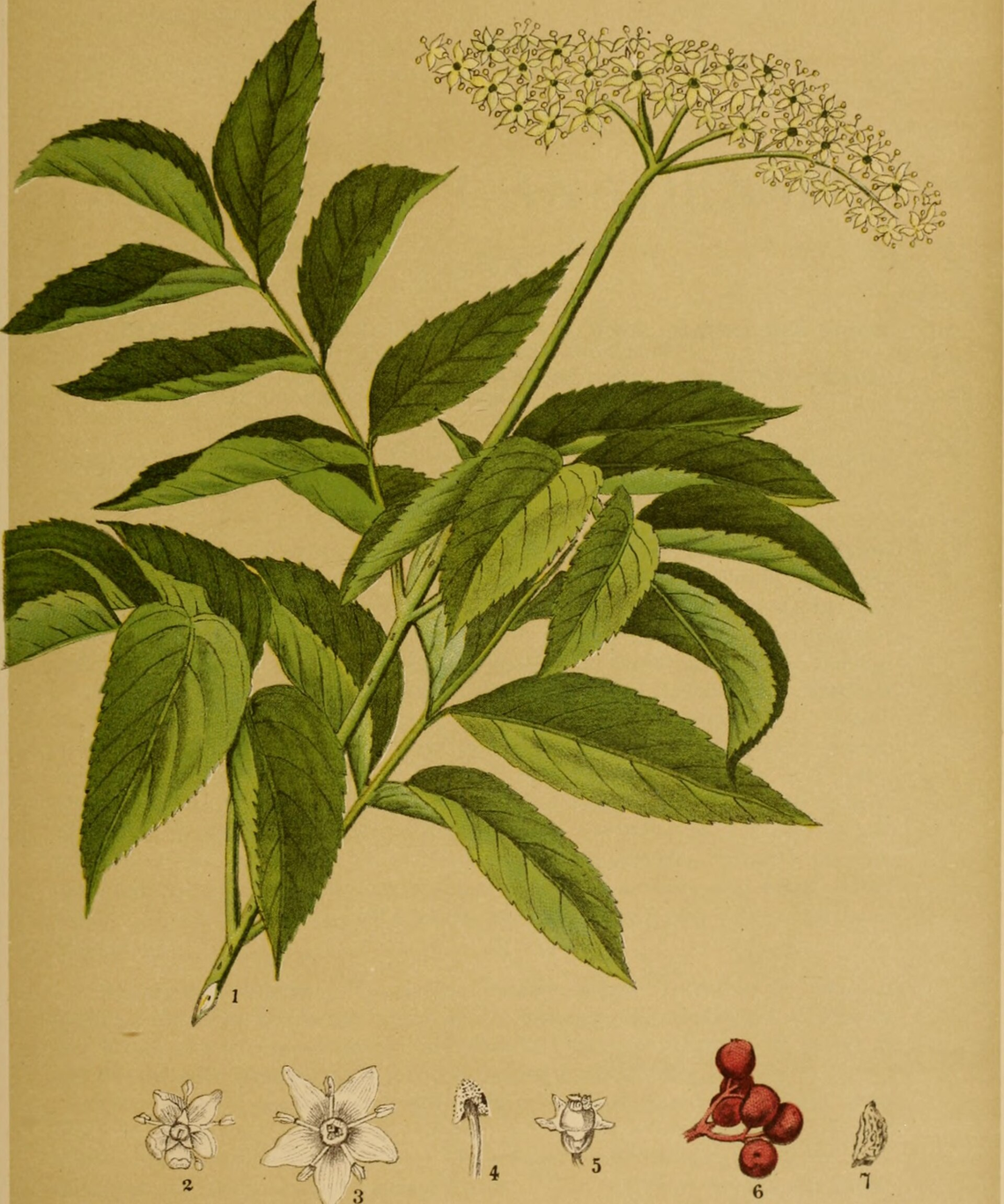
Large deciduous shrub or small tree growing 8-15 feet tall with multiple stems and large, flat-topped clusters of small white flowers followed by dark purple berries.
roots
Extensive, shallow root system that spreads readily; roots are fibrous and help stabilize soil along waterways and prevent erosion.
stem
Multiple hollow stems with light brown bark and prominent white pith; young stems are green to reddish, becoming gray-brown with age; stems have distinctive lenticels.
leaves
Opposite, pinnately compound leaves with 5-9 serrated leaflets; leaflets are lance-shaped, 2-6 inches long, with a strong odor when crushed.
flowers
Small, creamy white flowers in large, flat-topped clusters (cymes) 4-8 inches across; flowers have a sweet, honey-like fragrance and bloom from May to July.
fruits/seeds
Small, dark purple to black berries in large, drooping clusters; berries are 1/4 inch diameter with 3-5 seeds and ripen from August to September.
Active Compounds
Traditional Uses
- Cold and flu treatment and prevention
- Fever reduction and respiratory infections
- Immune system support during illness
- Inflammatory conditions and pain relief
- Skin conditions and wound healing
- Digestive complaints and constipation
Modern Applications
- Antiviral effects against influenza and other respiratory viruses
- Immune system modulation and support
- Antioxidant and anti-inflammatory effects
- Upper respiratory tract infection treatment
- Cardiovascular health support
- Potential anti-cancer properties
⚠️ Safety Information
Contraindications
- Raw elderberry consumption (can cause nausea)
- Use of bark, leaves, or roots (contains toxic compounds)
- Known allergy to plants in Adoxaceae family
Side Effects
- Gastrointestinal upset with raw berries
- Nausea and digestive disturbance
- Allergic reactions in sensitive individuals
- Potential cyanide poisoning from bark/leaves (avoid these parts)
Drug Interactions
- Diabetes medications (berries may lower blood sugar)
- Diuretic medications (potential additive effects)
- Laxatives (may enhance effects)
- Immunosuppressive drugs (may counteract effects)
Parts Used
- Ripe berries (primary medicinal and culinary use)
- Flowers (traditional medicinal use)
- Inner bark (traditional use, requires caution)
Preparation Methods
Fresh berries cooked with honey or sugar, 1-2 tablespoons as needed
1-2 teaspoons dried flowers per cup boiling water, steep 10-15 minutes
1 tablespoon berries per cup water, simmer 15 minutes
1:5 ratio in 40% alcohol, 2-4 ml three times daily
Traditional fermented preparation for winter wellness
Related Plants
Holy Basil
Ocimum tenuiflorum
Andrographis
Andrographis paniculata
Ashitaba
Angelica keiskei
Blue Vervain
Verbena hastata
Coptis / Goldthread
Coptis chinensis
Lemongrass
Cymbopogon citratus