Description
overall appearance
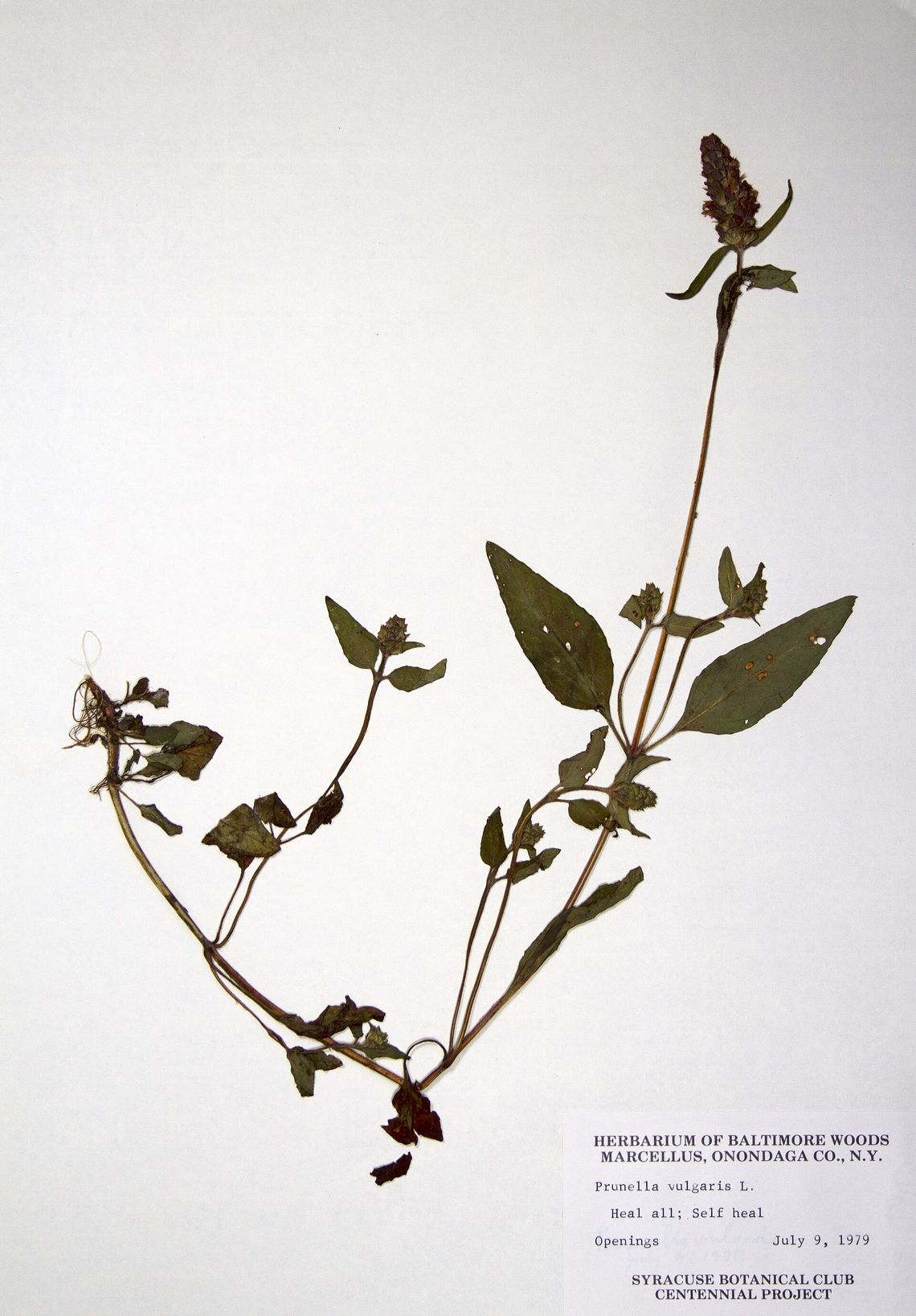
Self-heal is a low-growing perennial herb, typically 6-12 inches tall, with square stems and distinctive purple flower spikes.
roots
Fibrous root system with creeping rhizomes that spread to form colonies and mats in suitable conditions.
stem
Square stems characteristic of mint family, often prostrate at base then ascending, with nodes that root when touching ground.
leaves
Opposite, oval leaves are 1-2 inches long with smooth or slightly toothed margins. Leaves have prominent veining and may be slightly hairy.
flowers
Purple to violet tubular flowers are arranged in dense, cylindrical spikes at stem tips. Individual flowers have distinctive hooded upper lip.
fruits/seeds
Small nutlets (typically 4 per flower) are smooth, brown, and oval-shaped.
Active Compounds
Traditional Uses
- Wound healing and cuts
- Mouth sores and sore throat
- Digestive inflammation
- Skin conditions and burns
- Eye irritations
- Hemorrhoids and varicose veins
Modern Applications
- Topical wound healing and tissue repair
- Anti-inflammatory for mucous membranes
- Antioxidant and immune support
- Astringent for bleeding and inflammation
- Natural antiseptic for minor injuries
⚠️ Safety Information
Contraindications
- None known for typical external use
- Avoid large internal doses during pregnancy
- Rare allergic reactions in sensitive individuals
Side Effects
- Generally very well-tolerated
- Possible mild astringent effect with large doses
- Rare skin sensitivity with prolonged topical use
Drug Interactions
- No significant interactions reported
- May enhance effects of other wound healing preparations
- Generally considered very safe
Parts Used
- Aerial parts (leaves, stems, flowers)
- Fresh or dried plant material
Preparation Methods
1-2 tsp dried herb per cup water, steep 10-15 minutes
Fresh crushed leaves applied directly to wounds
Strong tea for mouth and throat conditions
1:5 ratio in 40% alcohol, 2-4 ml three times daily
Fresh herb infused in olive oil for topical use
Related Plants
Basil
Ocimum basilicum
Cat's Whiskers / Java Tea
Orthosiphon aristatus
Catnip
Nepeta cataria
Marshmallow
Althaea officinalis
Oak
Quercus spp.
Witch Hazel
Hamamelis virginiana