Wood Betony
Stachys betonica
Description
overall appearance
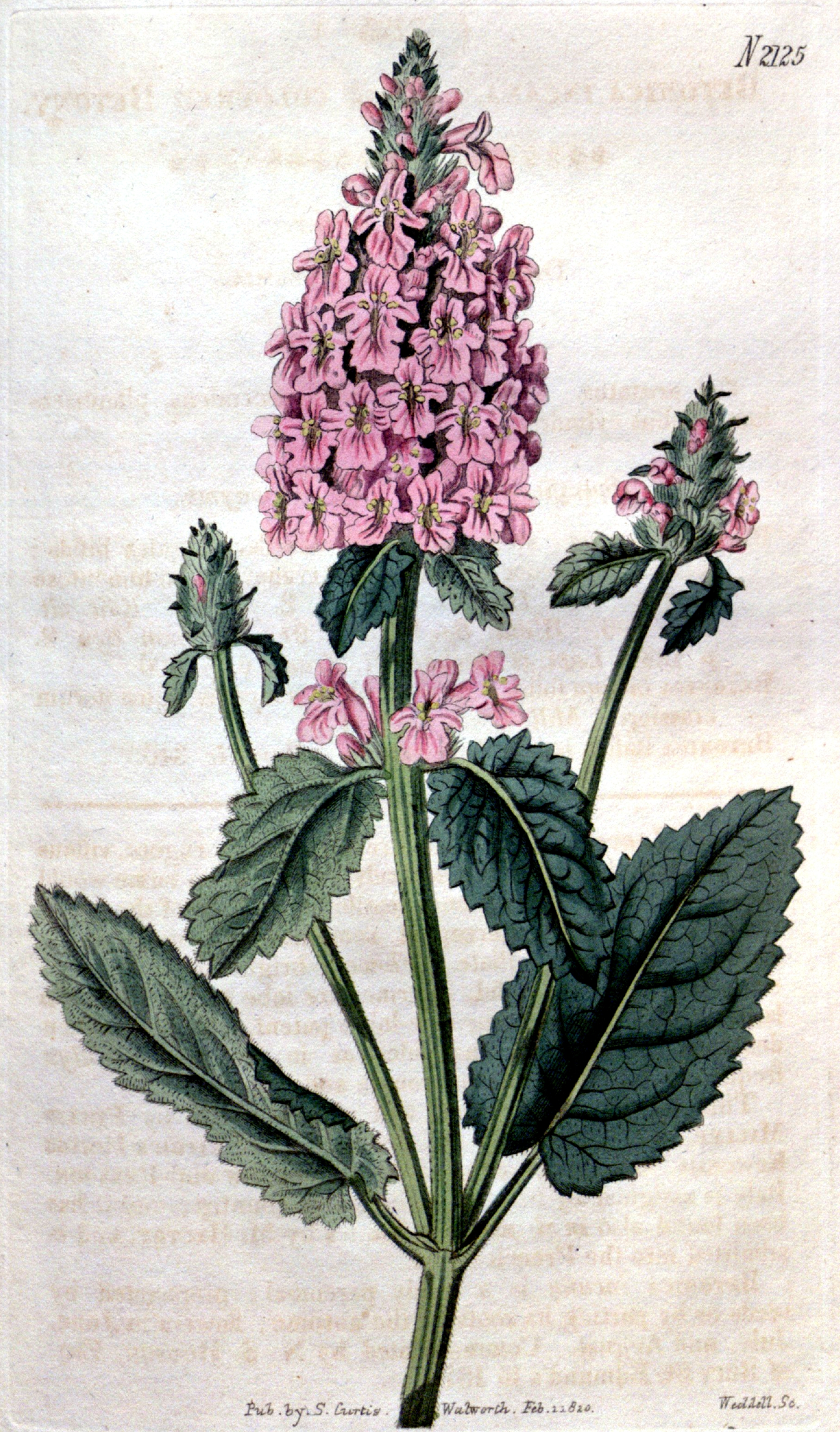
Wood betony is an upright perennial herb growing 1-2 feet tall with distinctive spikes of purple-red flowers and wrinkled leaves.
roots
Fibrous root system with short rhizomes that form clumps rather than spreading aggressively like some mint family members.
stem
Square stems characteristic of mint family, erect and sturdy, usually unbranched below the flower spike.
leaves
Opposite leaves are distinctively wrinkled and deeply veined. Basal leaves are larger (2-4 inches) with long petioles, while stem leaves are smaller and sessile.
flowers
Purple-red to magenta tubular flowers are arranged in dense, cylindrical spikes at stem tips. Flowers have characteristic two-lipped shape.
fruits/seeds
Small, brown nutlets (typically 4 per flower) are smooth and oval-shaped.
Active Compounds
Traditional Uses
- Nervous system disorders and anxiety
- Headaches and migraines
- Digestive weakness and poor appetite
- Liver and gallbladder conditions
- Respiratory conditions and asthma
- Wounds and bleeding
Modern Applications
- Natural anxiety and stress relief
- Digestive tonic and bitter stimulant
- Headache and tension relief
- Mild sedative for nervous conditions
- Astringent for topical applications
⚠️ Safety Information
Contraindications
- Pregnancy and breastfeeding (due to alkaloid content)
- Low blood pressure (may lower blood pressure further)
- Before surgery (sedative effects)
Side Effects
- Generally well-tolerated in moderate doses
- Possible drowsiness with large amounts
- Mild digestive upset in sensitive individuals
- Potential blood pressure lowering effects
Drug Interactions
- May enhance effects of sedative medications
- Possible interactions with blood pressure medications
- May increase effects of other nervous system depressants
- Caution with liver medications
Parts Used
- Aerial parts (leaves, stems, flowers)
- Traditionally the leaves were most valued
Preparation Methods
1-2 tsp dried herb per cup water, steep 10-15 minutes
For stronger bitter effects, simmer briefly
1:5 ratio in 40% alcohol, 2-4 ml three times daily
Traditional use of powdered leaves for headaches
Fresh crushed leaves for wounds and inflammation
Related Plants
Basil
Ocimum basilicum
Cat's Whiskers / Java Tea
Orthosiphon aristatus
Catnip
Nepeta cataria
Blessed Thistle
Cnicus benedictus
Blue Vervain
Verbena hastata
Lemon Verbena
Aloysia citrodora