Description
overall appearance
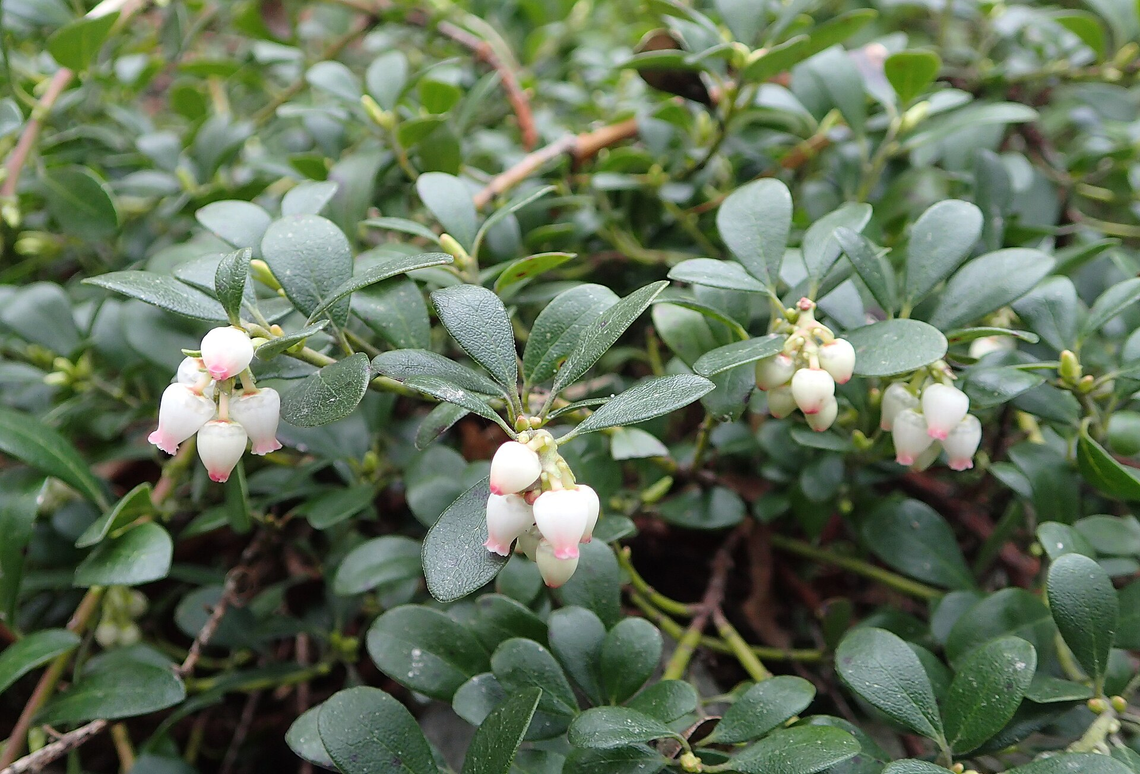
Low-growing evergreen shrub forming dense mats; trailing stems reach 3-6 feet long but only 6 inches tall.
roots
Shallow, fibrous root system with extensive horizontal spread; forms mycorrhizal associations.
stem
Woody, trailing stems; reddish-brown bark; branches root at nodes creating new plants.
leaves
Small, evergreen leaves 1/2-1 inch long; oval to spatulate shape; thick, leathery texture; shiny dark green.
flowers
Small, pink to white bell-shaped flowers in terminal clusters; appear in late spring to early summer.
fruits/seeds
Bright red berries containing 5 seeds; dry and mealy texture; important food for bears and birds.
Active Compounds
Traditional Uses
- Urinary tract infections and cystitis
- Kidney and bladder stones
- Prostate disorders and inflammation
- Diarrhea and digestive inflammation
- Wounds and skin conditions
- Traditional smoking mixture
Modern Applications
- Urinary tract infection treatment
- Bladder and kidney health support
- Antimicrobial and antiseptic effects
- Anti-inflammatory support
- Astringent for digestive issues
- Research into antibiotic-resistant bacteria
⚠️ Safety Information
Contraindications
- Pregnancy and breastfeeding (insufficient safety data)
- Children under 12 years
- Kidney disease or kidney stones
- Liver disease (hydroquinone metabolism)
Side Effects
- Nausea and stomach irritation
- Green discoloration of urine (harmless but alarming)
- Liver damage with long-term use
- Tinnitus (ringing in ears) with excessive doses
Drug Interactions
- Lithium (may affect elimination)
- Diuretic medications
- NSAIDs (may increase kidney stress)
- Medications that acidify urine (may reduce effectiveness)
Parts Used
- Leaves (primary medicinal use)
- Dried leaf preparations
- Standardized extracts
- Traditional smoking mixtures
Preparation Methods
1-2 teaspoons dried leaves per cup; steep 15-20 minutes
Leaves soaked in cold water 12-24 hours (reduces tannin extraction)
1:5 ratio with 40% alcohol; macerate dried leaves 4 weeks
Capsules with guaranteed arbutin content
Ground leaves for topical wound healing
Related Plants
Cranberry
Vaccinium macrocarpon
Wintergreen
Gaultheria procumbens
Hibiscus
Hibiscus sabdariffa
Horsetail
Equisetum arvense
Juniper
Juniperus communis
Slippery Elm
Ulmus rubra