Description
overall appearance
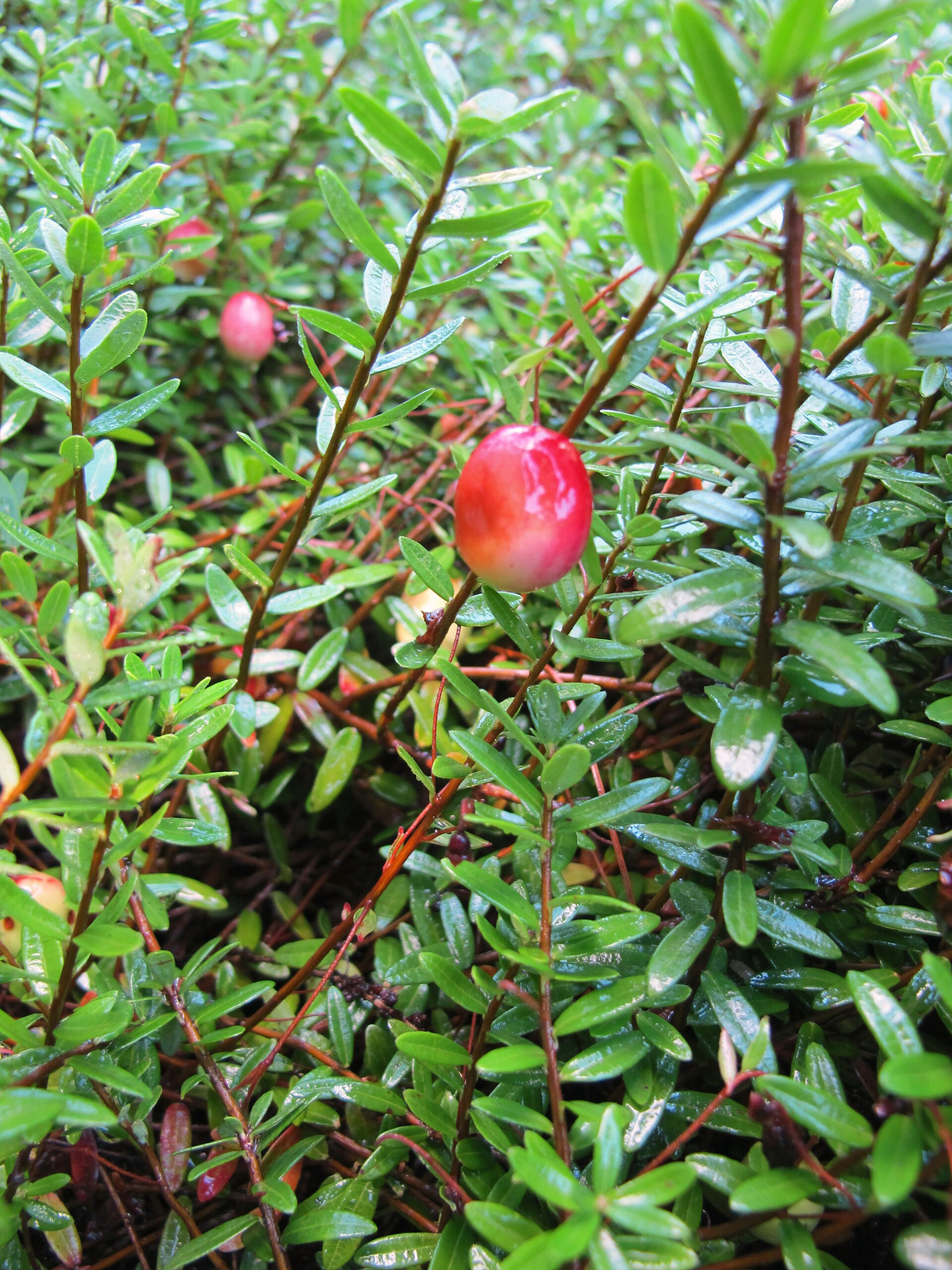
Low-growing, evergreen shrub forming dense mats with trailing stems and small, dark green leaves; produces distinctive red berries in fall.
roots
Shallow, fibrous root system adapted to boggy conditions; roots form associations with mycorrhizal fungi to help absorb nutrients from acidic soils.
stem
Slender, creeping stems (runners) that trail along the ground and root at nodes; stems are reddish-brown and can extend several feet in length.
leaves
Small, alternate, evergreen leaves 1/4 to 1/2 inch long; oval to elliptical with smooth margins, dark green above and lighter beneath with a waxy coating.
flowers
Small, pink to white nodding flowers with four reflexed petals resembling a crane's head; flowers bloom in late spring to early summer on short upright shoots.
fruits/seeds
Bright red, tart berries 1/4 to 1/2 inch in diameter with four air pockets that help them float; berries ripen in fall and can persist through winter.
Active Compounds
Traditional Uses
- Urinary tract infections and kidney problems
- Scurvy prevention during long sea voyages
- Stomach ailments and digestive disorders
- Wound healing and skin conditions
- Blood purification and detoxification
- Winter food source and preservation
Modern Applications
- Prevention of urinary tract infections (UTIs)
- Cardiovascular health support
- Antioxidant and anti-inflammatory effects
- Dental health and oral hygiene
- H. pylori infection management
- Immune system support
⚠️ Safety Information
Contraindications
- History of kidney stones (calcium oxalate type)
- Warfarin therapy (without medical supervision)
- Known allergy to berries or Ericaceae family
Side Effects
- Gastrointestinal upset with large amounts
- Diarrhea or stomach cramping
- Possible increased bleeding risk with blood thinners
- Dental enamel erosion with frequent juice consumption
Drug Interactions
- Warfarin and other blood thinners (may enhance effects)
- Some medications metabolized by liver enzymes
- Potential interaction with certain antibiotics
Parts Used
- Fresh or dried berries (primary medicinal part)
- Leaves (traditional use, less common)
- Juice and concentrated extracts
Preparation Methods
1/4 to 1/2 cup unsweetened juice daily for UTI prevention
1-2 teaspoons dried berries per cup boiling water, steep 10 minutes
1 tablespoon fresh berries per cup water, simmer 10-15 minutes
1/4 cup daily as food or medicine
300-400mg proanthocyanidin standardized extract daily
Related Plants
Uva Ursi
Arctostaphylos uva-ursi
Wintergreen
Gaultheria procumbens
Ashitaba
Angelica keiskei
Buchu
Agathosma betulina
Cleavers
Galium aparine
Hibiscus
Hibiscus sabdariffa