Description
overall appearance
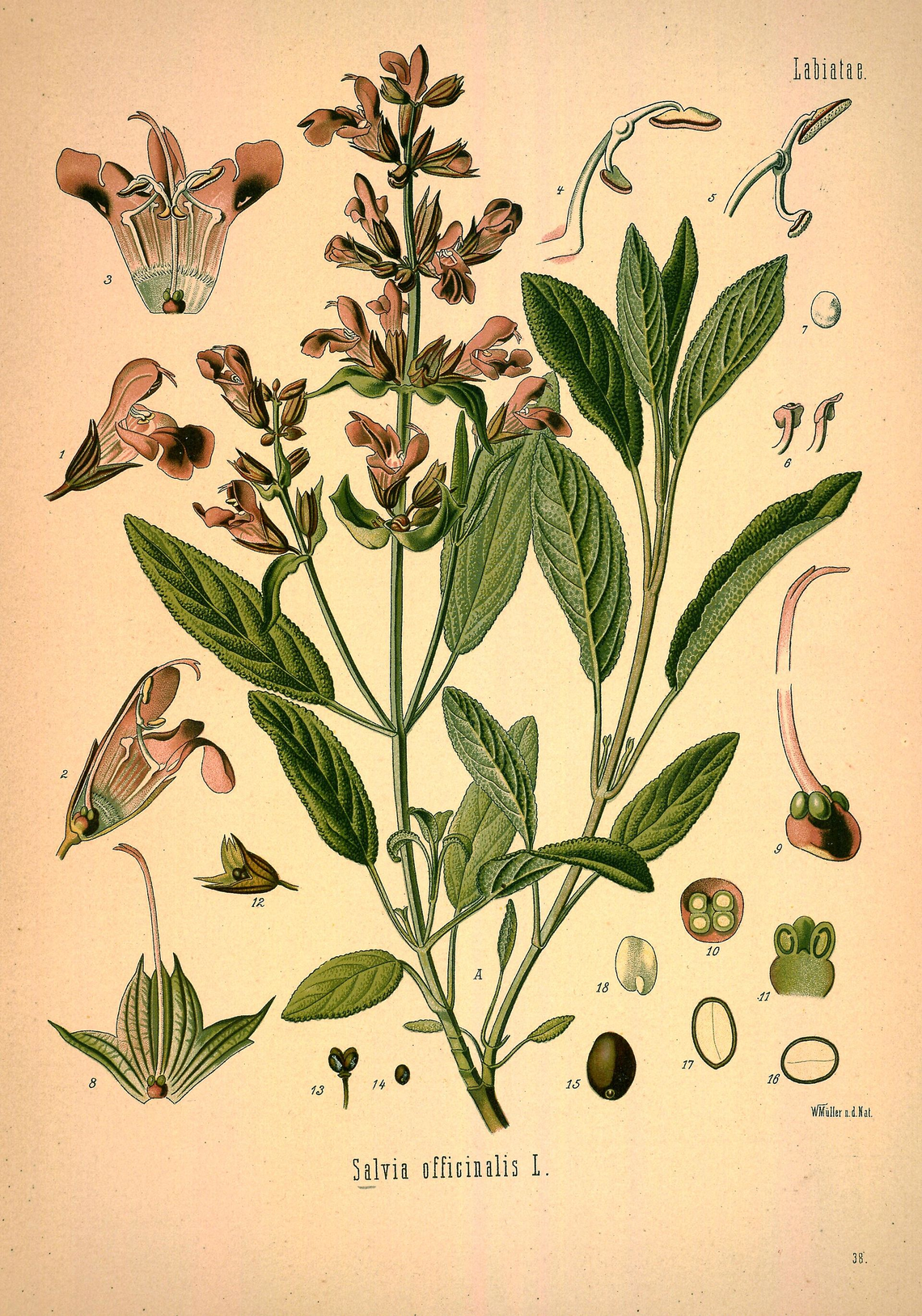
Evergreen perennial subshrub growing 1-3 feet tall with gray-green, velvety leaves and purple-blue flower spikes; forms woody base with herbaceous tops.
roots
Deep taproot with spreading lateral roots; roots are woody and help the plant survive drought conditions.
stem
Square stems (characteristic of mint family) that are woody at base, herbaceous above; stems are covered with fine, soft hairs.
leaves
Opposite, oval to lance-shaped leaves 1-3 inches long with wrinkled surface and velvety texture; leaves are gray-green and highly aromatic.
flowers
Small, tubular, two-lipped flowers arranged in whorls on terminal spikes; flowers are typically purple-blue, sometimes pink or white.
fruits/seeds
Small, brown nutlets containing one seed each; fruits develop in late summer and are gravity-dispersed.
Active Compounds
Traditional Uses
- Menopausal symptoms and hot flashes
- Excessive sweating and night sweats
- Sore throat and mouth inflammation
- Digestive complaints and poor appetite
- Memory problems and mental fatigue
- Wound healing and skin conditions
- Milk production regulation (drying)
Modern Applications
- Menopausal symptom relief
- Cognitive enhancement and memory support
- Antimicrobial effects for oral health
- Anti-inflammatory properties
- Antioxidant protection
- Excessive sweating control
- Digestive system support
⚠️ Safety Information
Contraindications
- Pregnancy and breastfeeding (contains thujone and affects hormones)
- Epilepsy (thujone may trigger seizures in large amounts)
- Estrogen-sensitive conditions (breast cancer, endometriosis)
Side Effects
- Generally safe in culinary amounts
- Possible allergic reactions in sensitive individuals
- Dry mouth with excessive use
- Potential hormonal effects with large doses
Drug Interactions
- Diabetes medications (may affect blood sugar)
- Sedative medications (may enhance effects)
- Anticonvulsant drugs (thujone may interfere)
- Hormone medications
Parts Used
- Leaves (primary medicinal part)
- Flowering tops
- Essential oil from aerial parts
Preparation Methods
1-2 teaspoons dried leaves per cup boiling water, steep 5-10 minutes
Strong tea used for throat and mouth inflammation
1:5 ratio in 45% alcohol, 2-4 ml twice daily
Diluted for topical use or aromatherapy
Fresh leaves crushed and applied to wounds
Related Plants
Basil
Ocimum basilicum
Cat's Whiskers / Java Tea
Orthosiphon aristatus
Catnip
Nepeta cataria
Oak
Quercus spp.
Alfalfa
Medicago sativa
Fennel
Foeniculum vulgare