Description
overall appearance
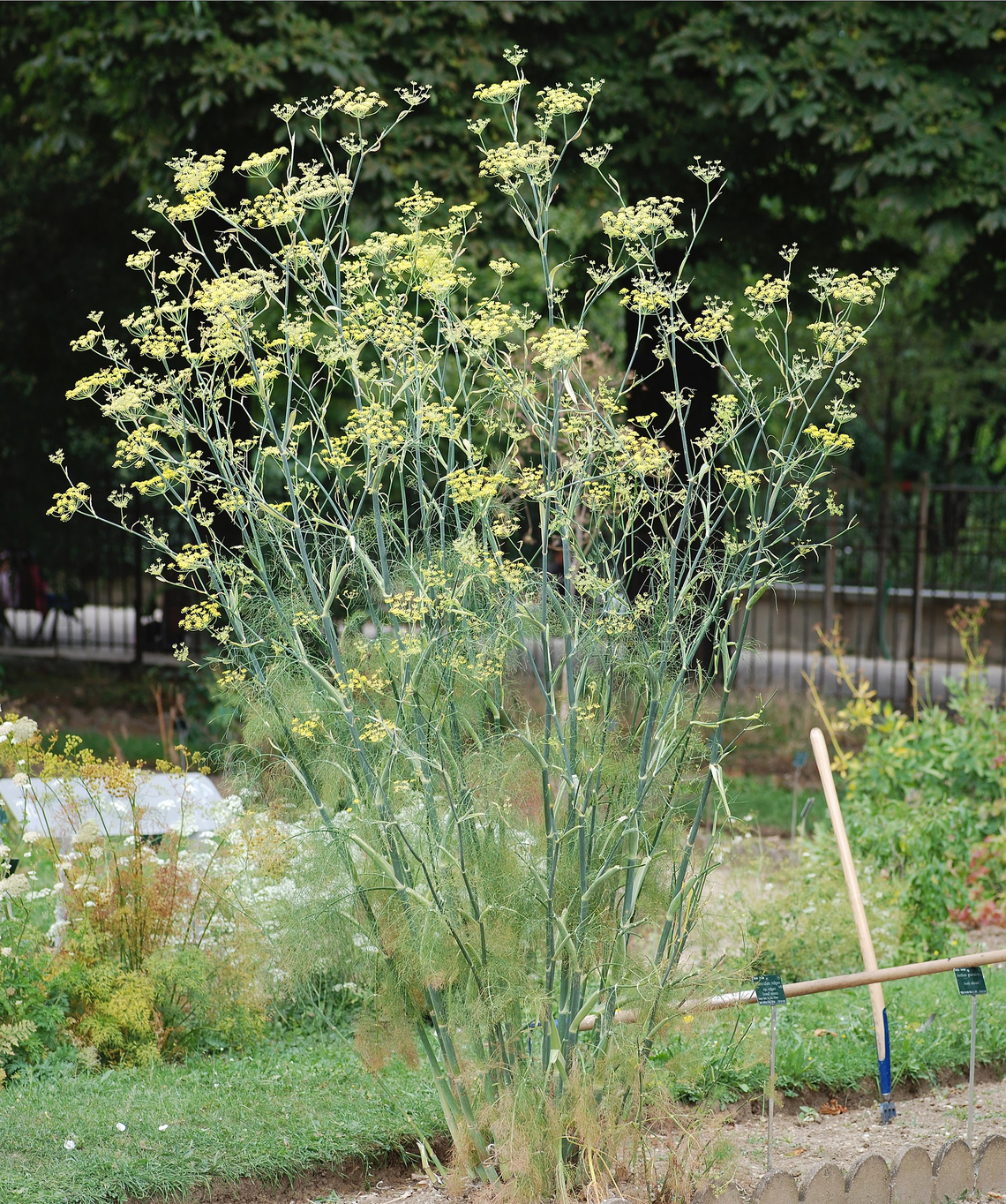
Tall perennial herb growing 3-8 feet tall with feathery, thread-like leaves and large, flat-topped clusters of small yellow flowers.
roots
Deep taproot system that can penetrate several feet into soil; roots are pale yellow to brown and have a sweet, anise-like aroma.
stem
Hollow, grooved stems that are smooth and branching; stems are blue-green with a waxy coating and can reach 1-2 inches in diameter.
leaves
Alternate, finely divided leaves that are feathery and thread-like; leaves are blue-green and highly aromatic when crushed.
flowers
Small, yellow flowers arranged in large, flat-topped compound umbels 4-6 inches across; flowers bloom from July to October.
fruits/seeds
Small, oval, ribbed fruits (often called seeds) about 1/4 inch long; fruits are brown when mature and have a sweet, licorice-like flavor.
Active Compounds
Traditional Uses
- Digestive complaints (gas, bloating, colic)
- Respiratory conditions (coughs, bronchitis)
- Lactation support and milk production
- Menstrual disorders and menopausal symptoms
- Eye inflammation and vision problems
- Infant colic and digestive upset
- Bad breath and oral hygiene
Modern Applications
- Irritable bowel syndrome (IBS) symptom relief
- Infantile colic treatment
- Lactation support for nursing mothers
- Menopausal symptom management
- Antispasmodic effects for digestive tract
- Antimicrobial and antifungal properties
- Anti-inflammatory effects
⚠️ Safety Information
Contraindications
- Allergy to plants in Apiaceae family
- Estrogen-sensitive conditions (due to estrogenic activity)
- Pregnancy in large medicinal doses (safe in culinary amounts)
Side Effects
- Allergic reactions in sensitive individuals
- Photosensitivity with large amounts
- Possible estrogenic effects with excessive use
- Nausea with very large doses
Drug Interactions
- Estrogen medications (may have additive effects)
- Ciprofloxacin (may reduce absorption)
- Tamoxifen (theoretical interaction)
Parts Used
- Seeds/fruits (primary medicinal part)
- Leaves (culinary and mild medicinal use)
- Roots (traditional European use)
Preparation Methods
1-2 teaspoons crushed seeds per cup boiling water, steep 10-15 minutes
1 tablespoon seeds per cup water, simmer 10 minutes
1:5 ratio in 45% alcohol, 2-4 ml three times daily
Essential oil diluted for topical use or aromatherapy
1-3 grams powdered seeds daily
Related Plants
Angelica
Angelica archangelica
Ashitaba
Angelica keiskei
Celery Seed
Apium graveolens
Chamomile
Matricaria chamomilla
Star Anise
Illicium verum
Basil
Ocimum basilicum