Description
overall appearance
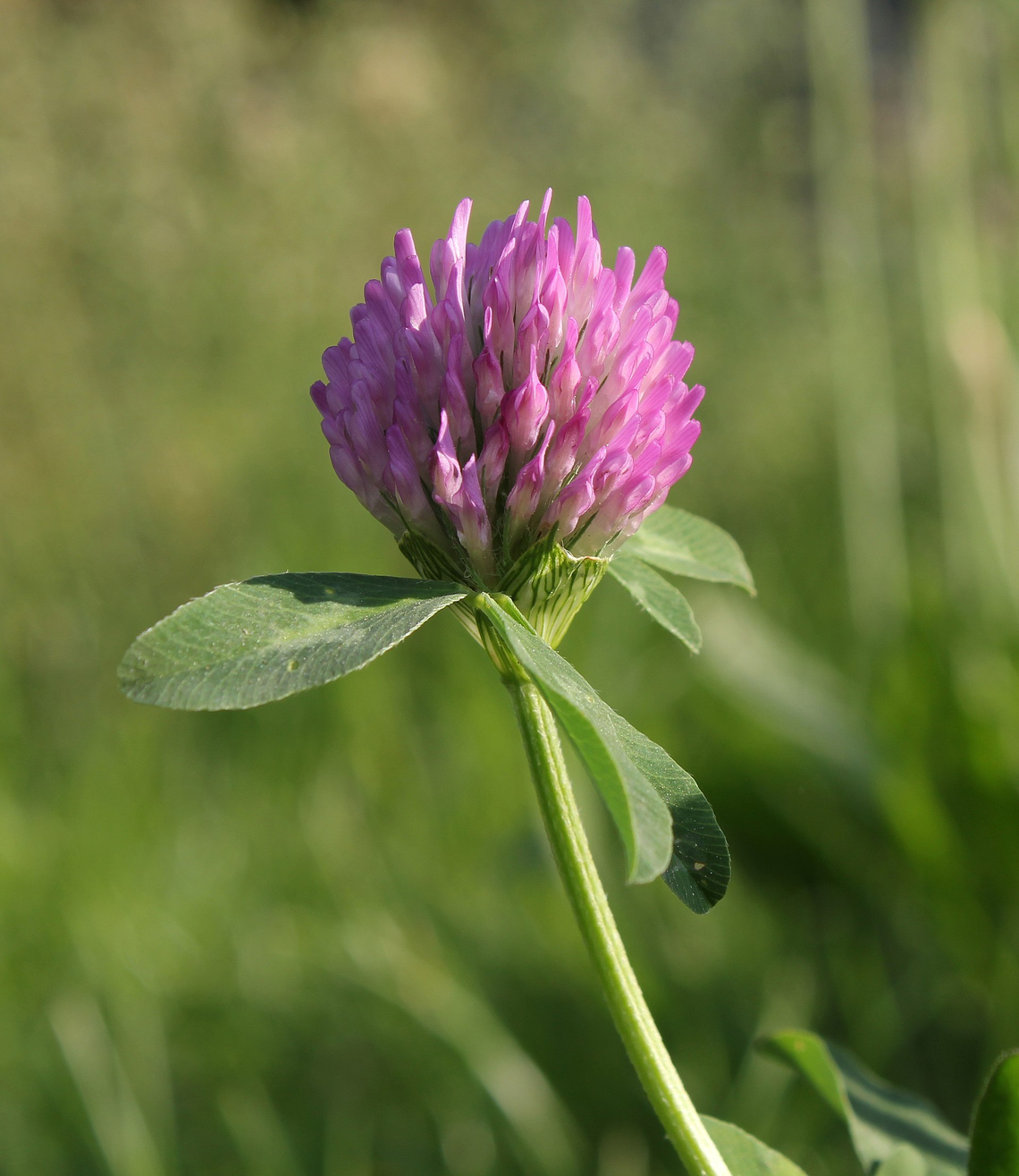
Perennial herb growing 1-2 feet tall with distinctive three-leaflet leaves and purple-pink globular flower heads; forms dense patches through underground stolons.
roots
Deep taproot system with nitrogen-fixing nodules formed by symbiotic bacteria; roots can penetrate 8-10 feet deep, improving soil structure.
stem
Branching stems that are somewhat hairy and hollow; stems rise from a central crown and can be prostrate to erect depending on growing conditions.
leaves
Alternate, palmately compound leaves with three oval leaflets; leaflets are 1/2 to 1 inch long with pale V-shaped markings and finely serrated margins.
flowers
Dense, globe-shaped flower heads 3/4 to 1 inch across composed of numerous small purple-pink pea-like flowers; flowers bloom from May through September.
fruits/seeds
Small, oval pods (legumes) containing 1-2 small, yellow to purple seeds; seeds are produced from mid-summer through fall.
Active Compounds
Traditional Uses
- Menopausal symptoms and hormonal imbalances
- Skin conditions (eczema, psoriasis, wounds)
- Respiratory conditions (coughs, bronchitis)
- Blood purification and detoxification
- Lymphatic congestion and swollen glands
- Digestive complaints and loss of appetite
- Cancer prevention (folk medicine)
Modern Applications
- Menopausal symptom relief (hot flashes, night sweats)
- Cardiovascular health and cholesterol management
- Bone health and osteoporosis prevention
- Skin health and anti-aging effects
- Cancer prevention research (breast, prostate)
- Antioxidant and anti-inflammatory effects
⚠️ Safety Information
Contraindications
- Hormone-sensitive conditions (breast cancer, endometrial cancer)
- Blood clotting disorders (contains coumarins)
- Pregnancy and breastfeeding (estrogenic effects)
- Protein S deficiency (genetic condition)
Side Effects
- Nausea or headache (uncommon)
- Skin rash in sensitive individuals
- Potential breast tenderness
- Possible blood thinning effects
Drug Interactions
- Hormone replacement therapy (may have additive effects)
- Blood-thinning medications (may enhance effects)
- Liver medications (may affect metabolism)
- Tamoxifen and other estrogen modulators
Parts Used
- Flower heads (primary medicinal part)
- Leaves (less potent than flowers)
- Occasionally aerial parts during flowering
Preparation Methods
1-2 teaspoons dried flowers per cup boiling water, steep 10-15 minutes
1:5 ratio in 45% alcohol, 2-4 ml twice daily
40-80mg standardized extract daily
Fresh flowers and leaves crushed and applied to skin conditions
Flowers infused in olive oil for topical use
Related Plants
Alfalfa
Medicago sativa
Astragalus
Astragalus membranaceus
Fenugreek
Trigonella foenum-graecum
Ashitaba
Angelica keiskei
Bloodroot
Sanguinaria canadensis
Burdock
Arctium lappa