Description
overall appearance
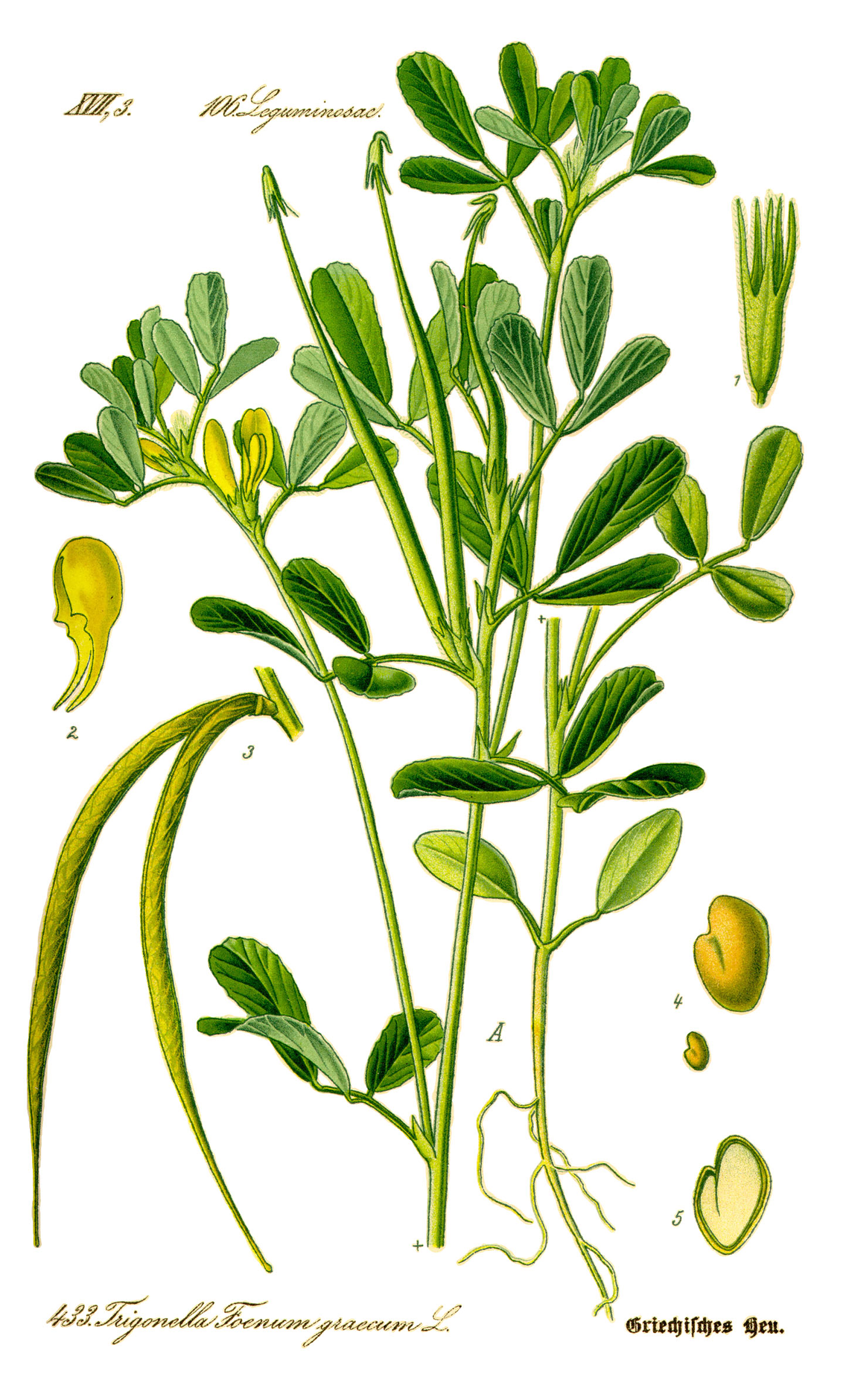
Annual herb growing 1-2 feet tall with trifoliate leaves and distinctive maple syrup-like aroma; nitrogen-fixing legume.
roots
Taproot system with nitrogen-fixing nodules characteristic of legumes; improves soil fertility through bacterial symbiosis.
stem
Erect, hollow, branching stems; green color with possible reddish tinge; smooth surface with slight ribbing.
leaves
Trifoliate compound leaves with oval leaflets; serrated margins; light green color; alternate arrangement; aromatic when crushed.
flowers
Small, white to pale yellow flowers with purple markings; pea-like shape typical of legumes; appear in leaf axils.
fruits/seeds
Long, curved pods containing 10-20 yellow-brown seeds; seeds angular and deeply grooved; aromatic with bitter taste.
Active Compounds
Traditional Uses
- Diabetes and blood sugar regulation
- Lactation support for nursing mothers
- Digestive disorders and constipation
- Respiratory ailments including bronchitis
- Arthritis and joint inflammation
- Hair loss and scalp conditions
Modern Applications
- Type 2 diabetes blood sugar management
- Cholesterol reduction and cardiovascular health
- Lactation enhancement and breast milk production
- Testosterone support and male reproductive health
- Weight management and appetite control
- Anti-inflammatory and antioxidant support
⚠️ Safety Information
Contraindications
- Pregnancy (may stimulate uterine contractions)
- Hormone-sensitive conditions (due to phytoestrogens)
- Bleeding disorders
- Scheduled surgery within 2 weeks
Side Effects
- Digestive upset and diarrhea with large doses
- Hypoglycemia in diabetes patients
- Body odor (maple syrup smell) with high doses
- Allergic reactions in sensitive individuals
Drug Interactions
- Diabetes medications (may enhance blood sugar lowering)
- Blood-thinning medications (warfarin)
- Thyroid medications
- Hormone replacement therapy
Parts Used
- Seeds (primary medicinal use)
- Leaves (fresh or dried - culinary and some medicinal use)
- Sprouted seeds
- Seed powder
Preparation Methods
1-2 teaspoons ground seeds per cup hot water; steep 15 minutes
Seeds soaked overnight, then simmered 15-20 minutes
1:5 ratio with 50% alcohol; macerate ground seeds 4 weeks
Ground seeds mixed with water for topical anti-inflammatory use
Seeds in carrier oil for hair and scalp treatment
Related Plants
Alfalfa
Medicago sativa
Astragalus
Astragalus membranaceus
Licorice
Glycyrrhiza glabra
Cumin
Cuminum cyminum
Moringa
Moringa oleifera
Amla / Indian Gooseberry
Phyllanthus emblica