Description
overall appearance
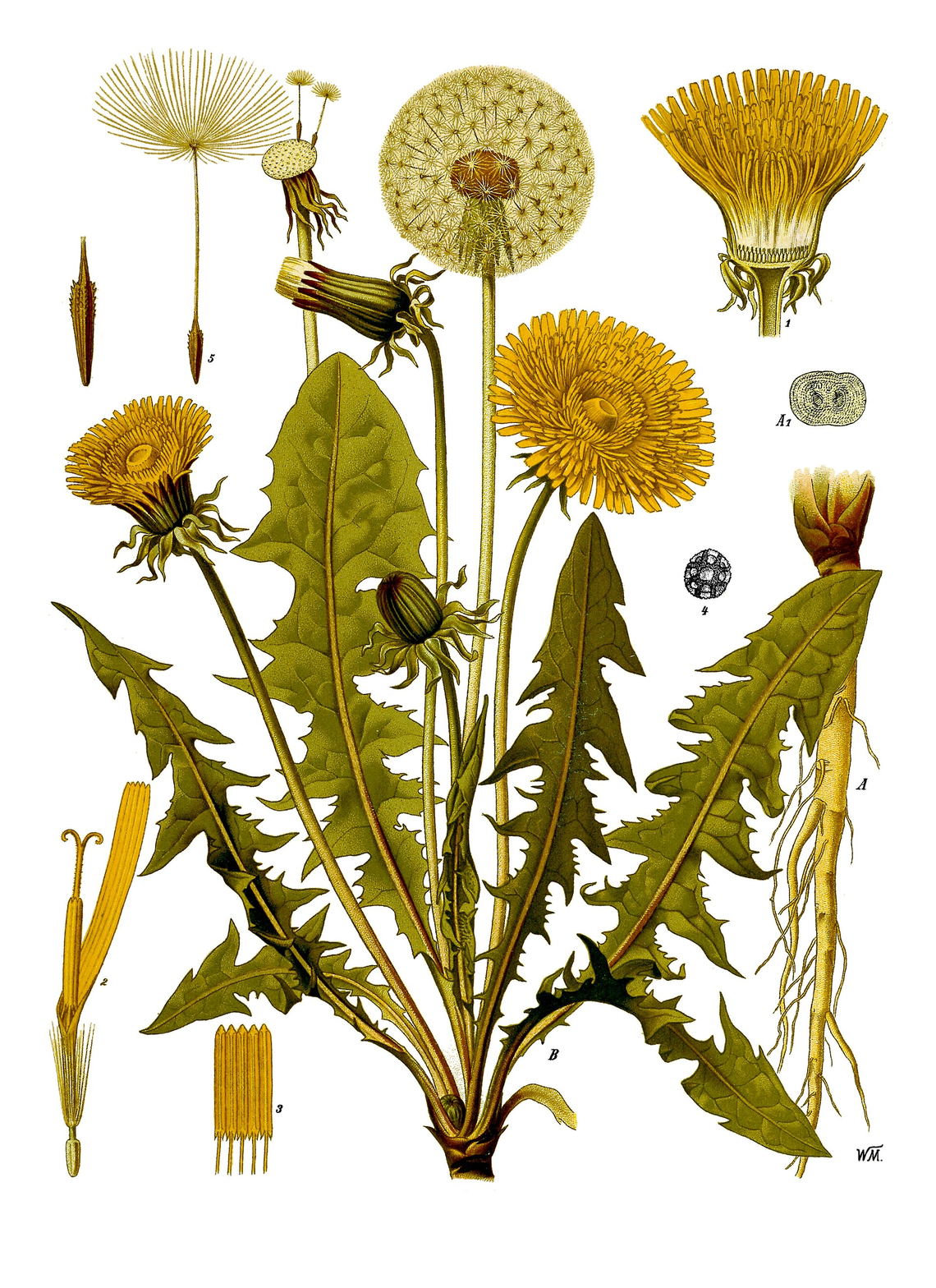
Perennial herb with basal rosette of deeply lobed leaves and bright yellow flowers on hollow stems; no true above-ground stem.
roots
Deep, thick taproot extending 6-18 inches deep; white latex when cut; stores nutrients and regenerates plant if top is removed.
stem
Flower stems (scapes) are hollow, leafless, and contain white latex; multiple stems arise from crown.
leaves
Basal rosette of deeply lobed leaves 2-12 inches long; lobes point backward (runcinate); smooth or slightly hairy.
flowers
Bright yellow composite flowers 1-2 inches across; composed entirely of ray petals; close at night and in cloudy weather.
fruits/seeds
White, fluffy seed heads (pappus) with parachute-like structures for wind dispersal; each flower produces 50-100 seeds.
Active Compounds
Traditional Uses
- Liver disorders and jaundice
- Kidney and bladder problems
- Digestive disorders and poor appetite
- Edema and water retention
- Gallbladder conditions
- Skin conditions and eczema
Modern Applications
- Liver detoxification and support
- Diuretic for mild edema
- Blood sugar regulation
- Digestive health and prebiotic support
- Antioxidant and anti-inflammatory effects
- Weight management support
⚠️ Safety Information
Contraindications
- Bile duct obstruction or gallstones
- Known allergies to Asteraceae family plants
- Stomach or duodenal ulcers
- Kidney disease (roots may be too potent)
Side Effects
- Generally very well-tolerated
- Possible digestive upset with large doses
- Contact dermatitis in sensitive individuals
- Increased urination (intended diuretic effect)
Drug Interactions
- Diuretic medications (may enhance effects)
- Diabetes medications (may lower blood sugar)
- Blood-thinning medications (theoretical interaction)
- Lithium (may affect elimination)
Parts Used
- Leaves (diuretic, nutritive)
- Roots (liver and digestive support)
- Flowers (antioxidant, wine-making)
- Whole plant (spring tonics)
Preparation Methods
1-2 teaspoons dried leaves per cup; steep 10-15 minutes for diuretic effects
1-2 teaspoons dried root per cup; simmer 15-20 minutes for liver support
1:5 ratio with 40% alcohol; macerate chopped fresh plant 4 weeks
Fresh leaves crushed for topical application to warts and wounds
Fresh flowers in carrier oil for massage and skin care
Related Plants
Arnica
Arnica montana
Bhringaraj
Eclipta prostrata
Blessed Thistle
Cnicus benedictus
Birch
Betula spp.
Devil's Claw
Harpagophytum procumbens
Oregon Grape
Mahonia aquifolium