Description
overall appearance
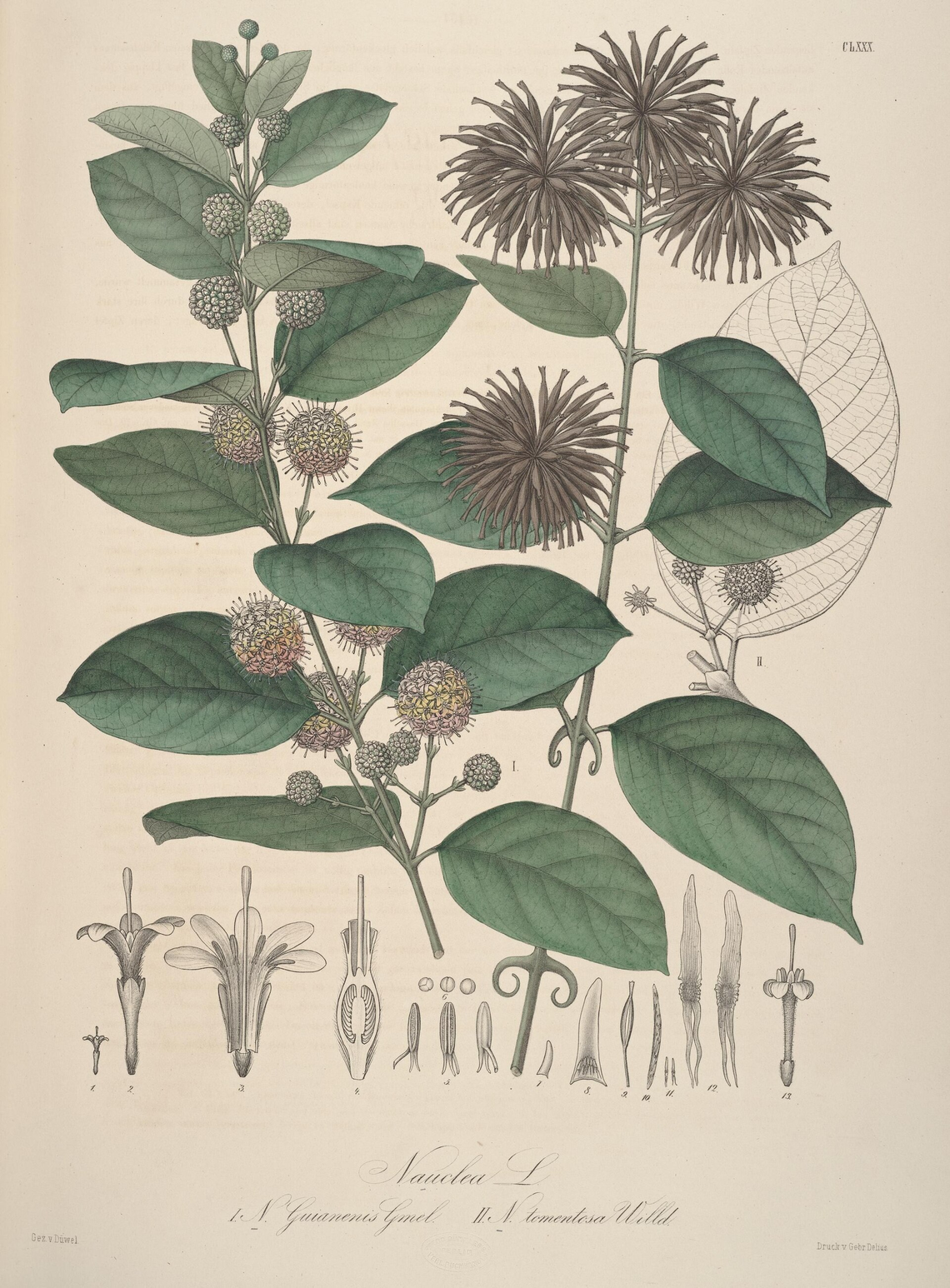
Cat's claw is a woody vine that can climb 100 feet or more into rainforest canopy using its distinctive hook-like thorns.
roots
The root system includes both fibrous roots and the thick, woody main root. The root bark is the primary source of medicinal compounds.
stem
Woody, climbing stems can reach several inches in diameter. The vine is characterized by curved, claw-like thorns that help it climb.
leaves
Opposite, oval leaves are 3-5 inches long with prominent veins. Leaves are dark green and glossy with smooth margins.
flowers
Small, white to yellowish flowers appear in spherical clusters at branch tips. Flowers are tubular and fragrant.
fruits/seeds
Small capsules split to release numerous tiny seeds with feathery appendages for wind dispersal.
Active Compounds
Traditional Uses
- Immune system support and infections
- Arthritis and joint inflammation
- Digestive disorders and ulcers
- Cancer and tumor conditions
- Wounds and skin conditions
- Contraception (traditional use)
Modern Applications
- Immune system modulation
- Anti-inflammatory for arthritis
- Antioxidant supplementation
- Digestive health support
- Complementary cancer therapy (under professional guidance)
⚠️ Safety Information
Contraindications
- Pregnancy and breastfeeding
- Autoimmune diseases (may stimulate immune system)
- Organ transplant recipients
- Children under 3 years old
Side Effects
- Mild digestive upset
- Headache and dizziness
- Low blood pressure
- Possible immune system overstimulation
Drug Interactions
- May interact with immunosuppressive medications
- Possible interactions with blood pressure medications
- May enhance effects of blood-thinning medications
- Caution with chemotherapy drugs
Parts Used
- Root bark (primary medicinal part)
- Inner bark of stems
- Leaves (less commonly used)
Preparation Methods
1 tsp inner bark per cup water, steep 15-20 minutes
Simmer 1 tbsp bark in 3 cups water for 15 minutes
1:5 ratio in 50% alcohol, 1-3 ml three times daily
Standardized extract preparations
Ground bark mixed with water for topical use
Related Plants
Cleavers
Galium aparine
Noni
Morinda citrifolia
Partridge Berry
Mitchella repens
Pau D'Arco
Tabebuia impetiginosa
Burdock
Arctium lappa
Clove
Syzygium aromaticum