Description
overall appearance
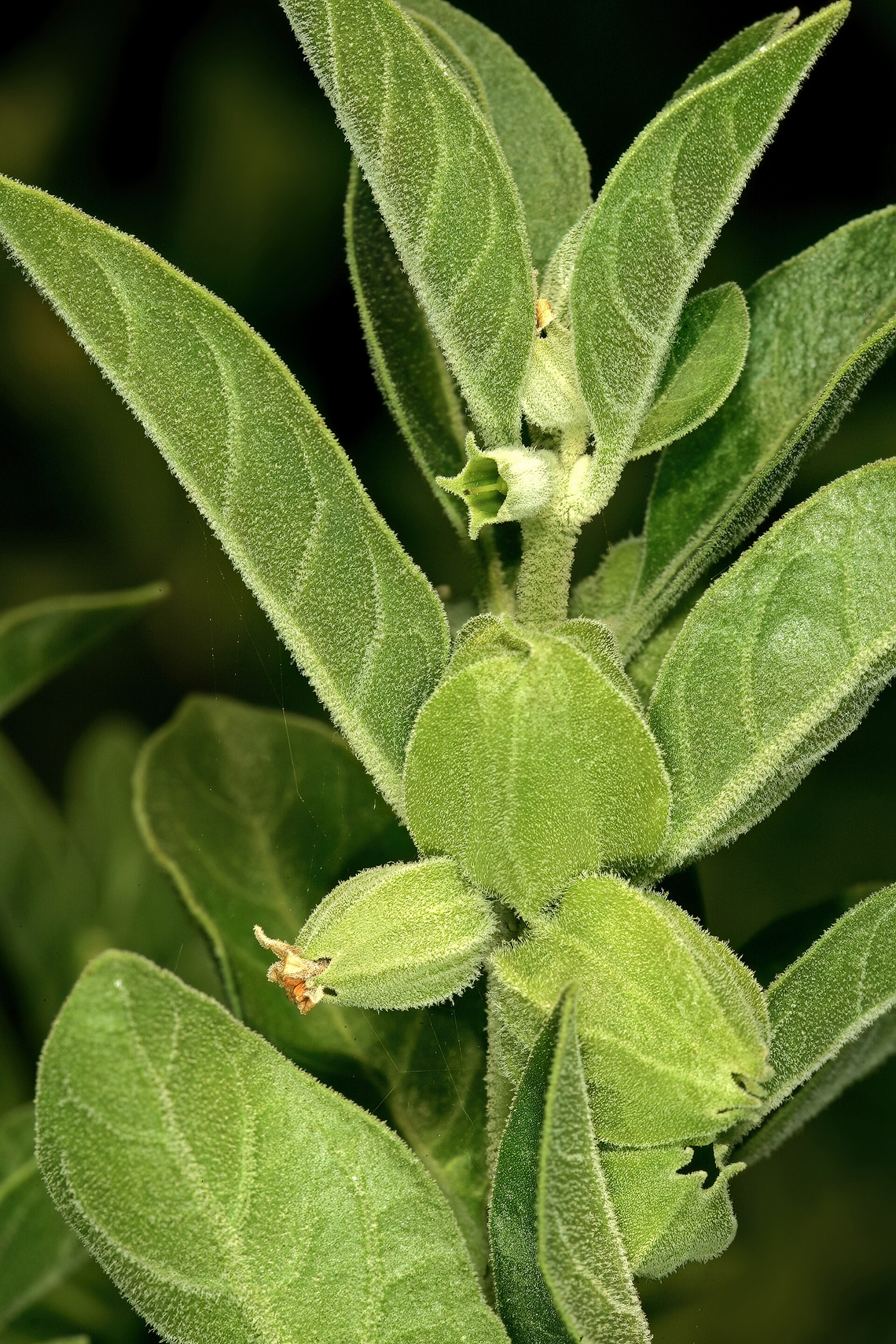
Small, woody shrub growing 1-3 feet tall with oval leaves and small, greenish-yellow flowers followed by orange-red berries enclosed in papery calyces.
roots
Thick, fleshy, unbranched taproot that can grow 12-18 inches long; roots are cream to light brown externally, white internally, with a horse-like odor when fresh.
stem
Branching, woody stems covered with fine, star-shaped hairs (stellate pubescence); stems are green when young, becoming brown and woody with age.
leaves
Simple, oval leaves 2-4 inches long, arranged alternately; leaves are covered with fine hairs and have a dull green color with lighter undersides.
flowers
Small, inconspicuous, bell-shaped flowers that are greenish-yellow; flowers grow in clusters in leaf axils and bloom throughout the year in suitable climates.
fruits/seeds
Small, round, orange-red berries enclosed in an inflated, papery calyx; berries contain numerous small, yellow seeds and ripen 6-8 months after flowering.
Active Compounds
Traditional Uses
- General tonic and rejuvenative (Rasayana in Ayurveda)
- Stress, anxiety, and nervous exhaustion
- Insomnia and sleep disorders
- Sexual weakness and infertility
- Arthritis and inflammatory conditions
- Immune system weakness
- Memory and cognitive enhancement
Modern Applications
- Adaptogenic stress response support
- Anxiety and depression management
- Athletic performance and muscle strength
- Thyroid function support
- Blood sugar regulation
- Testosterone support in men
- Cortisol level reduction
⚠️ Safety Information
Contraindications
- Pregnancy and breastfeeding (may cause miscarriage)
- Autoimmune diseases (may stimulate immune system)
- Hyperthyroidism (may increase thyroid hormones)
- Nightshade family allergies
Side Effects
- Drowsiness or sedation (especially with high doses)
- Gastrointestinal upset or diarrhea
- Skin rash in sensitive individuals
- Potential liver toxicity with very high doses
Drug Interactions
- Immunosuppressive medications (may counteract effects)
- Sedatives and sleep medications (may enhance effects)
- Blood pressure medications (may lower blood pressure)
- Diabetes medications (may lower blood sugar)
- Thyroid medications (may enhance effects)
Parts Used
- Roots (primary medicinal part)
- Berries (traditional use for certain conditions)
- Leaves (occasional traditional use)
Preparation Methods
1-6 grams root powder daily, traditionally mixed with milk and honey
3-6 grams dried root per cup water, simmer 15-20 minutes
1:5 ratio in 45% alcohol, 2-4 ml twice daily
300-500mg daily containing 1.5-12% withanolides
Traditional powder preparation with other herbs
Related Plants
Ginseng
Panax ginseng
Nutmeg
Myristica fragrans
Pelargonium / Umckaloabo
Pelargonium sidoides
Rhodiola
Rhodiola rosea
Bacopa
Bacopa monnieri
Black Pepper
Piper nigrum