Description
overall appearance
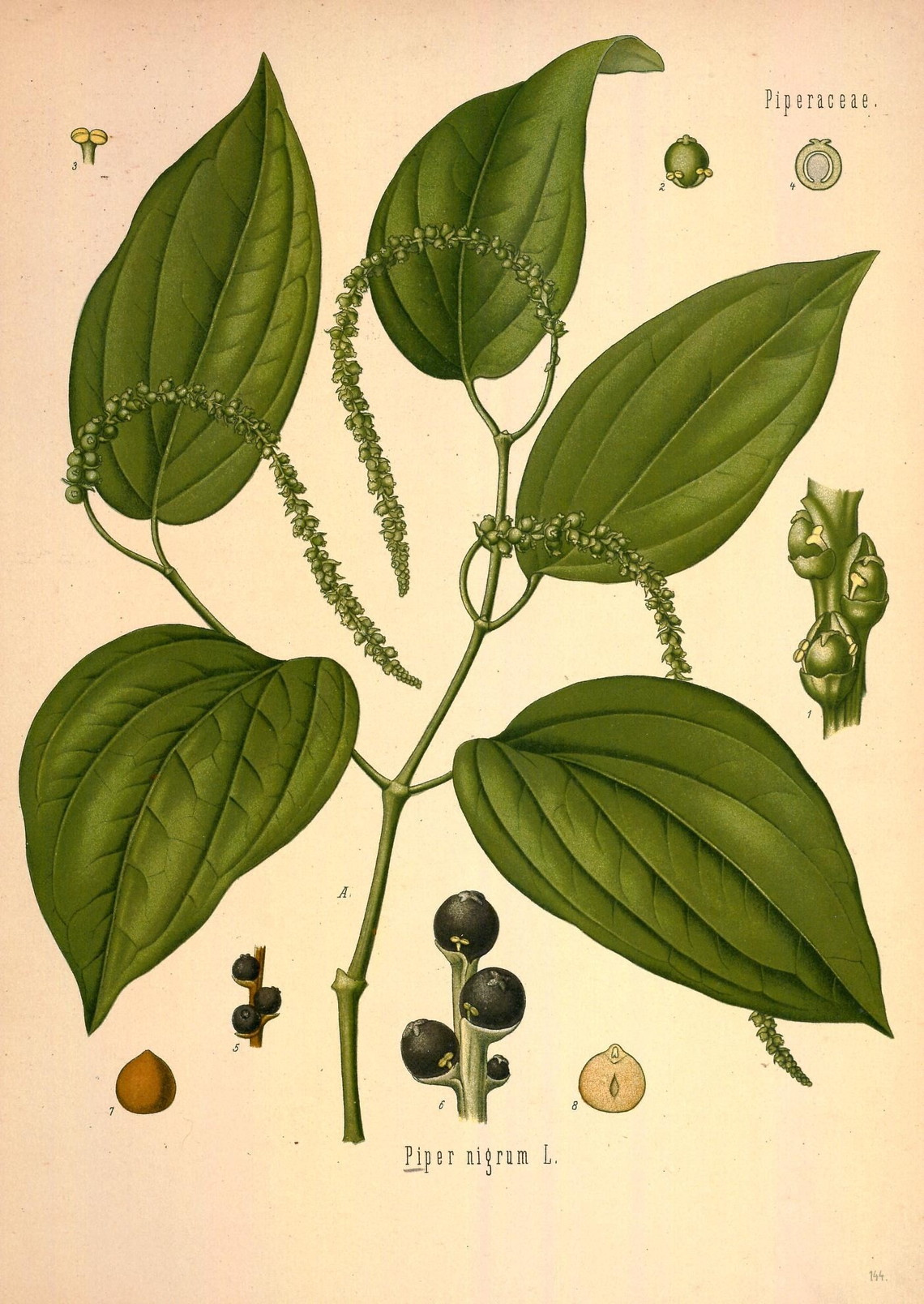
Perennial climbing vine reaching 12-20 feet in length; woody stems with nodes that produce roots for climbing support structures.
roots
Adventitious roots at nodes allow climbing; extensive fibrous root system in soil; aerial roots help attach to support trees.
stem
Woody, jointed stems with swollen nodes; green when young, becoming brown and woody; requires support structure for climbing.
leaves
Alternate, simple leaves 3-6 inches long; ovate to heart-shaped with prominent parallel veins; thick, leathery texture; dark green color.
flowers
Small, inconspicuous flowers arranged in drooping spikes 3-6 inches long; flowers lack petals; wind-pollinated.
fruits/seeds
Small drupes arranged in dense spikes; green when immature, turning red when ripe; dried immature fruits become black peppercorns.
Active Compounds
Traditional Uses
- Digestive disorders and poor appetite
- Respiratory conditions including coughs and asthma
- Arthritis and joint pain
- Fever and malaria treatment
- Memory enhancement and cognitive function
- Parasitic infections and worms
Modern Applications
- Bioavailability enhancement of other nutrients and drugs
- Digestive health and enzyme stimulation
- Anti-inflammatory and pain relief
- Antioxidant and neuroprotective effects
- Weight management and thermogenesis
- Antimicrobial and antiparasitic properties
⚠️ Safety Information
Contraindications
- Active gastric or duodenal ulcers
- Inflammatory bowel disease
- Upcoming surgery (may increase bleeding)
- Kidney stones (may increase oxalate absorption)
Side Effects
- Gastric irritation with excessive use
- Heartburn and acid reflux in sensitive individuals
- Skin irritation with topical application
- Respiratory irritation if inhaled in large amounts
Drug Interactions
- Enhances absorption of many medications (beneficial and potentially problematic)
- Phenytoin and propranolol (increased bioavailability)
- Theophylline (enhanced effects)
- Lithium (potential toxicity)
Parts Used
- Fruits (peppercorns) - fresh, dried, or ground
- Essential oil from fruits
- Leaves (occasionally in traditional medicine)
- Roots (rarely used)
Preparation Methods
1/2 teaspoon ground pepper per cup hot water; steep 10 minutes
Whole peppercorns simmered 15-20 minutes for stronger effects
1:5 ratio with 70% alcohol; macerate crushed peppercorns 4 weeks
Ground pepper mixed with oil for topical pain relief
Peppercorns in carrier oil; strain after 2-4 weeks
Related Plants
Clove
Syzygium aromaticum
Nutmeg
Myristica fragrans
Sassafras
Sassafras albidum
Andrographis
Andrographis paniculata
Ashitaba
Angelica keiskei
Basil
Ocimum basilicum