Description
overall appearance
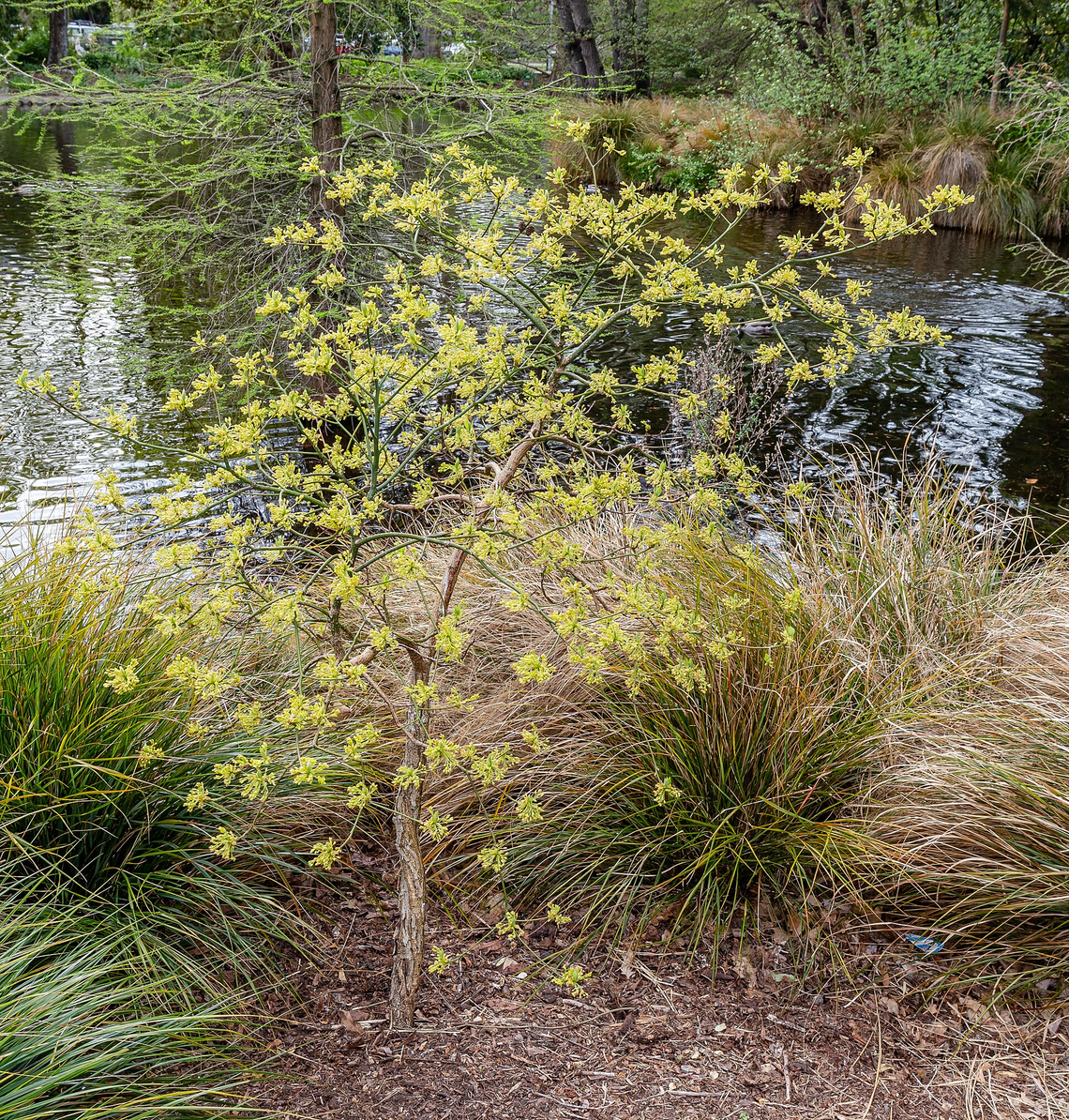
Deciduous tree or large shrub reaching 30-60 feet tall with distinctive three-lobed leaves and aromatic bark.
roots
Deep taproot with lateral spreading roots; forms colonies through root suckers; highly aromatic.
stem
Bark furrowed and reddish-brown on mature trees; younger bark smooth and green; all parts aromatic.
leaves
Distinctive three-lobed leaves (mitten-shaped); some leaves entire, others 2-3 lobed; bright green turning yellow-orange in fall.
flowers
Small, yellow-green flowers in clusters; dioecious (male and female flowers on separate trees); appear before leaves.
fruits/seeds
Dark blue berries on red stalks (female trees only); single seed; important food for birds.
Active Compounds
Traditional Uses
- Blood purification and "spring tonic"
- Rheumatism and arthritis
- Skin conditions and eczema
- Digestive disorders
- Fever reduction
- Respiratory ailments
Modern Applications
- Historical interest only (root products banned)
- Culinary use of leaves (filé powder)
- Aromatic applications (safrole-free preparations)
- Research into safrole-free compounds
- Traditional flavoring (root beer - now synthetic)
⚠️ Safety Information
Contraindications
- Root bark and essential oil (BANNED - carcinogenic safrole)
- Pregnancy and breastfeeding (safety concerns)
- Children (avoid root products entirely)
- Liver disease (safrole hepatotoxicity)
Side Effects
- Liver damage with safrole-containing preparations
- Potential carcinogenic effects (root products)
- Digestive upset with excessive use
- Allergic reactions in sensitive individuals
Drug Interactions
- Liver-metabolized medications (if using safrole-containing products)
- Blood-thinning medications (theoretical)
- Generally avoid medicinal use due to restrictions
Parts Used
- Root bark (historical use - now restricted)
- Leaves (filé powder for culinary use)
- Twigs and branches (sassafras tea)
- Essential oil (commercial extraction)
Preparation Methods
Root preparations banned due to safrole content
Young leaves for mild, mucilaginous beverage
Small twigs and bark for traditional "sassafras tea"
Dried, ground leaves for culinary thickening
Now prohibited due to safety concerns
Related Plants
Cinnamon
Cinnamomum verum
Ashitaba
Angelica keiskei
Andrographis
Andrographis paniculata
Bitter Melon
Momordica charantia
Blessed Thistle
Cnicus benedictus
Bloodroot
Sanguinaria canadensis