Cinnamon
Cinnamomum verum
Description
overall appearance
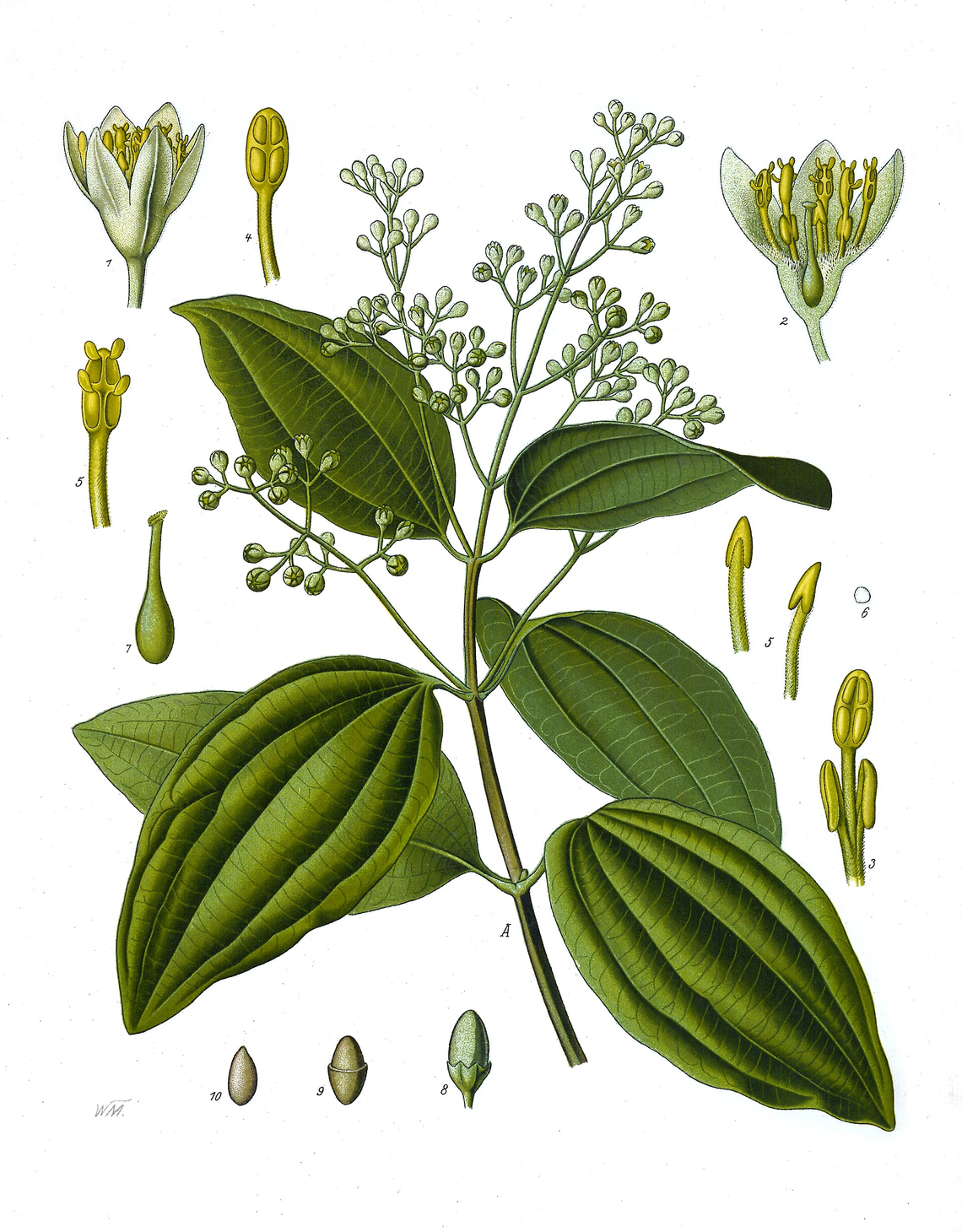
Evergreen tree reaching 30-50 feet in height with dense, oval crown and aromatic bark that is commercially harvested.
roots
Deep taproot system with extensive lateral roots; capable of regenerating from root cuttings after bark harvesting.
stem
Straight trunk with smooth, aromatic bark; inner bark is the source of cinnamon spice; outer bark removed in strips that curl into quills.
leaves
Opposite, leathery leaves 3-7 inches long; oval to lance-shaped with pronounced parallel veins; dark green above, lighter beneath; aromatic when crushed.
flowers
Small, pale yellow to greenish-white flowers in loose panicles; inconspicuous but fragrant; appear during rainy season.
fruits/seeds
Small, dark purple berry-like drupes containing single seed; birds disperse seeds naturally in forest habitats.
Active Compounds
Traditional Uses
- Digestive disorders and stomach complaints
- Cold and flu symptoms
- Menstrual irregularities and reproductive health
- Blood circulation improvement
- Diabetes and blood sugar regulation
- Respiratory infections and bronchitis
Modern Applications
- Type 2 diabetes blood sugar management
- Antioxidant and anti-inflammatory support
- Antimicrobial and antifungal properties
- Cardiovascular health and cholesterol management
- Cognitive function and neuroprotection
- Weight management and metabolic support
⚠️ Safety Information
Contraindications
- Avoid large doses during pregnancy and breastfeeding
- Liver disease patients should avoid cassia cinnamon
- Bleeding disorders due to blood-thinning effects
- Upcoming surgery within 2 weeks
Side Effects
- Skin and mouth irritation with high doses
- Liver damage possible with excessive cassia cinnamon
- Low blood sugar in sensitive individuals
- Allergic reactions in susceptible people
Drug Interactions
- Blood-thinning medications (warfarin, aspirin)
- Diabetes medications (may enhance effects)
- Liver-processed medications
- Heart medications
Parts Used
- Inner bark (primary source of spice and medicine)
- Essential oil from bark
- Leaves (for essential oil)
- Buds (cinnamon flower buds)
Preparation Methods
1/2 teaspoon ground cinnamon per cup hot water; steep 10-15 minutes
1 cinnamon stick simmered in water for 15-20 minutes
1:5 ratio with 60% alcohol; macerate bark for 4 weeks
Ground cinnamon mixed with honey for topical application
Cinnamon bark in carrier oil; avoid direct application due to skin sensitivity
Related Plants
Sassafras
Sassafras albidum
Ashitaba
Angelica keiskei
Cumin
Cuminum cyminum
Dong Quai
Angelica sinensis
Fenugreek
Trigonella foenum-graecum
Lemongrass
Cymbopogon citratus